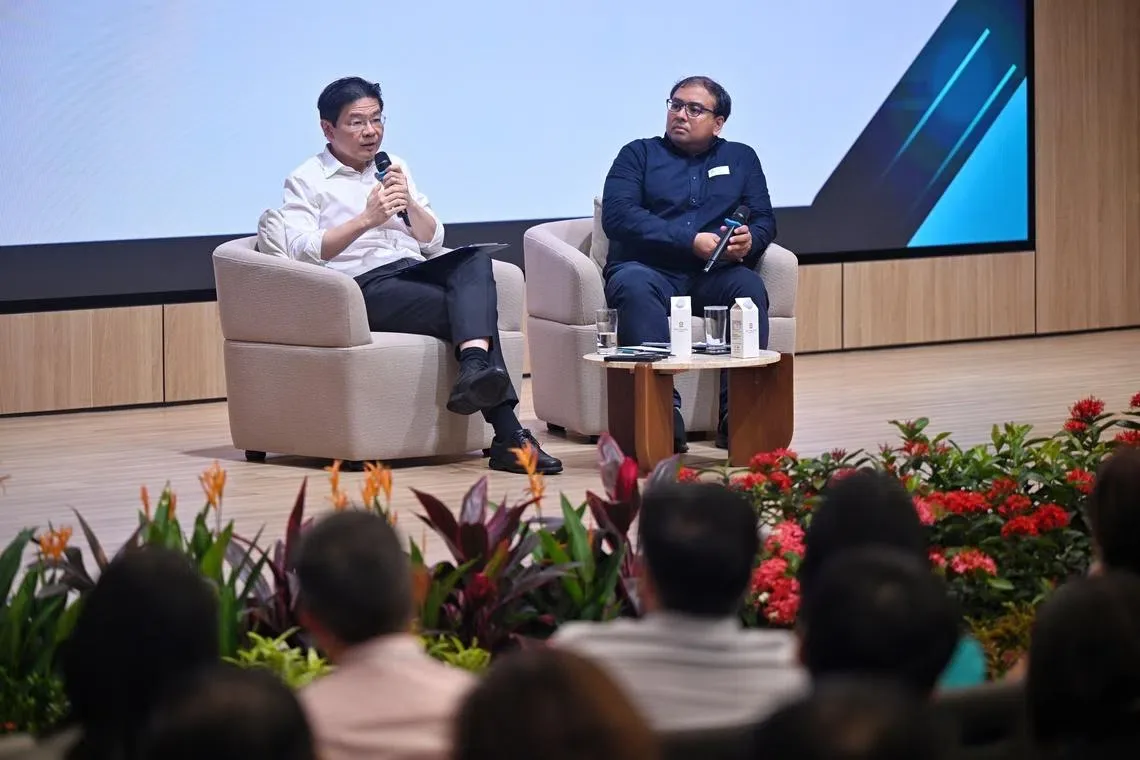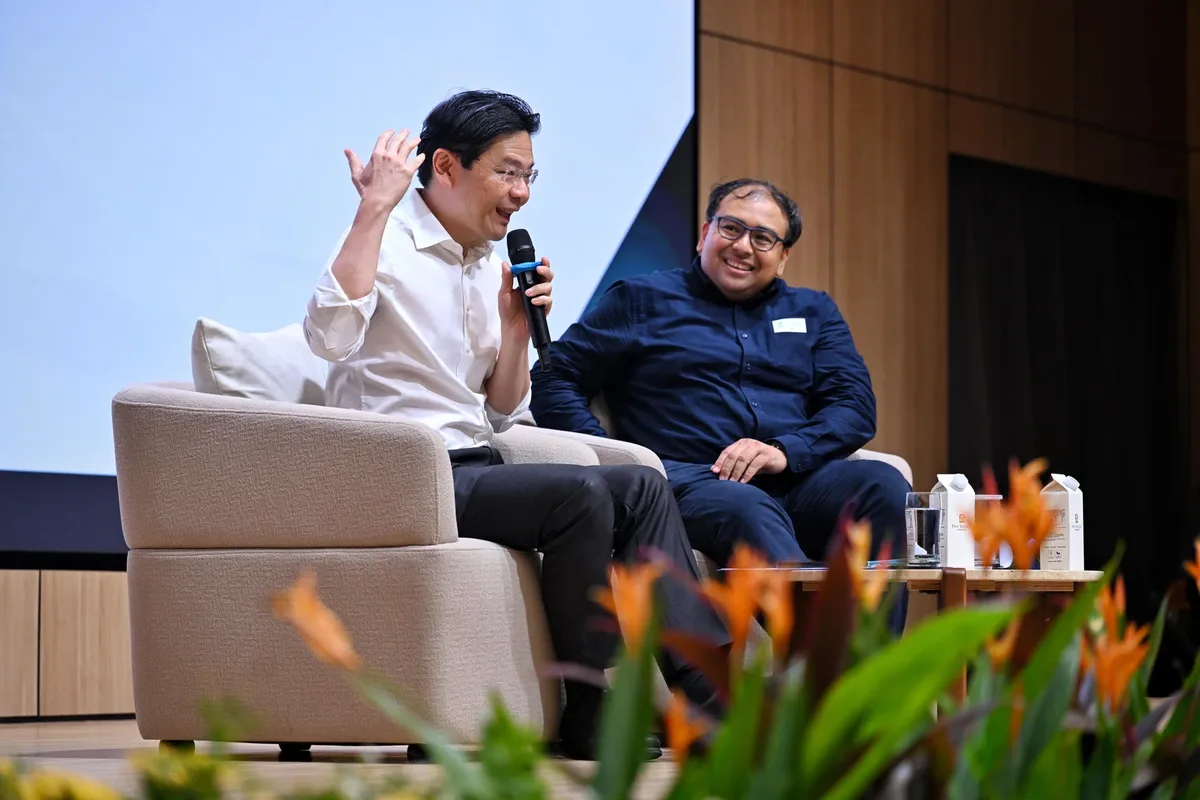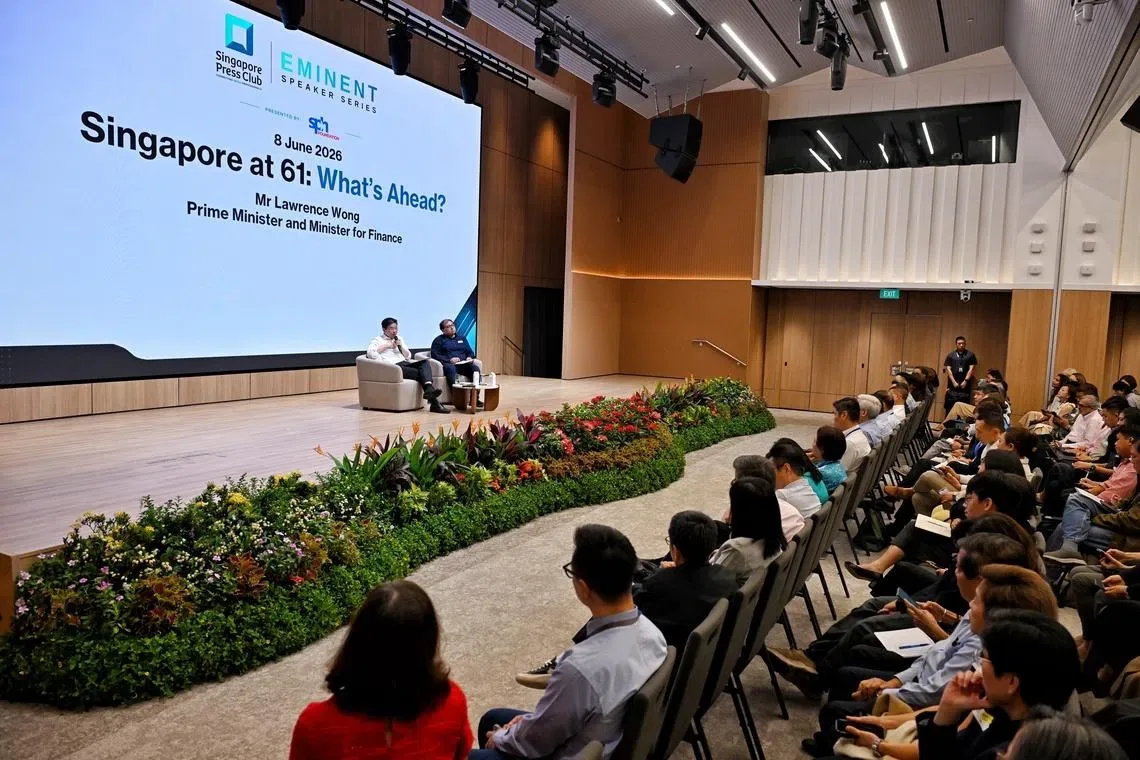
Prime Minister Lawrence Wong spoke at a Singapore Press Club dialogue on June 8 about how artificial intelligence can improve productivity in cities facing labour shortages like Singapore [1, 2, 3]. He said Singapore cannot continue to rely on importing labour and must harness AI to transform processes and operations to become far more productive. "We can harness AI well to really transform processes and operations to become far more productive. And in a city like Singapore, where we are always labour short – you talk to companies and employers, they are always looking for people and we cannot afford to just keep importing labour," Wong said [1].
Wong emphasized that shallow use of AI, like deploying chatbots alone, is insufficient. Instead, AI must be deeply embedded in organisational workflows to drive meaningful change [1, 2, 3]. Singapore aims to help companies adopt AI effectively while also supporting workers in adapting by reskilling and upskilling to meet new demands [1, 2, 3].
The prime minister acknowledged uncertainty about AI's net effect on jobs. "Will we end up with more jobs or fewer jobs at the end of the day in the longer-term? We should have some humility in saying we do not know the answer. No one can predict what the future will be," he said [1]. There will be disruptions from automation, but the long-term job balance remains unclear [1, 2, 3, 4].
Singapore’s small size and close partnerships between government, employers, and unions give it an advantage in guiding responsible AI deployment, Wong said. "We can guide the way AI is deployed in our country to make sure that it complements workers, to make sure that AI benefits workers and serves humanity, not the other way around," he stated [1]. He added, "This is one aspect about AI that Singapore has some certainty on – we are not passive bystanders, we have agency."
Wong said a global framework for AI development would be desirable but is unlikely soon, given difficulties in securing agreement from major powers such as the US and China [1, 2, 3].
He also raised concerns about AI enabling misinformation and disinformation, which can undermine social cohesion. "Such an environment could make it harder for people to agree on the basic set of facts – making it impossible to hold a society together," Wong said [5]. Authorities recently blocked 14 posts targeting the Indian community linked to misinformation likely spread online from China-based platforms [5].
Singapore’s population was 6.11 million as of June 2025, below the previously planned upper limit of 6.9 million. Wong said the government aims for stable growth to avoid decline and will continue controlling immigration to ensure new arrivals share Singapore’s values [5]. "There is no new figure to be updated, because our population will just grow at a much slower rate than before, and we are just trying to maintain stability and to avoid population decline," Wong explained [5].
Singapore’s economy grew strongly in the first quarter of 2026, rising 6% year-on-year, surpassing the initial estimate of 4.6%, but global economic uncertainty remains, with rising inflationary pressures and unclear impacts of AI on employment [4]. Wong concluded, "Our greatest strength remains the same – and that’s our ability to stay united and move forward together as one people," emphasizing social cohesion as a key strength [4].