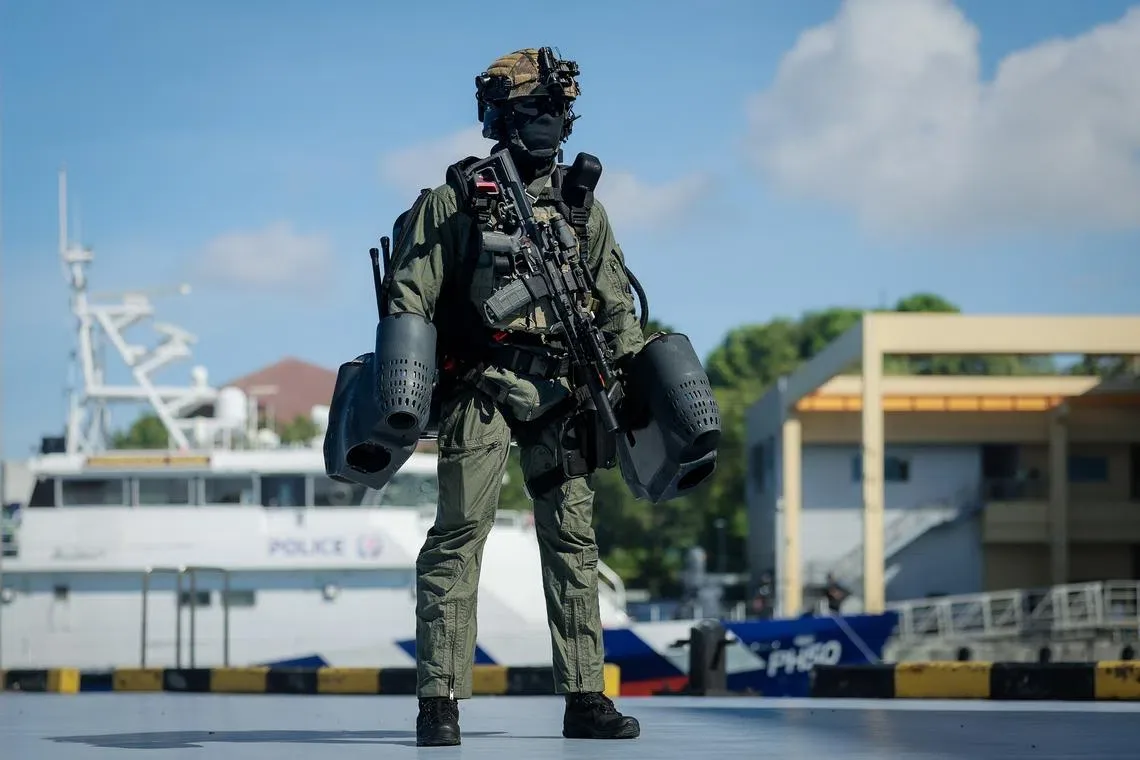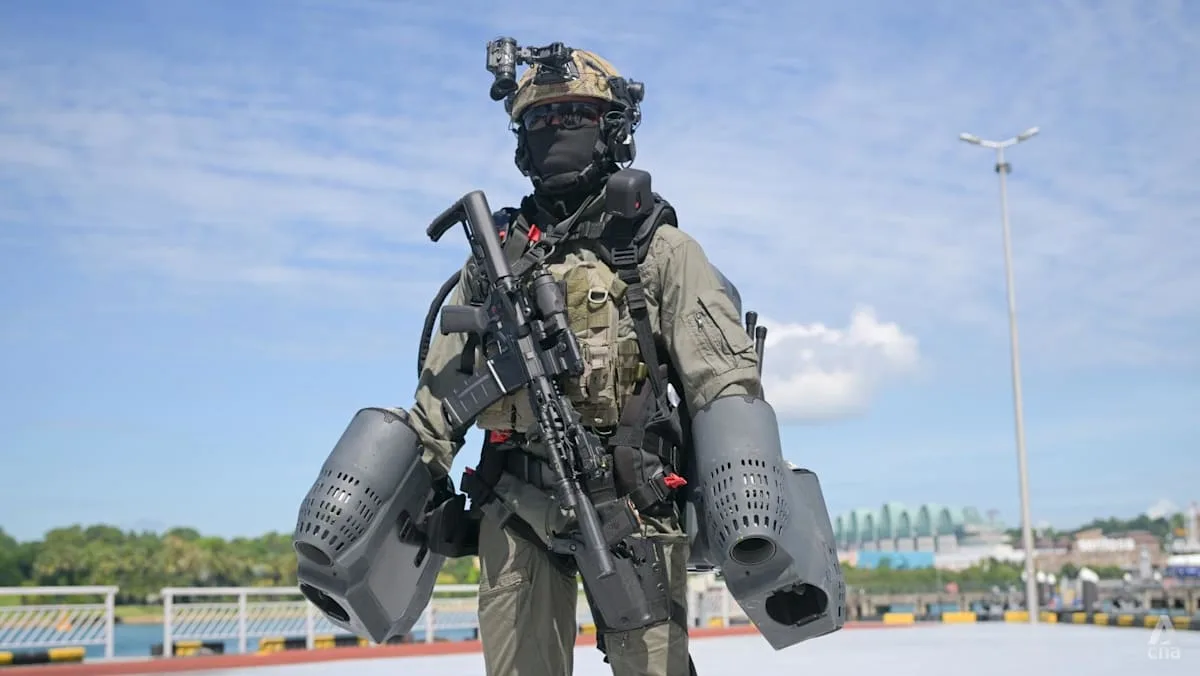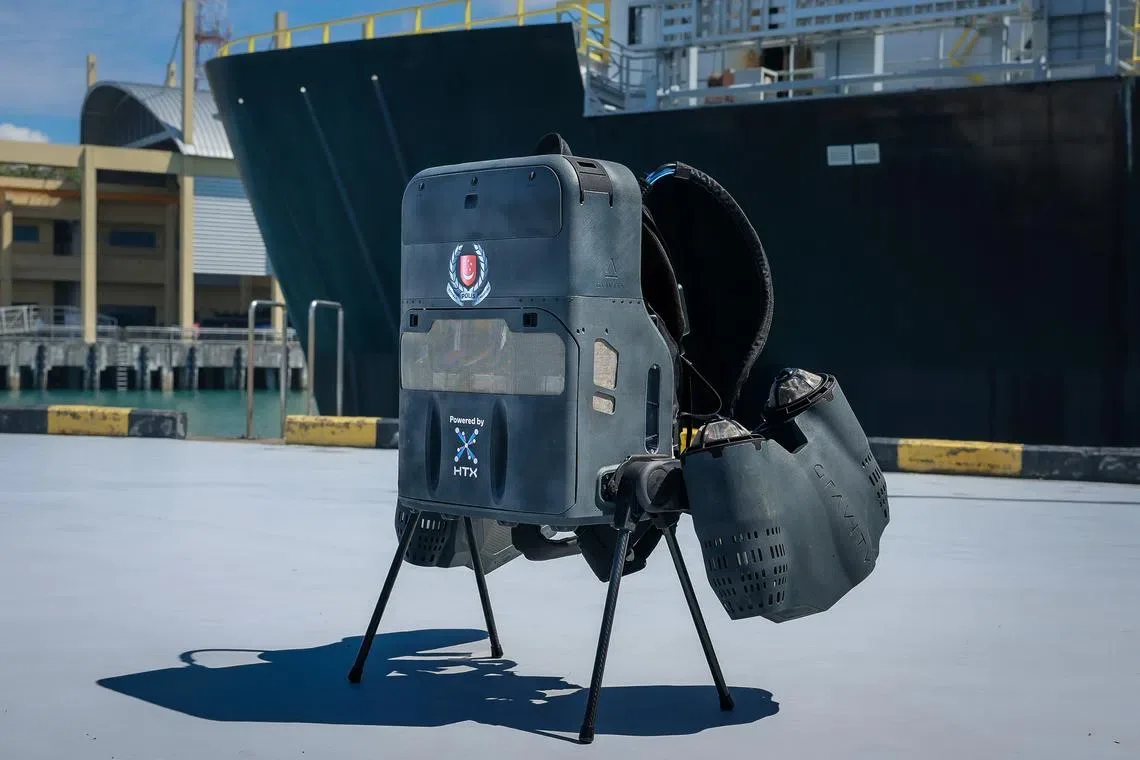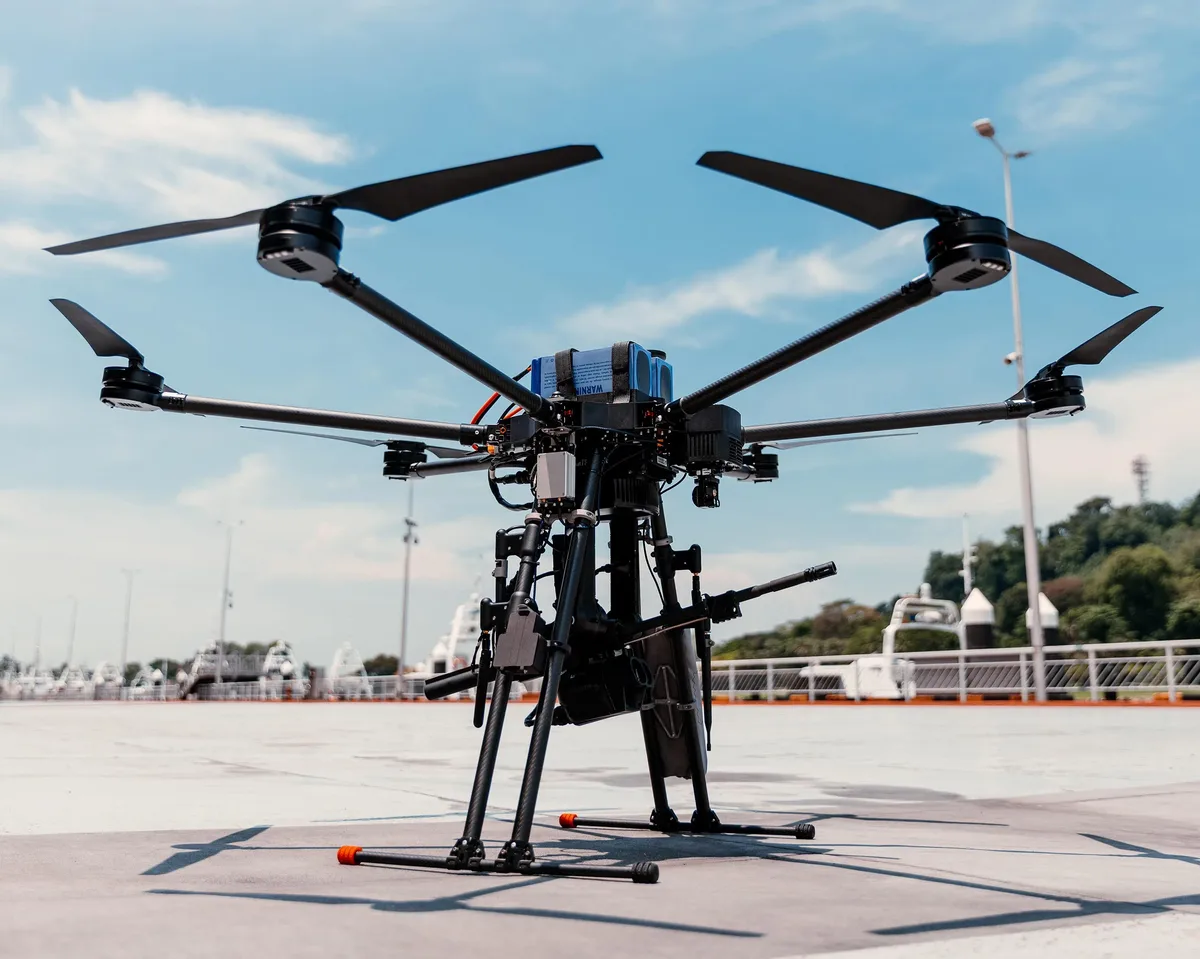
The Singapore Police Force is trialling jetpacks and weaponised drones to enhance tactical capabilities in special operations involving ships and buildings [1, 2]. The jetpacks, made by UK company Gravity Industries, weigh about 35 kilograms, can reach speeds up to 137 km/h, and offer approximately three minutes of flight time per use [1, 2].
These drones, called Weaponised Unmanned Systems (WUS), are intended for operations where terrain and adversary tactics pose heightened risks, such as boarding hostile vessels or storming buildings [1, 2]. Drones have previously been used by police for reconnaissance and crowd control, but weaponising them marks a new step for specialist missions [2]. Possible uses include breaching booby-trapped entrances and providing cover fire for officers on the scene [1, 2].
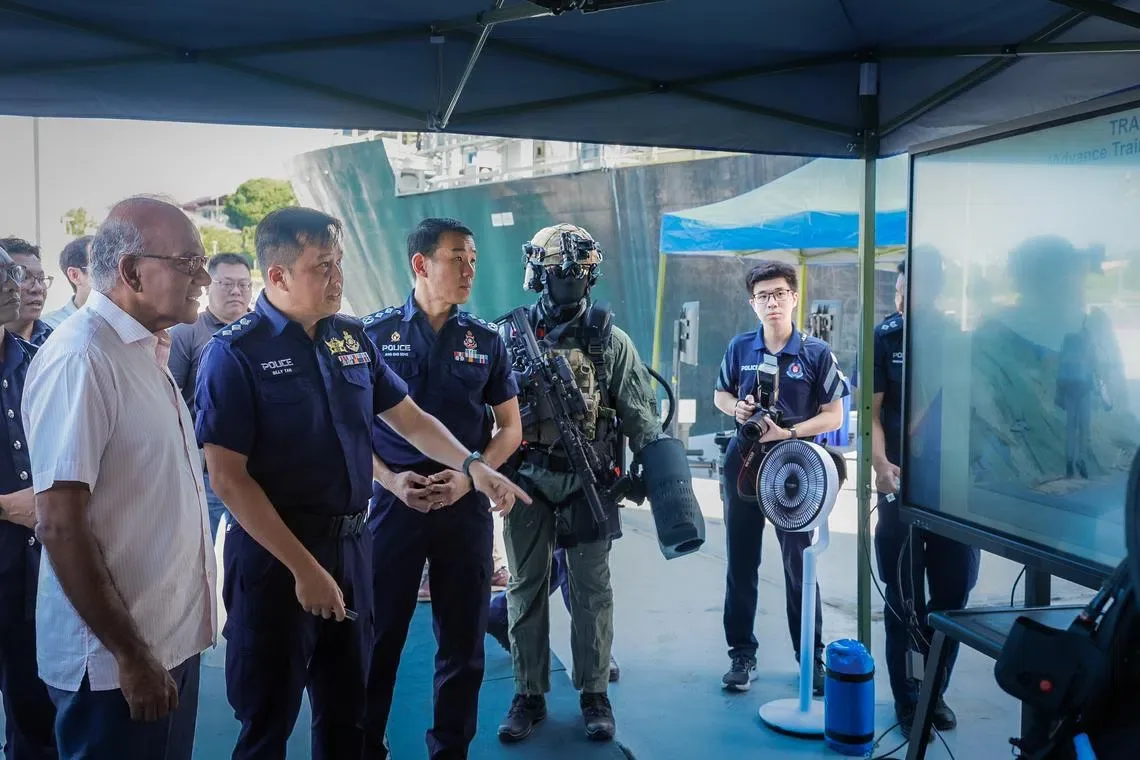
Coordinating Minister for National Security and Home Affairs Minister K. Shanmugam visited the Police Coast Guard Brani Base on May 14 and highlighted the new technology. He said, "For some time now, I have asked SPF and other Home Team departments to really push down this route aggressively, and essentially this technology can protect our officers" [1]. He called the advance "a quantum upgrade from how policing was done some years ago" and added, "It gives you speed, it gives you tactical advantage. It gives cover to our officers who are coming on to the scene" [1, 2].
Minister Shanmugam noted the rise in terrorist threats worldwide and the increasing sophistication of hostile technologies. He said, "You see that people who want to do you harm. You see it around the world, the kind of technologies they use and the threat of terrorism, attacks and so on, have been there and I would say, are increasing" [2]. Officials emphasized that these innovations are not a response to any specific threat but part of an ongoing effort to upgrade policing capabilities [1].
Trials of the jetpacks and weaponised drones are set to begin in the coming months after the May 14 announcement [1]. The Singapore Police Force aims to assess their operational effectiveness in complex environments posing risks to officers.