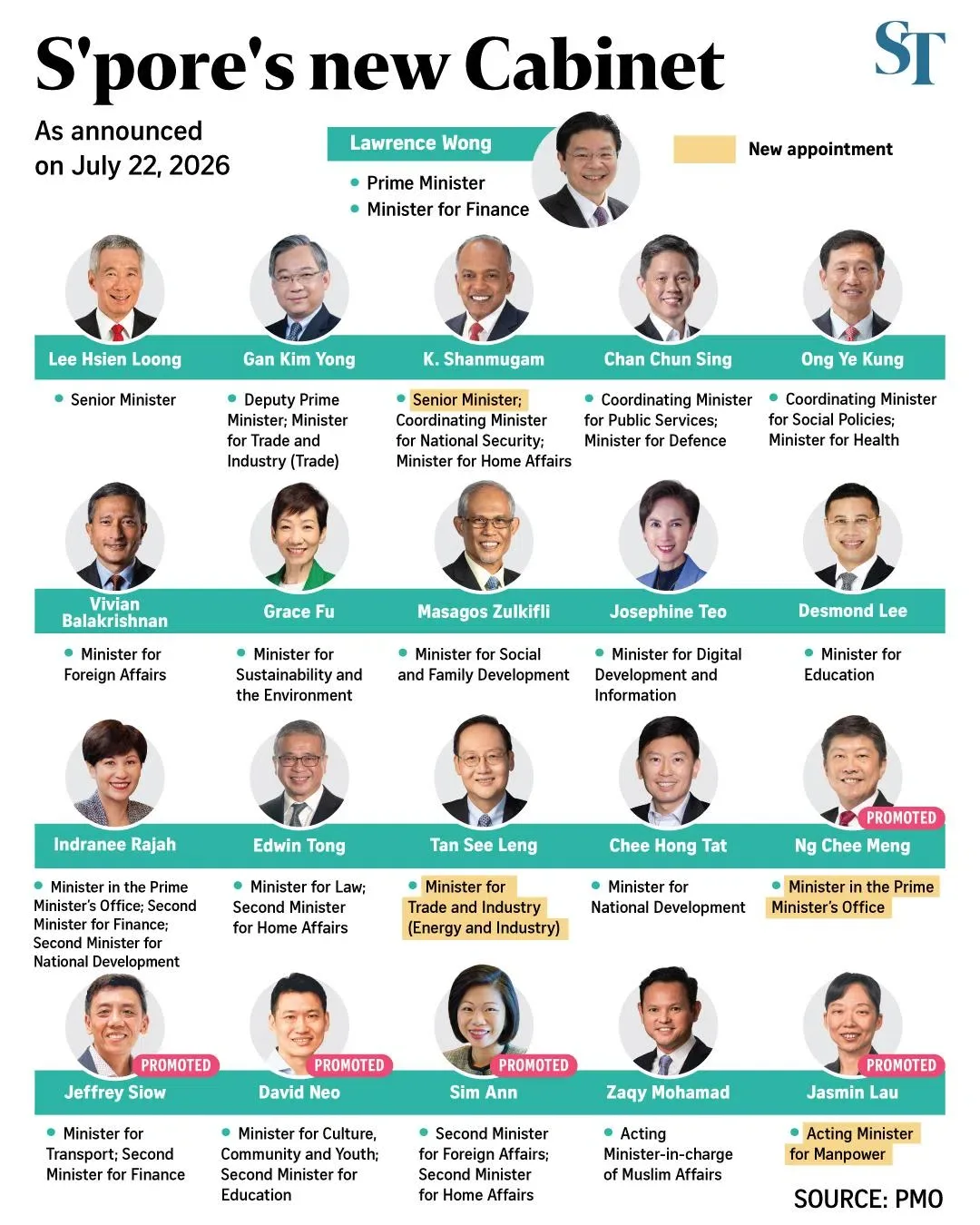
The Ministry of Trade and Industry (MTI) in Singapore will be renamed the Ministry of Energy, Trade and Industry (METI) starting October 1, 2026, reflecting the growing importance of energy to the nation's economy and industrial strategy [1, 2, 3, 4]. Prime Minister Lawrence Wong announced the change on July 22, 2026, during a cabinet reshuffle press conference, noting that "Energy is becoming increasingly central to Singapore’s economic competitiveness, industrial transformation, and long-term resilience" [1]. He added that "clean energy is going to be a major challenge for us," underscoring the national focus on energy transformation [1].
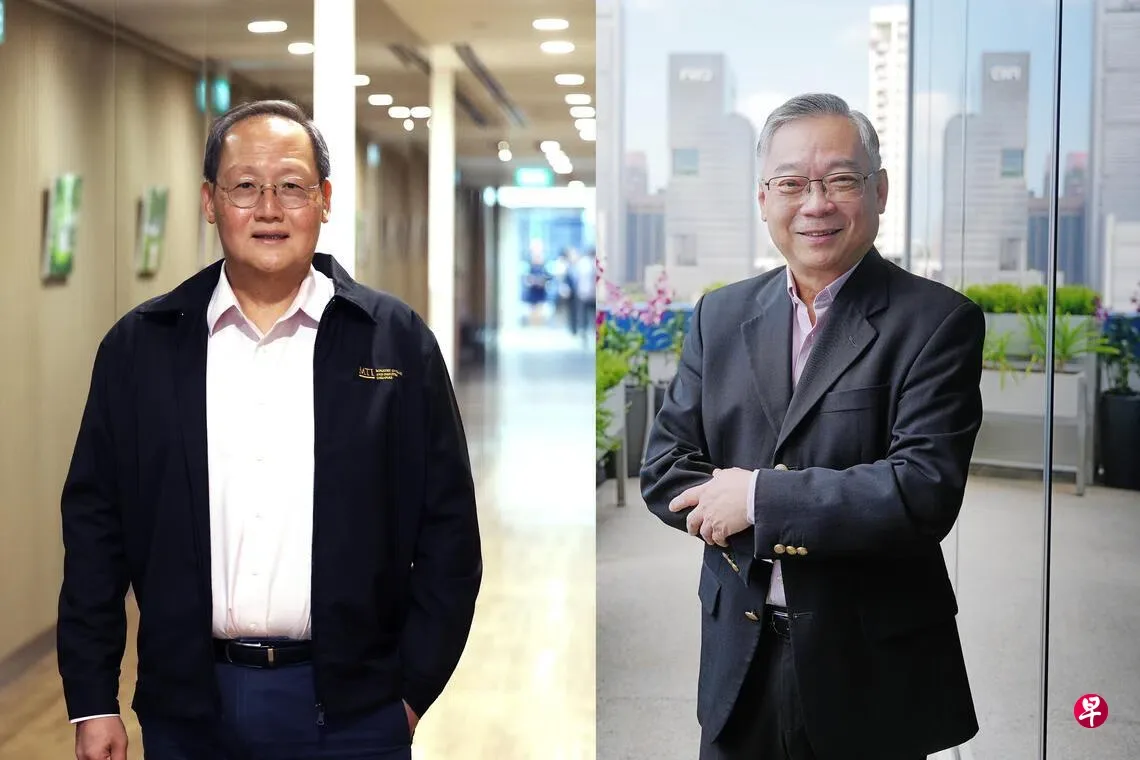
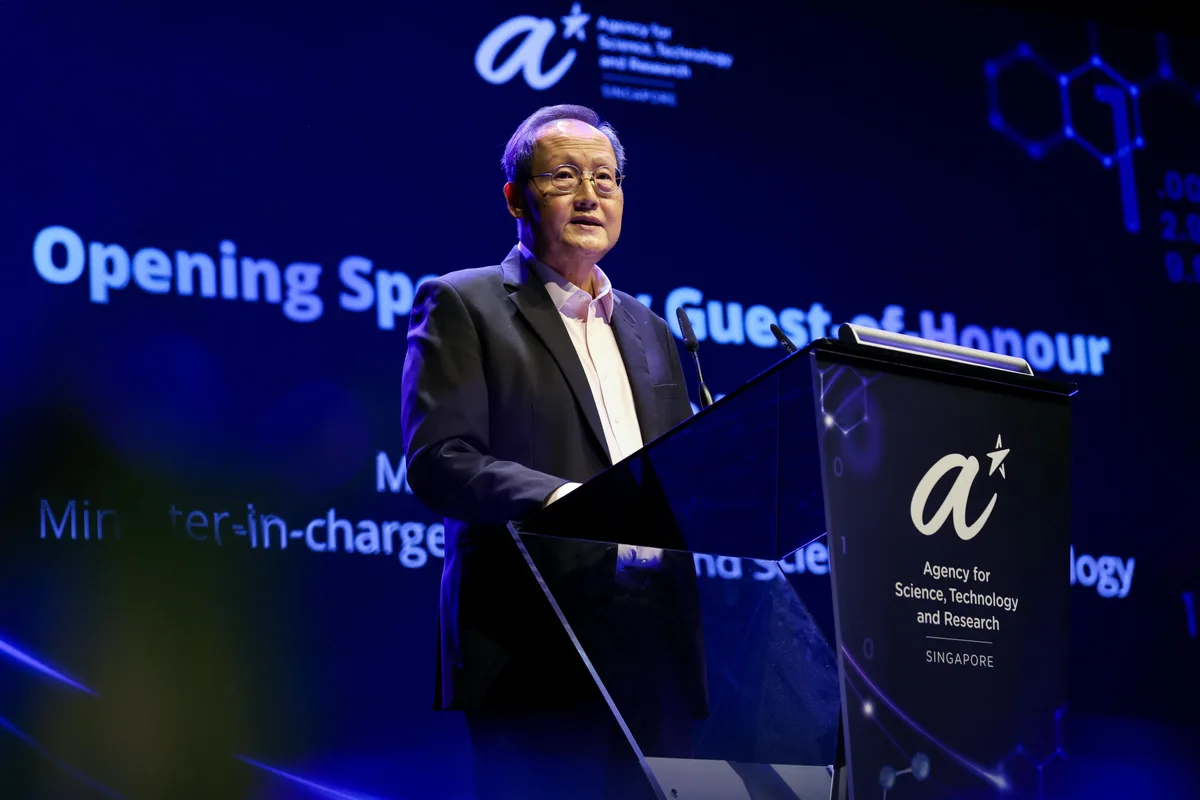
The restructuring took effect from July 27, 2026, with ministerial portfolio shifts preceding the official ministry name change on October 1 [1, 2, 3, 4]. Tan See Leng, who previously served as Manpower Minister, will become Minister of Trade and Industry focusing on Energy and Industry, while Deputy Prime Minister Gan Kim Yong will continue overseeing Trade and Singapore's wider economic strategy [1, 2, 3, 4]. Minister for Sustainability and the Environment Grace Fu remains Minister-in-charge of Trade Relations within the new ministry [1, 2, 3, 4].
Foo Cexiang, a former civil servant and MP for Tanjong Pagar GRC, will be appointed Minister of State at METI starting September 1, 2026 [1, 2, 3, 4]. The ministry will be led by these two ministers to manage its expanded scope and the increased complexity of geopolitical trade negotiations [1, 2, 3, 4].
The renaming acknowledges energy as a national challenge comparable to water supply, requiring a shift toward clean energy sources while sustaining economic growth and the country's net-zero goals [1, 2, 3, 4]. The ministry prioritizes energy security, stable and competitively priced energy, and balancing the low-carbon transition [4]. It has already taken major steps including constructing a second liquefied natural gas (LNG) terminal, centralizing natural gas purchasing, expanding solar deployment, and fostering ASEAN cooperation to advance low-carbon energy [4].
An $800 million Singapore dollar Decarbonisation Challenge fund has been launched to support research and development of critical clean energy technologies [4]. Additionally, Singapore is conducting a feasibility study on nuclear energy and plans a UN atomic watchdog review in 2027 to assess readiness for possible nuclear deployment [1, 2, 3, 4].
Former Minister of State Chan Seng Huai will transfer to the Ministry of Foreign Affairs, retaining his concurrent role at the Ministry of National Development [4]. Prime Minister Wong noted that the energy ministry structure may be further adjusted in the future depending on government decisions and feasibility studies [4].