Singapore will undergo a United Nations nuclear watchdog assessment in 2027 to determine its readiness to make an informed decision on whether to deploy nuclear energy, with a focus on managing radioactive waste safely and effectively [1, 2].
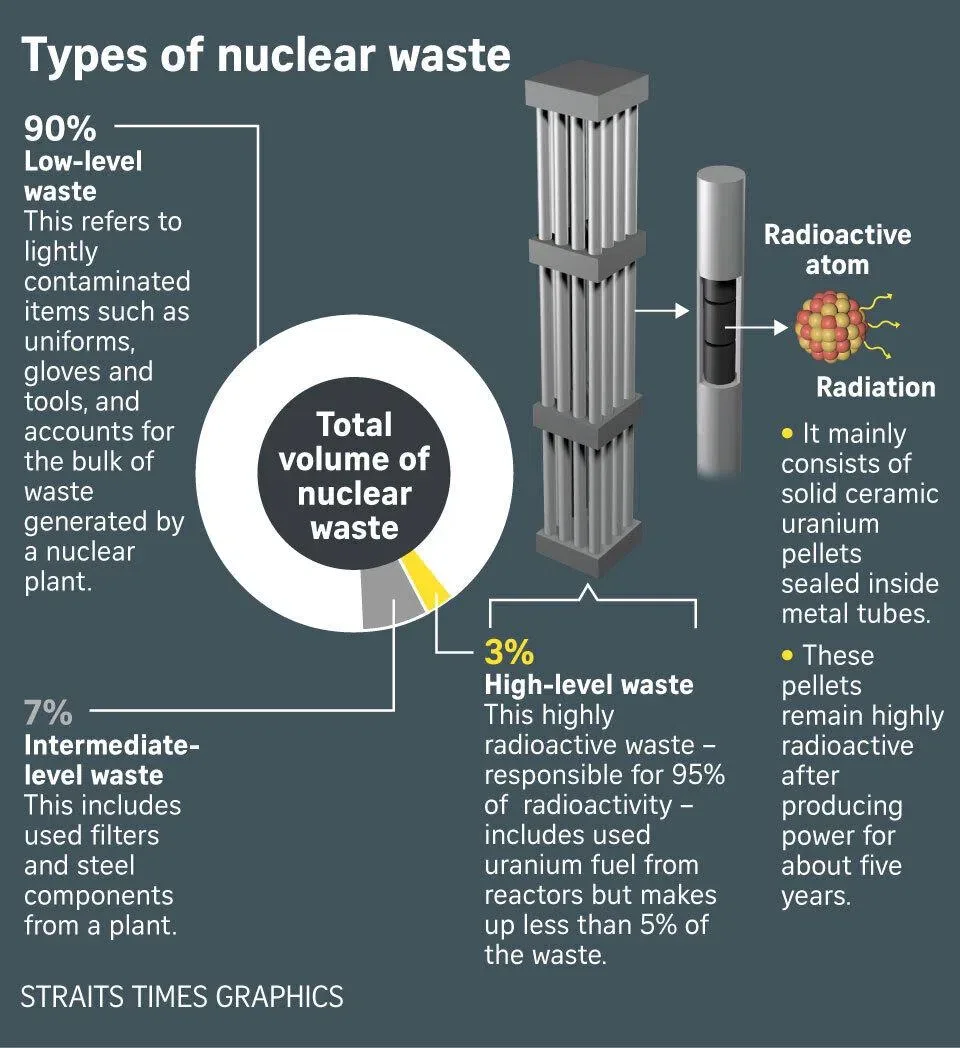
Nuclear waste, a by-product of nuclear power plants, contains radioactive particles that can stay hazardous for thousands to hundreds of thousands of years [1, 2]. It is generally classified into three types—high-level, intermediate, and low-level—based mainly on their radioactivity and how long they take to decay to safe levels [1, 2].
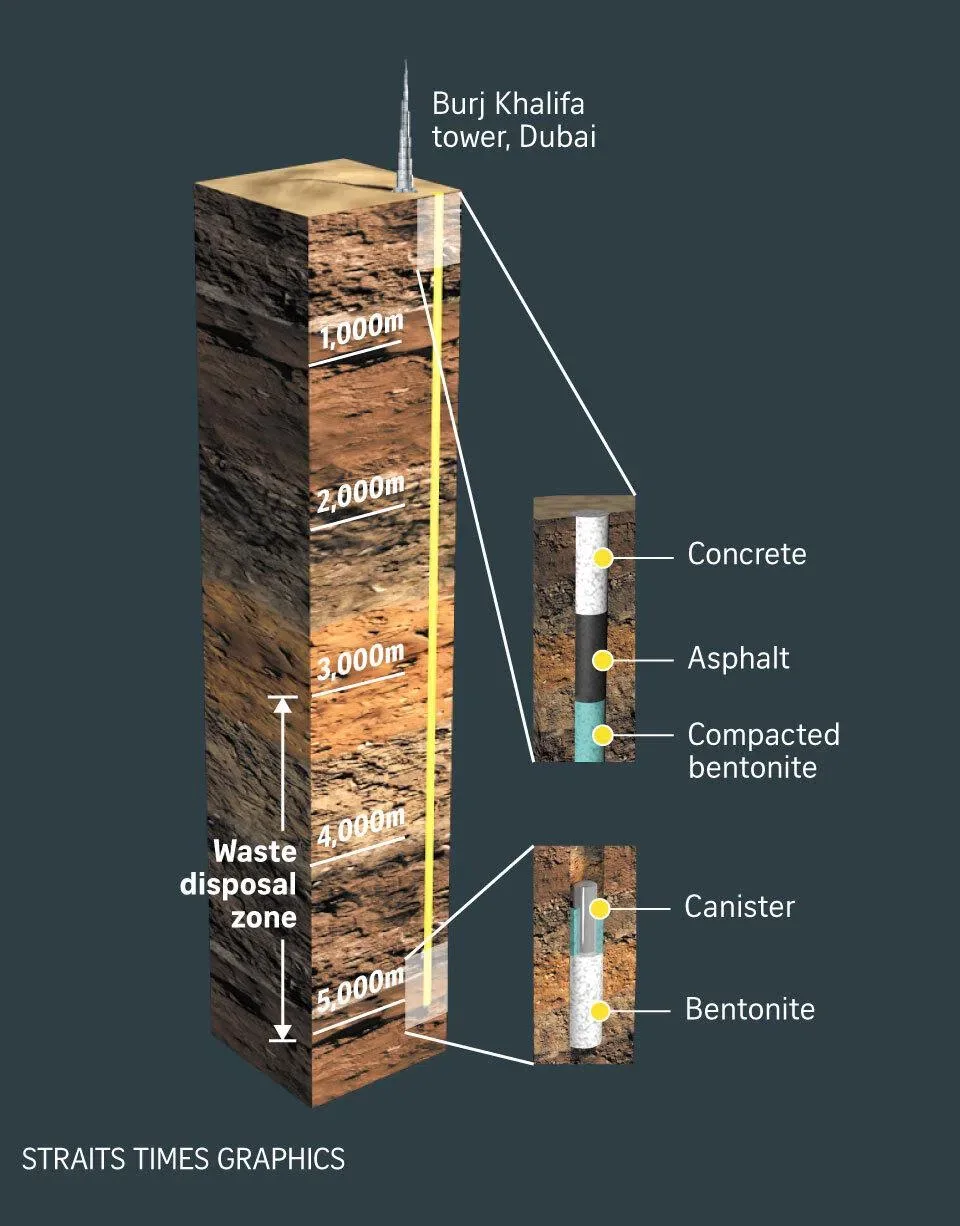
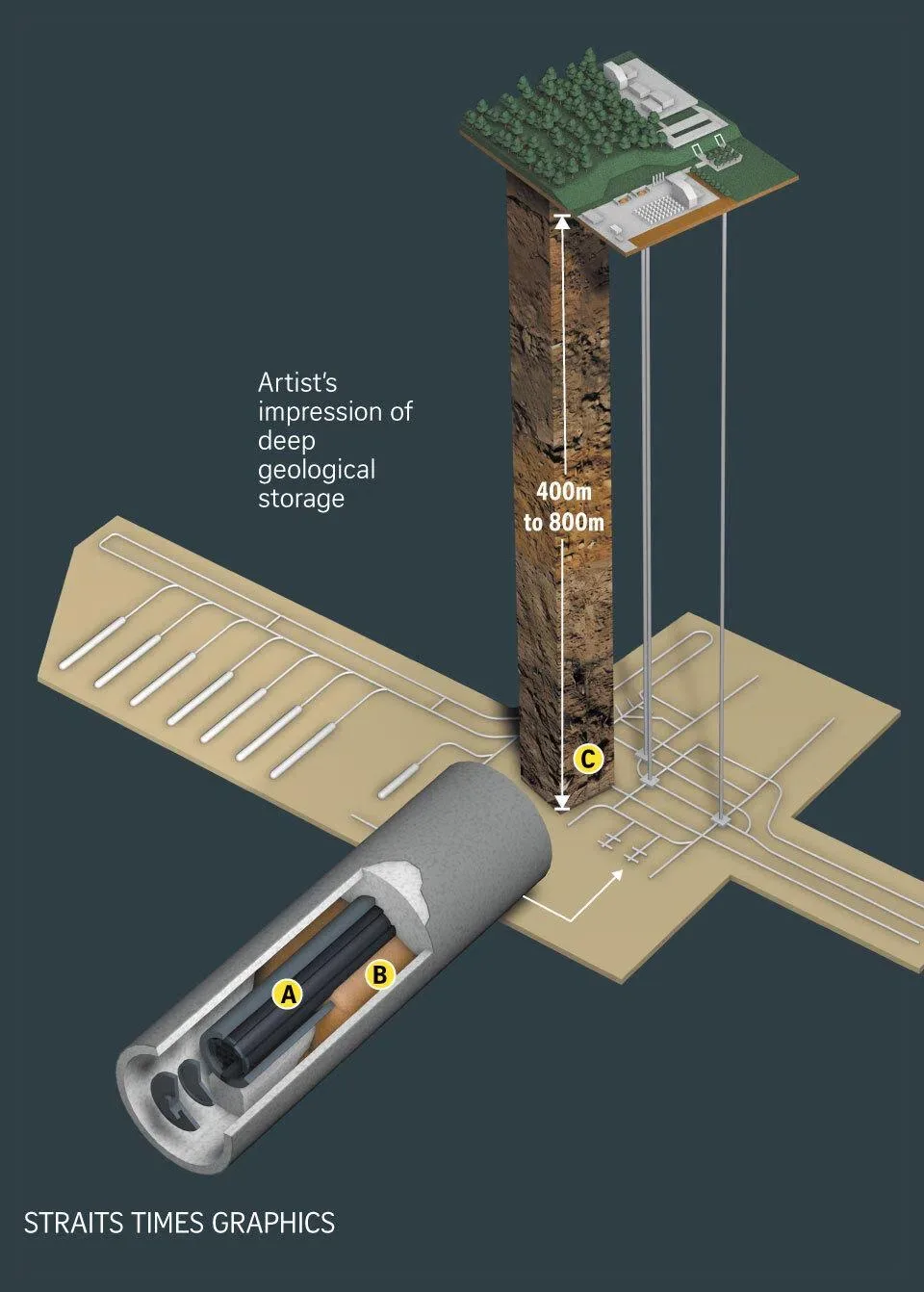
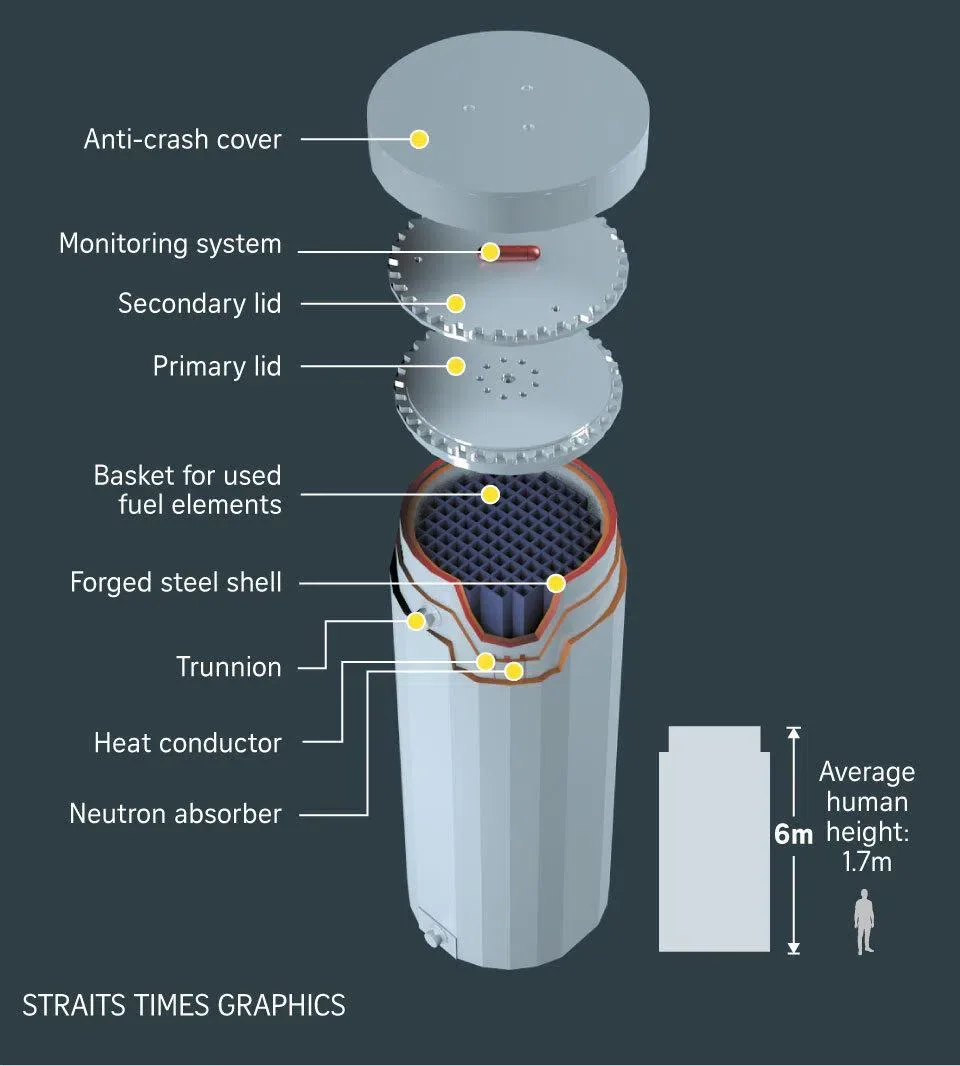
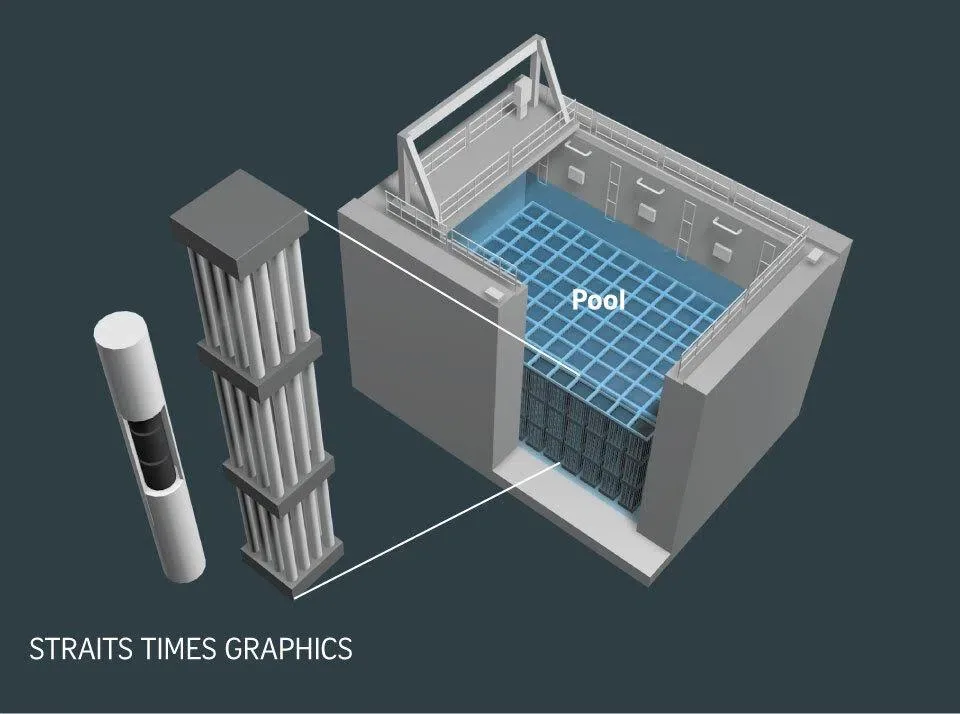
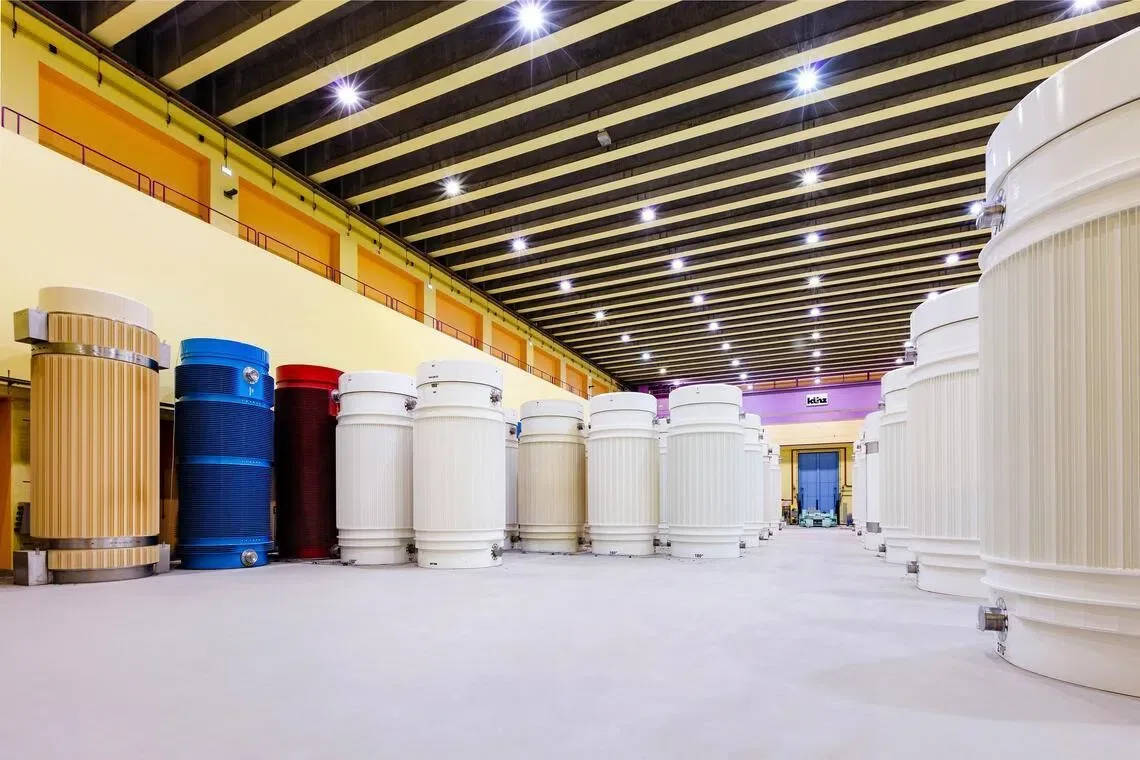
High-level radioactive waste requires careful shielding and secure storage, ideally underground, because of its long-lasting toxicity [1, 2]. Most countries currently store used fuel temporarily in protective casks, either indoors or on land, while permanent disposal sites remain rare and difficult to develop due to strict geological needs and public opposition [1, 2]. For example, Finland is set to become the first country to operate a permanent underground nuclear waste storage facility more than 400 meters deep starting late this year [1, 2].
The amount of nuclear waste created annually is relatively small compared to other waste types. In 2016, each person in France produced about 350 kilograms of household waste but only 2 kilograms of nuclear waste [1, 2]. Various countries manage nuclear waste domestically by deep underground burial, although some, like Turkey, require used fuel to be returned to the country building their nuclear plants, such as Russia [1, 2].
The risks of inadequate nuclear waste handling are illustrated by a 1981 incident in Tsuruga, Japan, where 16 tonnes of radioactive sludge spilled into Wakasa Bay due to technical and human error. More than 50 workers were exposed to radiation, and the event remained unreported for over a month [1, 2].
Singapore's upcoming assessment by the UN will evaluate its capacity to address these technical, environmental, and safety challenges as it considers nuclear energy for its future power needs [1, 2]. Meanwhile, Finland's permanent storage site is expected to begin operations late in 2026, providing a leading example of deep geological disposal [1, 2].