Singapore’s inaugural National Adaptation Plan will take stock of existing climate resilience efforts and identify climate risks across sectors rather than prescribe new solutions, Minister Grace Fu said on May 19 at the Ecosperity event [1, 2, 3, 4]. The plan is expected to be published and submitted to the United Nations in 2027, coinciding with Singapore’s chairmanship of ASEAN that year [1, 2].
The plan translates the UN Global Goal on Adaptation’s 59 indicators on water, food, and public health into a foundational framework that will guide how the government and businesses assess climate risks [3, 4]. Ms. Fu explained, "While not all the indicators are applicable to the Republic, the framework would still serve as a 'useful checklist for businesses that are operating in Singapore,' including those with regional exposure" [3].
The framework is intended to help companies identify vulnerabilities in their operations and supply chains caused by climate impacts. For example, telecommunications firms should consider risks to infrastructure from extreme heat, low rainfall, and dry conditions, while rice importers need to monitor water scarcity in supplier countries [1, 2, 3, 4]. Ms. Fu said, "If you are responsible for critical telecommunications infrastructure, you’d want to have a discussion on what would be the climate risk on the functioning of your equipment under high heat, low rainfall and very dry situations. It helps to inform you how to make your supply a lot more resilient through adaptation measures" [1].
National adaptation plans will be revised regularly to keep pace with emerging climate risks and responses [1, 2]. Climate adaptation is also a major theme for strengthening ASEAN’s resilience during Singapore’s 2027 chairmanship. Regional cooperation on supply chains, agriculture, export policies, and climate data sharing will be crucial, officials said [1, 2].
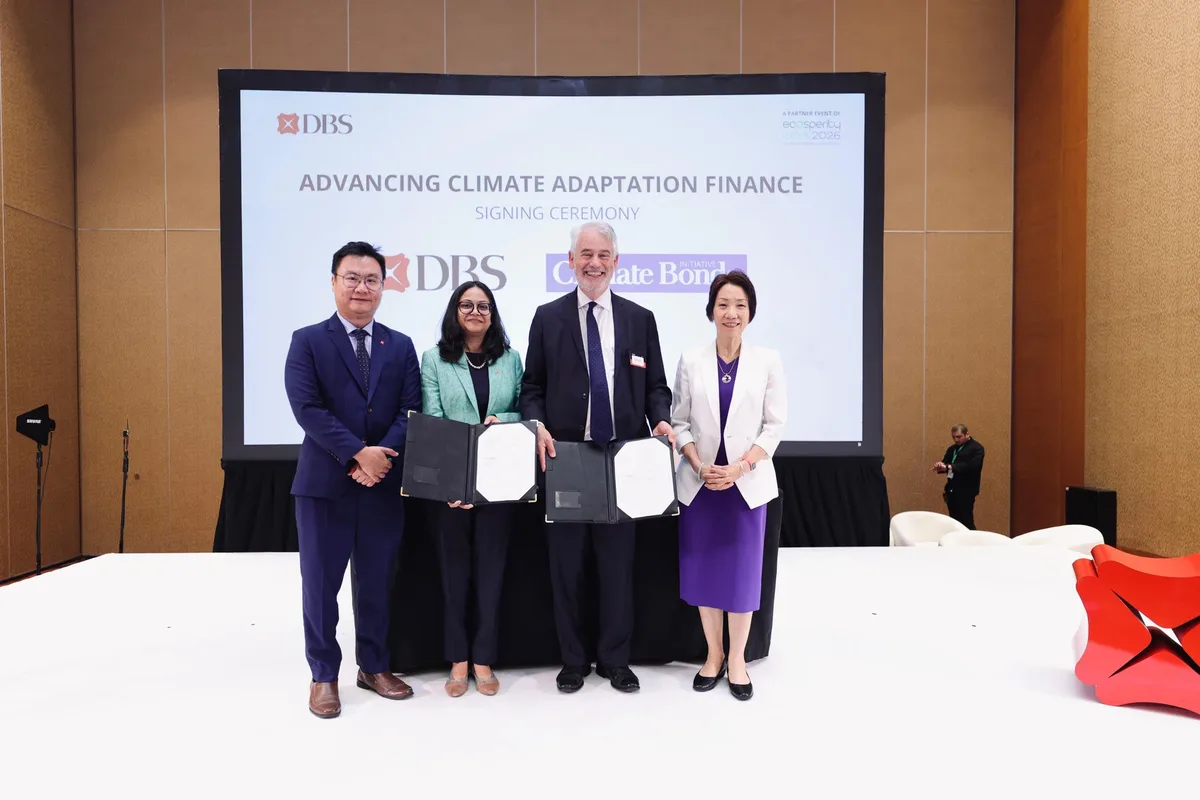
Singapore aims to integrate climate risks into company investment and economic decisions, with potential for risks to be priced into financing [1, 2]. In a related development, DBS and Climate Bonds Initiative signed an agreement to develop a research paper on climate adaptation investment opportunities in Asia-Pacific, focusing on sectors such as energy and real estate [3, 4].
The National Adaptation Plan’s publication and submission to the UN in 2027 will mark a key milestone in Singapore’s efforts to map its climate risks and resilience measures ahead of its ASEAN chairmanship year [1, 2].