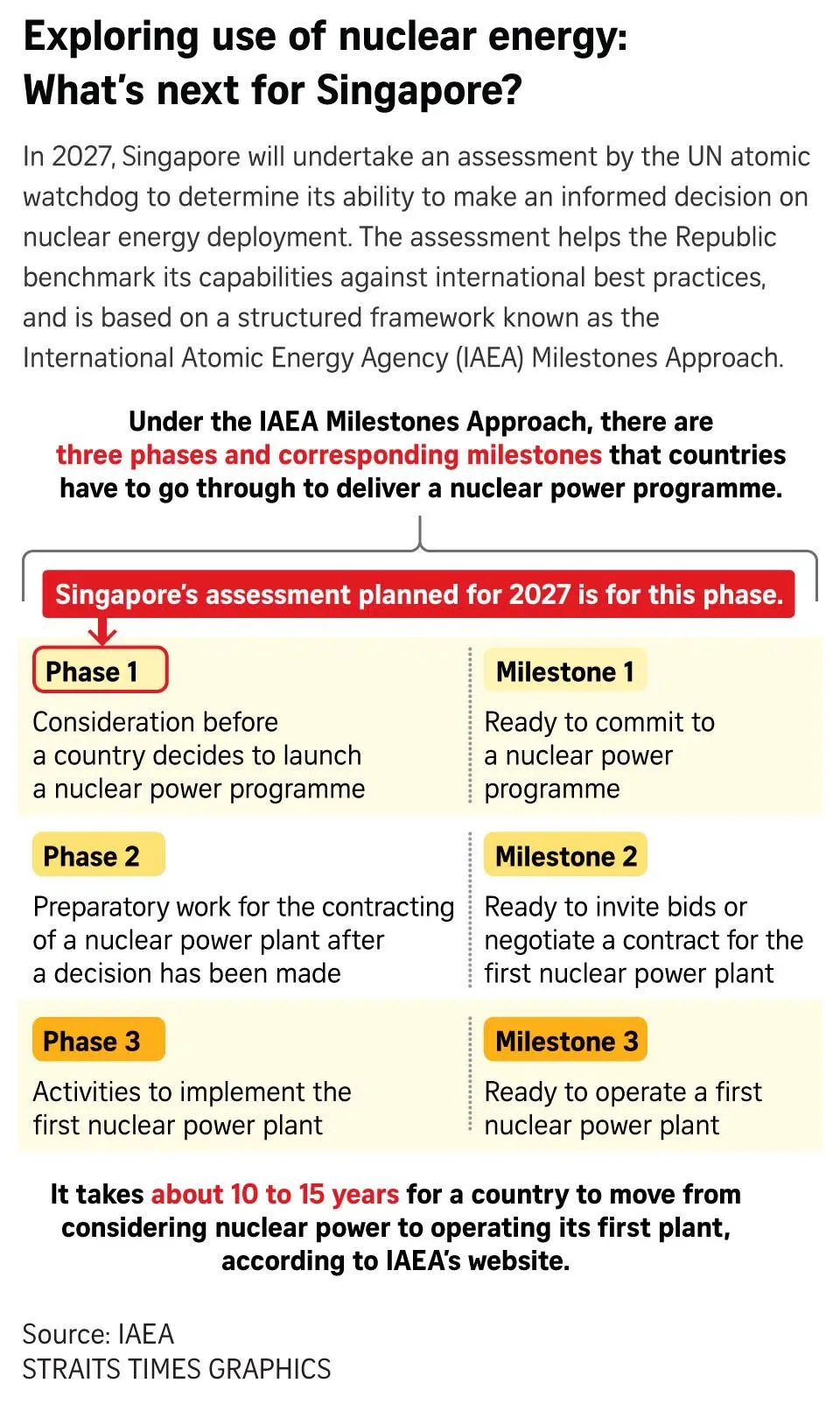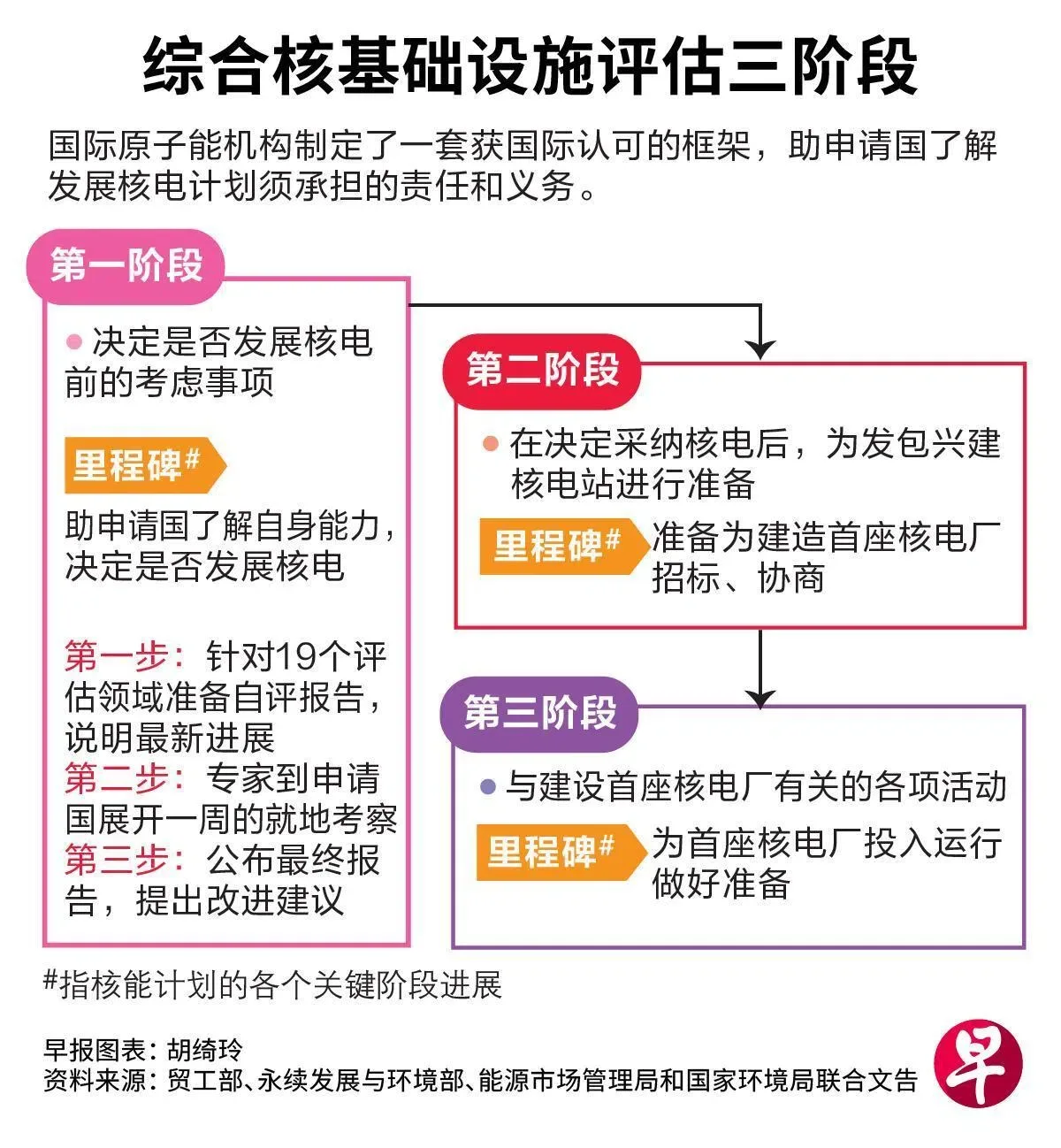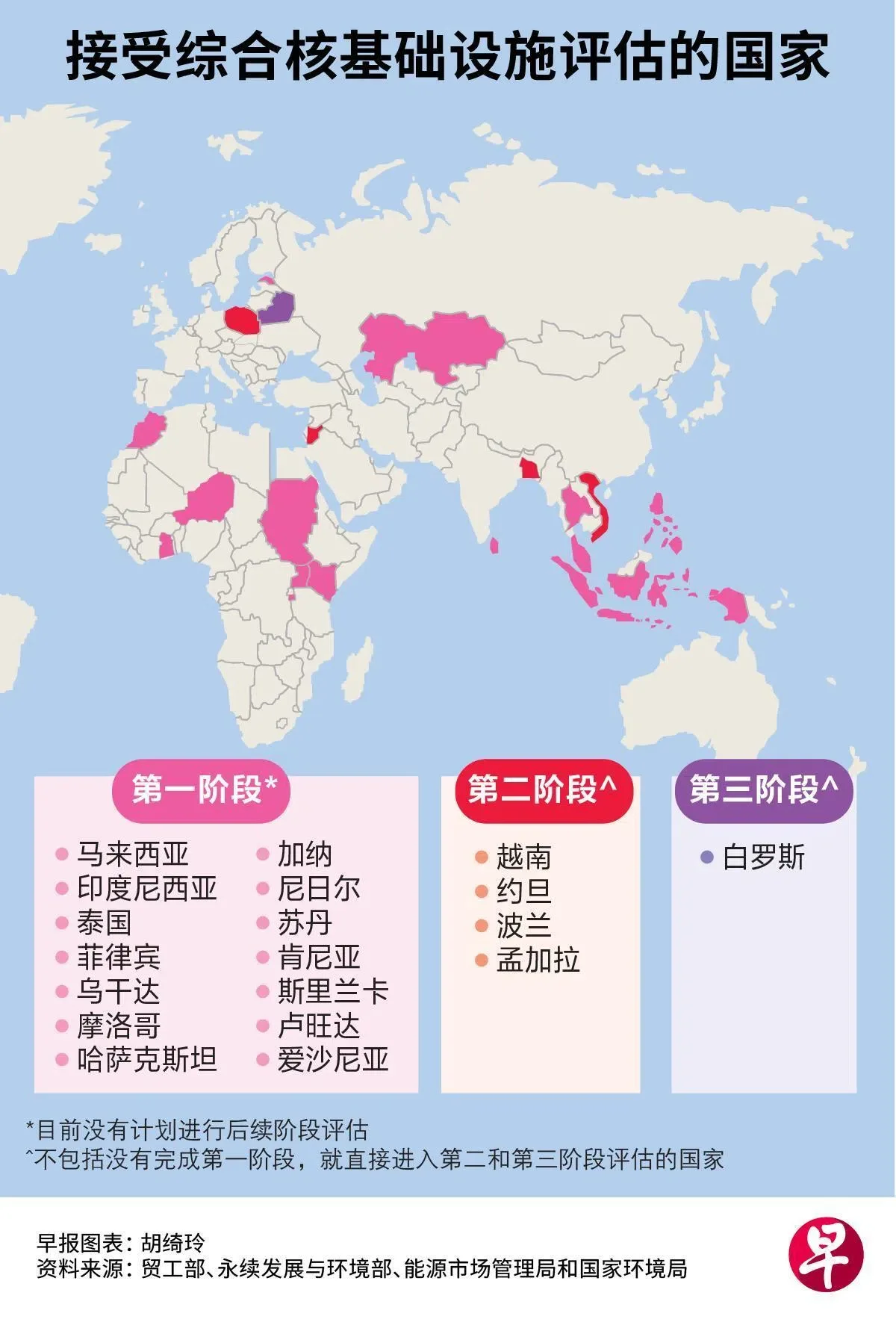
Singapore will undergo the first phase of the International Atomic Energy Agency’s (IAEA) Integrated Nuclear Infrastructure Review (INIR) starting in 2027 to assess its readiness for potential nuclear power deployment [1, 2, 3, 4]. The voluntary and independent INIR Phase 1 will evaluate Singapore’s capabilities in 19 key areas, including nuclear safety, radioactive waste management, emergency planning, regulatory frameworks, and environmental protection [2, 3, 5, 6, 4, 7, 8, 9].
Prime Minister Lawrence Wong emphasized that the assessment does not mean Singapore has decided to build nuclear plants. "This is not a decision to deploy nuclear power in Singapore," he said [2]. He added that safety will remain the overriding priority, noting Singapore's small size and dense population leave "no margin for error" [1]. Wong underlined the need to be confident not only in the technology but also in the supporting ecosystem like regulation and emergency response [1].
Singapore has studied nuclear energy for over a decade, completing a preliminary feasibility study in 2012 that decided against pursuing nuclear plants at the time due to risks [8]. Since then, the city-state has steadily developed its nuclear capabilities, especially in safety, and is exploring nuclear alongside other low-carbon options such as solar and hydrogen [2, 3, 4, 7, 9, 10].
If Singapore chooses to proceed after the Phase 1 assessment, it will move to further INIR phases assessing readiness for plant construction and safe commissioning [2, 3, 5, 6]. Developing a nuclear power program typically takes 10 to 15 years or more from decision to operation, according to experience in other countries [5, 6, 8].
Singapore’s caution reflects the experience of about 19 countries worldwide that have completed the INIR Phase 1, including Southeast Asian neighbors Malaysia, Indonesia, Vietnam, the Philippines, and Thailand [7, 8, 10].
The INIR Phase 1 review beginning in 2027 will help Singapore identify strengths and gaps across its infrastructure and regulatory framework, guiding future capability building and potential decisions on nuclear deployment [1, 2].