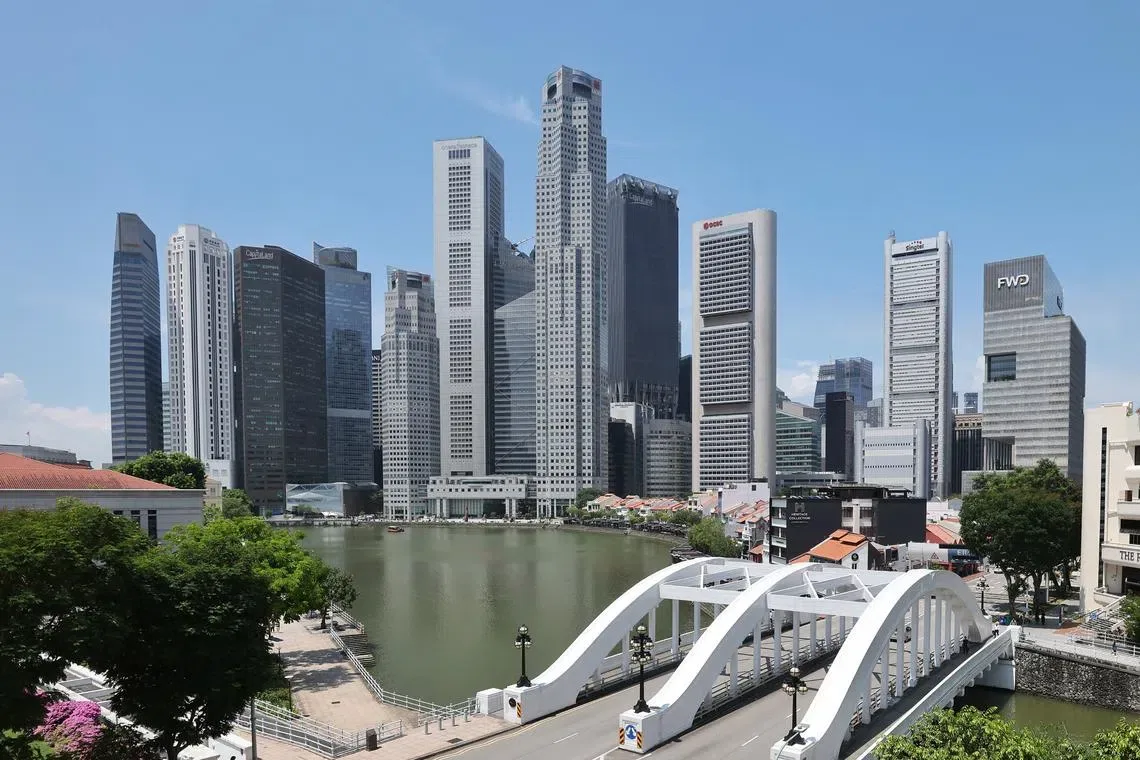
A high-powered panel tasked with reviewing Singapore's economy completed its work and presented the Economic Strategy Review report to the government on May 13, 2026 [1, 2]. The report contains 32 recommendations grouped under eight focus areas aimed at securing the city-state’s economic growth and job creation amid a more fragmented global environment [1, 2].
The review was co-chaired by Acting Minister for Transport and Senior Minister of State for Finance Jeffrey Siow along with nine other newer political leaders, marking a significant role for Singapore's 4th Generation leadership in shaping economic direction [1, 2]. The process involved 45 leaders from the private sector, trade unions, and academia serving on five committees, as well as consultations with 7,700 unionists and workers [1, 2].
Key recommendations include positioning Singapore as a trusted hub for artificial intelligence solutions and expanding trust-based services such as cybersecurity and AI governance. The report also calls for developing Jurong Island as a premier testbed for low-carbon technologies to advance sustainability goals [1, 2].
Siow described the recommendations as the latest set of plans to "build a better ship" to navigate Singapore through an "increasingly turbulent weather" of global economic changes [1]. For decades, Singapore’s prosperity relied on rules-based globalization that attracted investments, fostered entrepreneurship, and created good jobs. However, delivering similar progress will be more challenging amid irrevocable global disruptions [1, 2].
The review carries political significance as it offers a platform for the new 4G leadership to articulate how they will safeguard Singapore’s economic exceptionalism beyond reacting to immediate crises [1, 2]. The existence of a long-term plan reassures businesses and workers that the government is thinking ahead and preparing strategic responses to upcoming challenges [1, 2].
The government will now begin work to implement the 32 recommendations and monitor their progress across the eight focus areas.