South Korea's government launched a new mobile application on June 24, 2026, that allows stalking victims to track suspects wearing court-ordered electronic ankle monitors in real time [1, 2, 3, 4]. The app displays suspects’ movements on a map, triggering alerts if they come within a preset distance of victims and notifying police or probation officers to respond promptly [1, 2, 3, 4].
Electronic monitoring of stalking suspects under court orders began in South Korea in 2024 to supplement emergency alert devices such as smartwatches issued to victims [1, 2, 3]. A revision to the electronic monitoring law passed in December 2025 enabled the real-time tracking feature and included privacy safeguards governing location data sharing [1, 2, 3, 4].
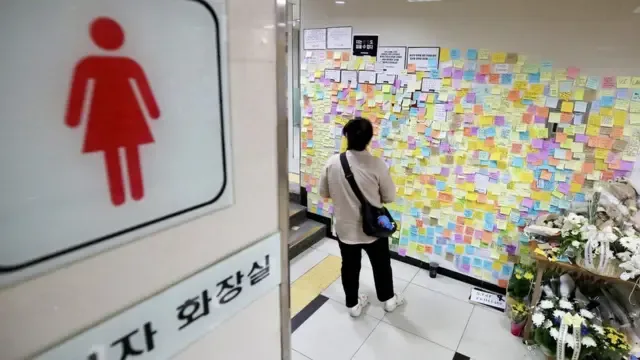
Since the stalking law was criminalized in 2021, with penalties up to three years in prison or fines up to 30 million KRW (about $19,600), reports of stalking have more than doubled in the country [1, 4]. Despite protective devices, 23 stalking victims were killed or targeted by suspects between 2021 and August 2025 [2, 3, 4]. A woman in 2024 was killed by her ex-boyfriend stalker after protective measures failed [1, 4], and a police-issued smartwatch wearer was stabbed to death earlier in 2026 [1, 4].
Victims report repeated violations of restraining orders and insufficient police enforcement. One victim, Minji, said, "I still have to run away again. Lately, I often wonder if it will only end after I die" [1]. Her ex-boyfriend reportedly violated restraining orders about 100 times, yet received a five-year prison term and a 40-hour stalking behavior correction course [1, 4]. Yuri, sister of a murdered stalking victim, said police told her brother, "If you keep contacting her, you may be punished," but she felt the measures were inadequate [4].
Critics argue that stalking reflects deeper problems of violence against women and that technology alone is not a complete solution [1, 4]. Academics have voiced concerns over the psychological impact and human rights aspects of real-time tracking. Professor Han Min-gyeong of Korean National Police University said, "victims may feel extreme fear... so it is necessary to carefully assess whether providing real-time location information of offenders actually helps victims recover and return to normal life" [1]. Dongguk University professor Gwak Dae-kyung warned that requiring electronic ankle monitors based on potential risk raises human rights questions [1].
The Ministry of Justice plans to introduce a system in April 2027 that will allow stalking victims to petition courts directly for restraining orders instead of relying on police [2, 3]. The Ministry hopes this will improve protection amid ongoing challenges in enforcement.