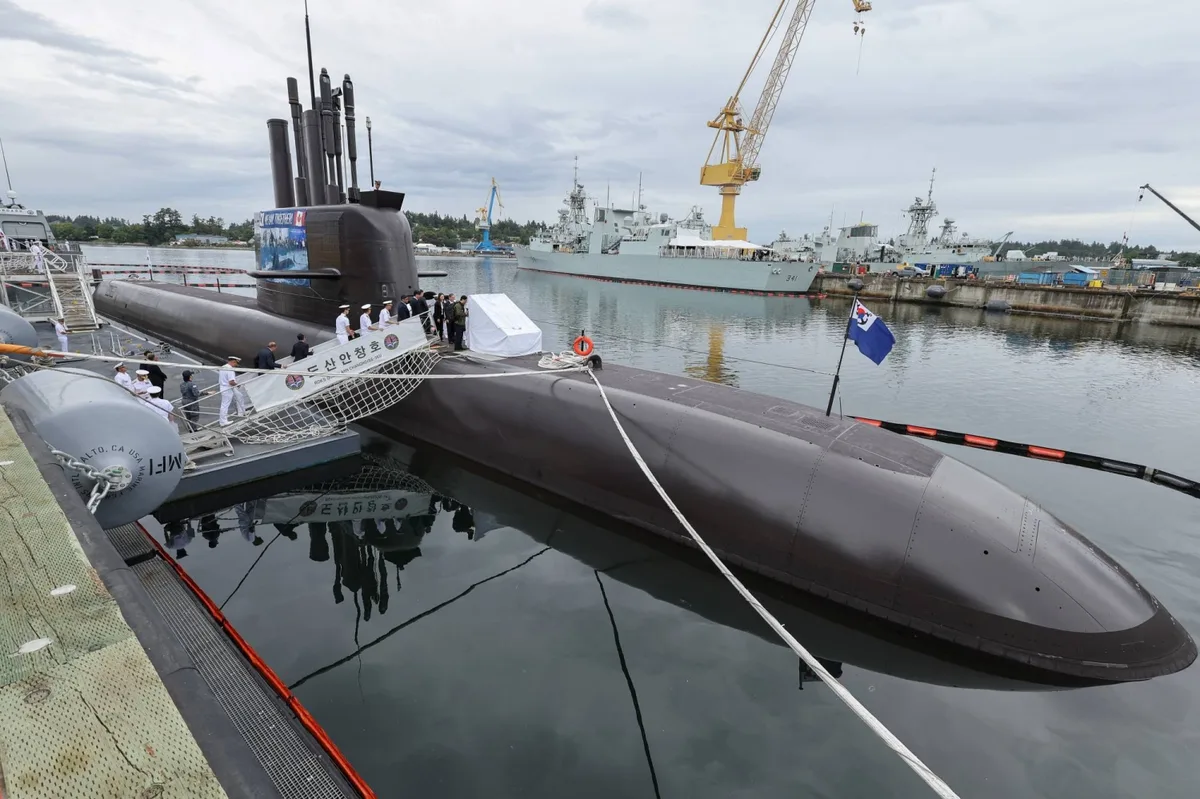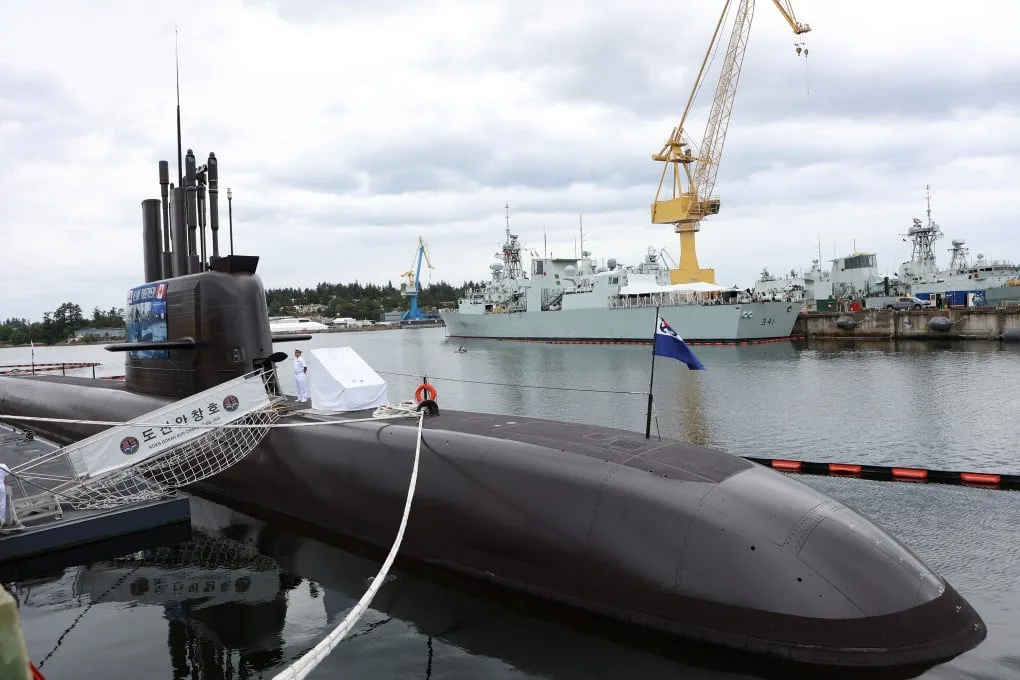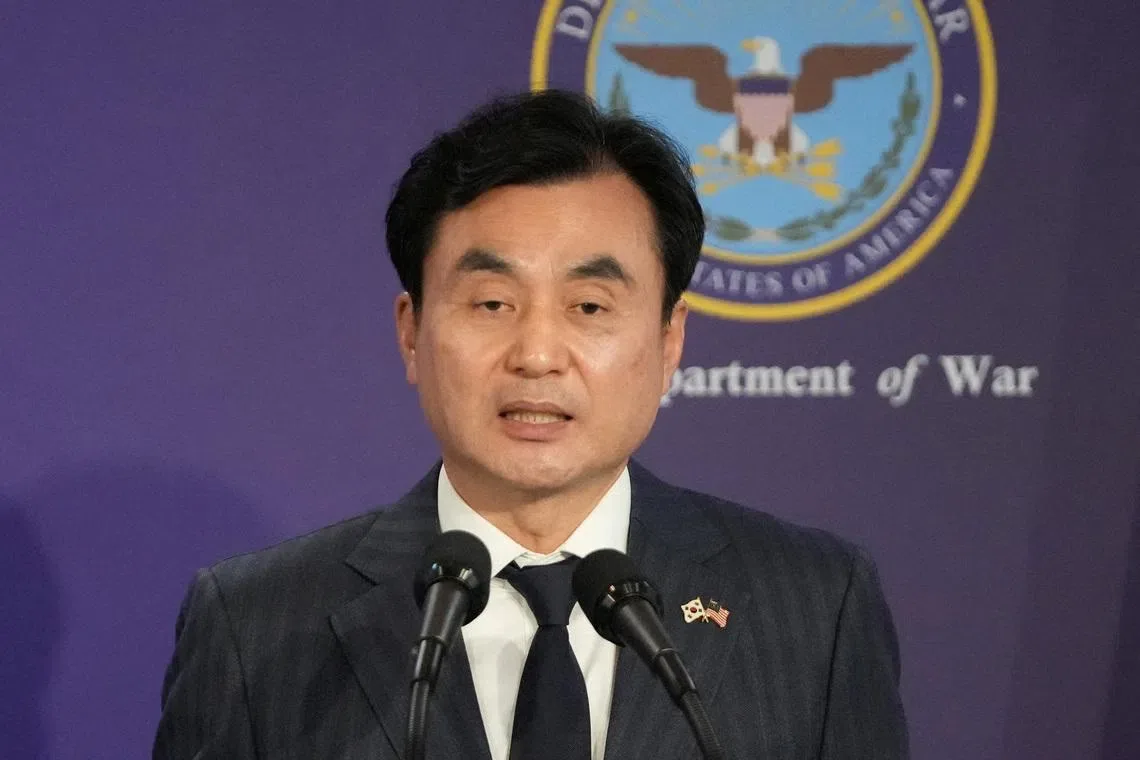
South Korea plans to develop and launch its first nuclear-powered submarine by the mid-2030s, Defense Minister Ahn Gyu-back announced on May 26, 2026 [1, 2]. The submarine will use low-enriched uranium fuel and be built domestically, leveraging South Korea's nuclear, shipbuilding, and defense industries [1, 2].
President Lee Jae Myung called the submarine "a symbol of our will to take responsibility for peace and security on the Korean Peninsula," noting it will be built on the basis of a strong South Korea-U.S. alliance [2]. He also stressed accelerating advanced technologies like artificial intelligence and drones alongside the submarine program as core strategic assets for future defense capabilities [3].
The project aims to counter North Korea's increasing submarine-launched nuclear and missile threats [1, 2]. Nuclear propulsion will allow the submarines to stay submerged much longer and travel farther than current diesel-powered vessels [1, 3, 2].
South Korea will work closely with the United States and the International Atomic Energy Agency to ensure nuclear non-proliferation in the fuel procurement and development processes [1, 3, 2]. Defense Minister Ahn emphasized that South Korea will not acquire or develop nuclear weapons despite the nuclear submarine program [1, 2].
The submarine plan boosted stock prices for South Korean shipbuilders Hanwha Ocean and HD Hyundai Heavy, reflecting market optimism about the program [2]. However, challenges remain, including delayed talks with the U.S., non-proliferation concerns, and budget pressures [3].
U.S. officials, including Undersecretary Allison Hooker, are expected to lead delegations to Seoul in the coming weeks to start bilateral working groups on implementing cooperation agreements related to the submarine program [3].