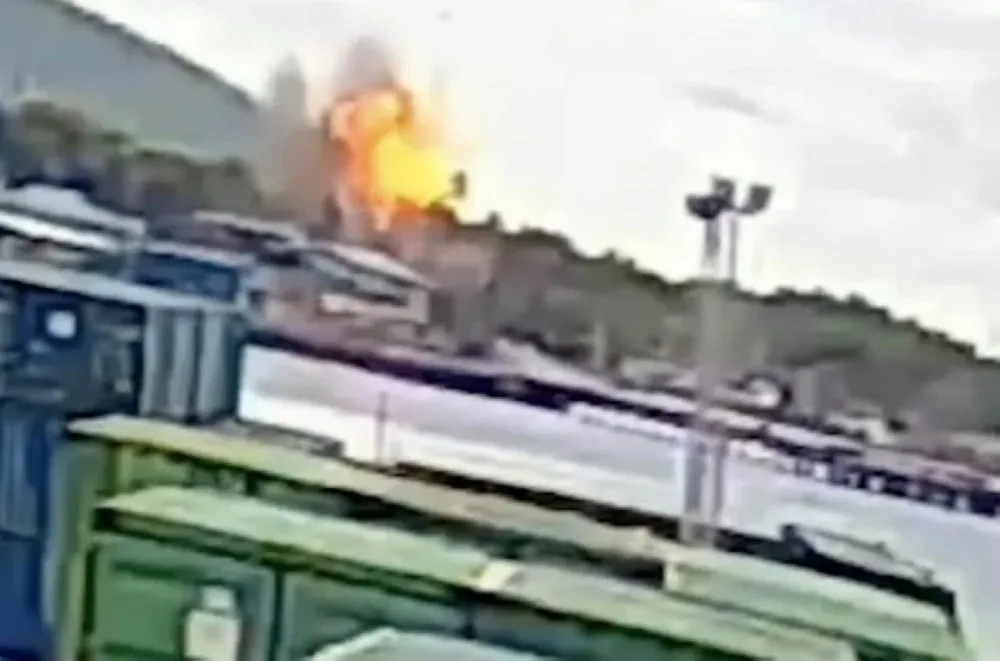
A suspected World War II ordnance exploded beneath a stilt house in a fishing village in Papua, Indonesia, on May 31, killing five people and injuring at least 19 others, police said [1, 2].
The blast occurred in the afternoon and was followed by a thunderous boom, flames, and thick smoke that destroyed nine homes in the village [1, 2]. Three people remain missing, and authorities have yet to identify several recovered body parts [1, 2].
Papua police spokesman Cahyo Sukarnito said, "The source of the explosion is strongly suspected to have been a bomb or mortar left over from World War II" [2]. Indonesia was a major battleground during World War II when Japanese occupation forces clashed with the Allies [1, 2].
At least 19 people were treated for minor injuries after the explosion [1, 2]. The police continue to search for missing victims and investigate the cause. Sukarnito added, "We will provide further updates once the search for victims and the investigation have been completed" [2].
Last year, a similar incident occurred in West Java, where an explosion during troop disposal of rejected munitions killed 13 people [1, 2]. Such incidents underscore ongoing risks posed by leftover wartime explosives in Indonesia.
Rescue and recovery efforts remain underway in the affected village in Papua, with authorities focused on locating missing persons and securing the area from any additional hazardous ordnance [1, 2].