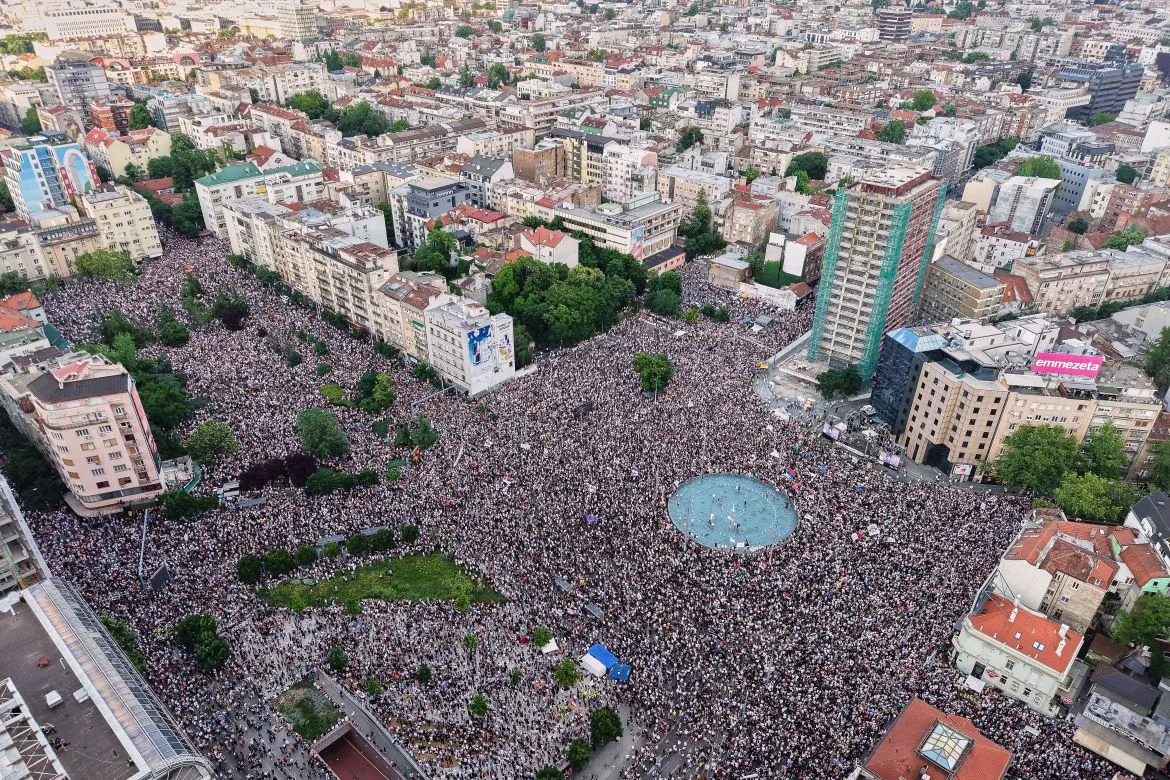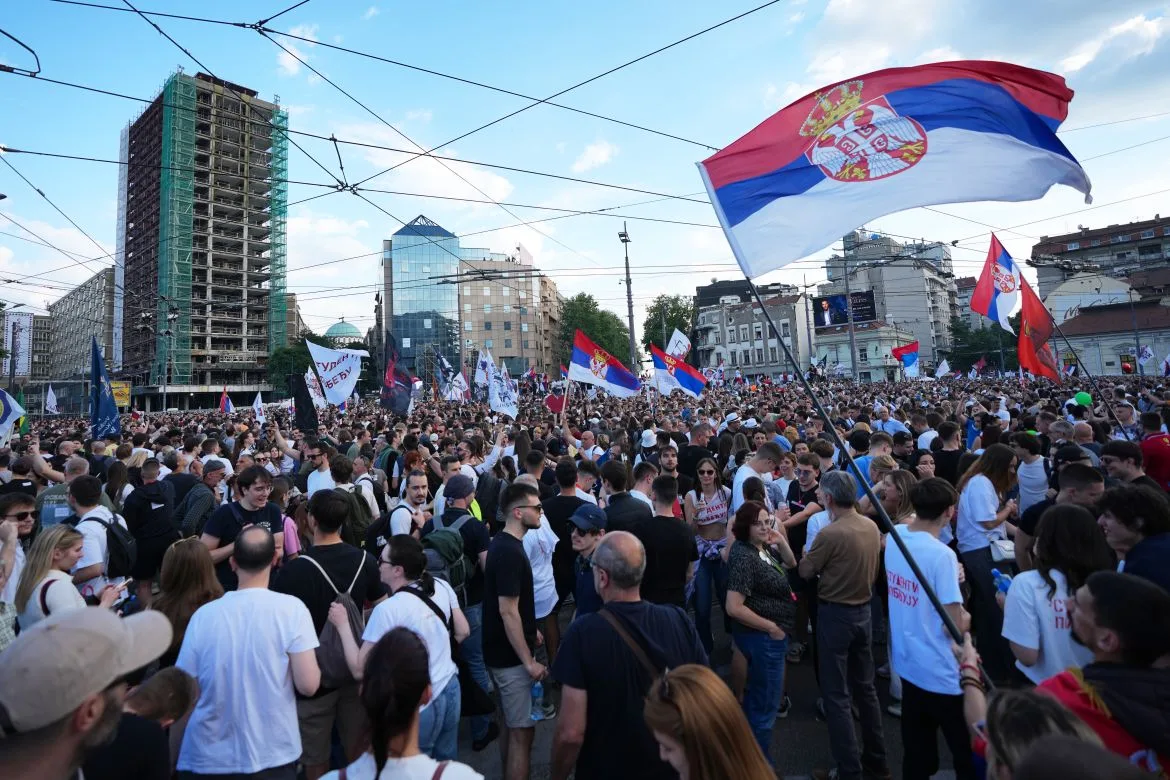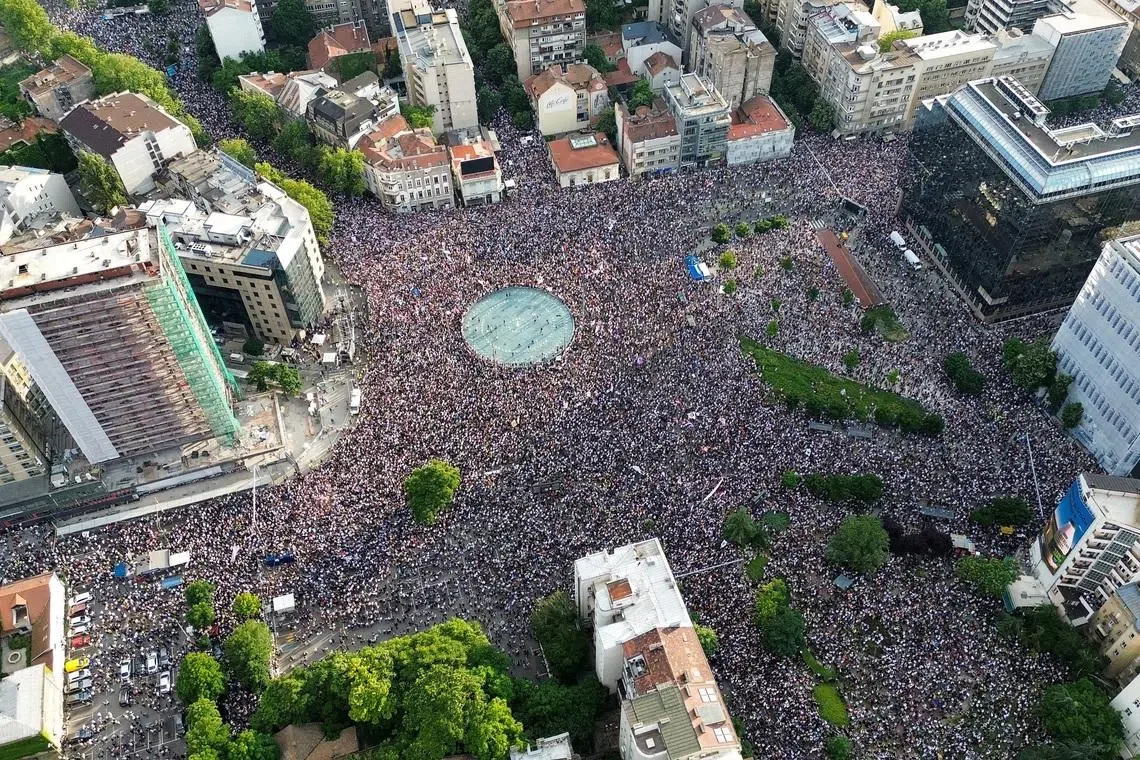
On May 23, 2026, tens of thousands of protesters gathered in Slavija Square in Belgrade to demand early elections and an end to President Aleksandar Vucic’s more than decade-long rule [1, 2, 3]. The demonstrations were one of the largest in Serbia since the 2000 uprising that removed Slobodan Milosevic, with independent monitors estimating attendance between 100,000 and 190,000, while police put the crowd at about 34,300 [1, 4, 5, 6]. Protesters wore badges and shirts with slogans like “Students are winning” and accused the government of corruption and mismanagement [1, 2, 7].
The protest movement traces back to late 2024, after a deadly roof collapse at the Novi Sad railway station that killed 16 people, an incident blamed on corruption and negligence [1, 2, 3, 8]. That tragedy sparked student-led anti-corruption protests that have continued since, leading to political pressure including the resignation of then-Prime Minister Milos Vucevic in January 2025 [2, 3].
The May 23 protest included a broad coalition of students, teachers, civil servants and civic groups calling for anti-corruption reform and rule of law [2, 3, 9]. The Serbian state railway canceled all trains to and from Belgrade that day, reportedly to prevent outsiders from joining [2, 3, 6].
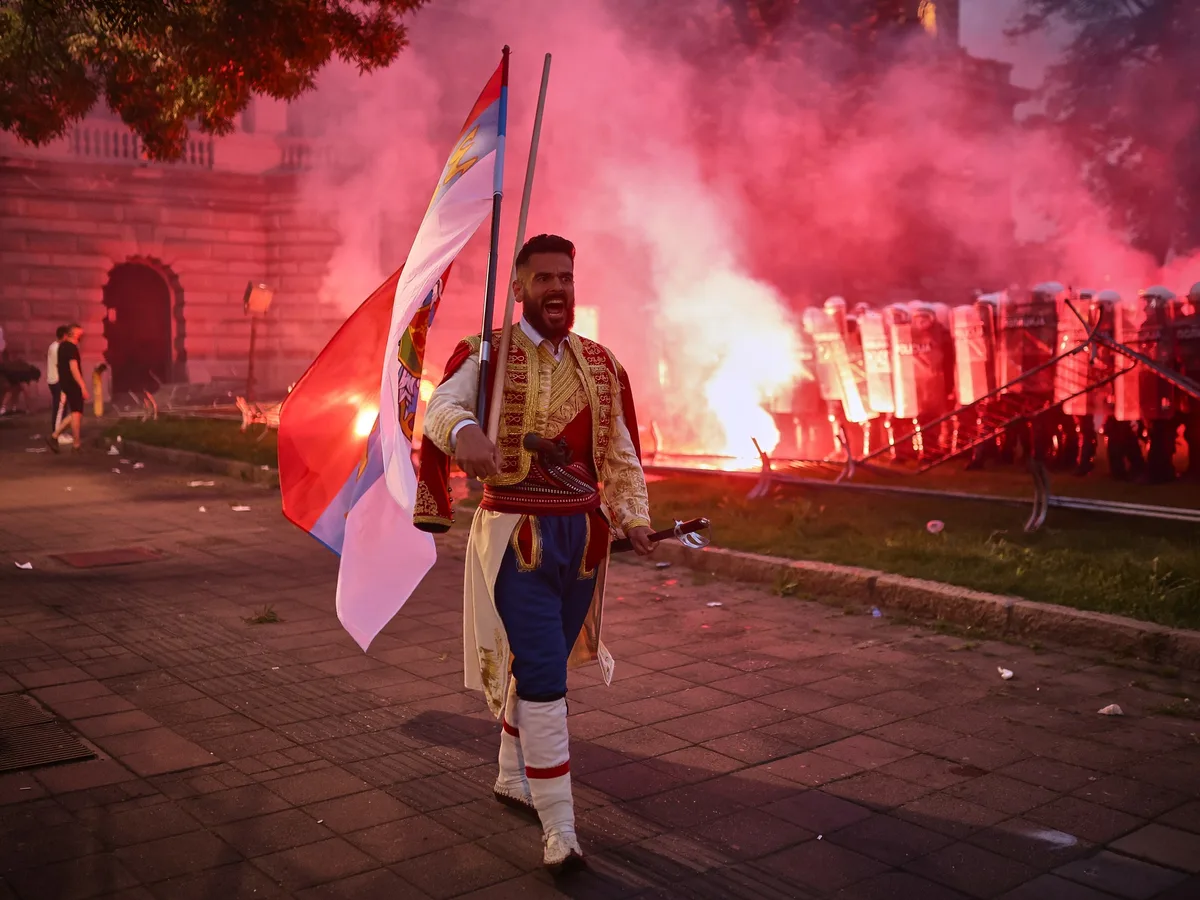
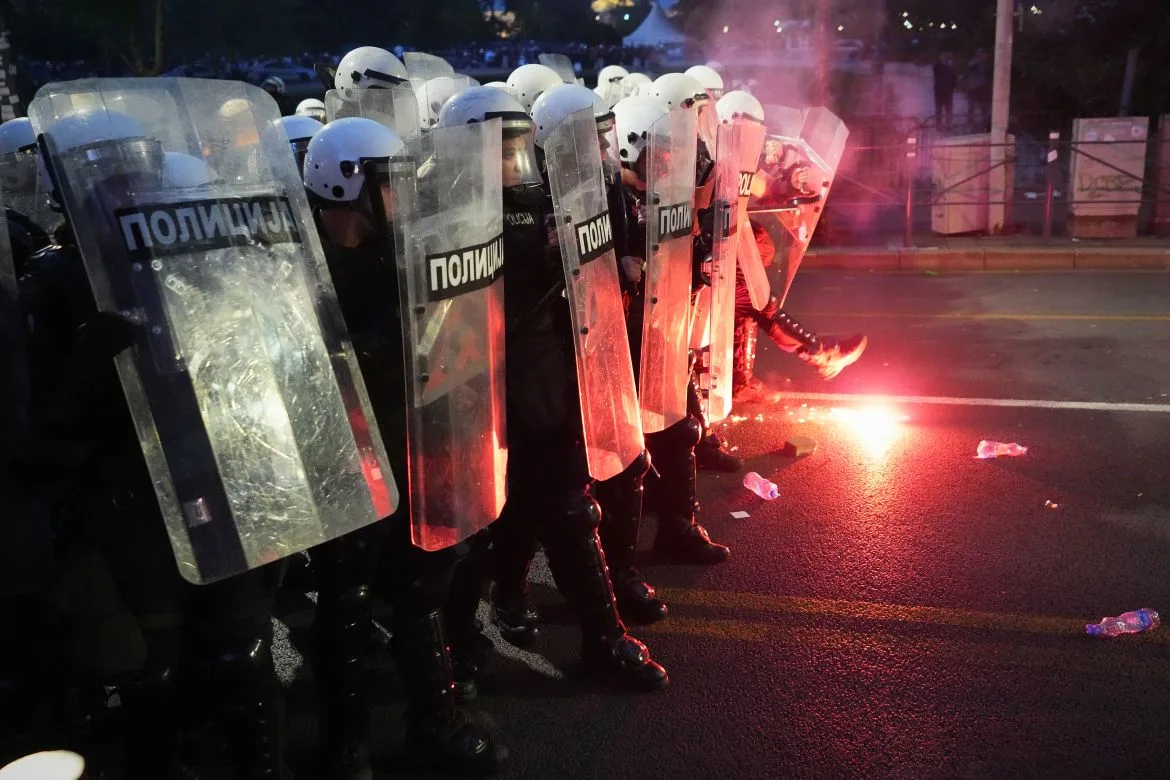
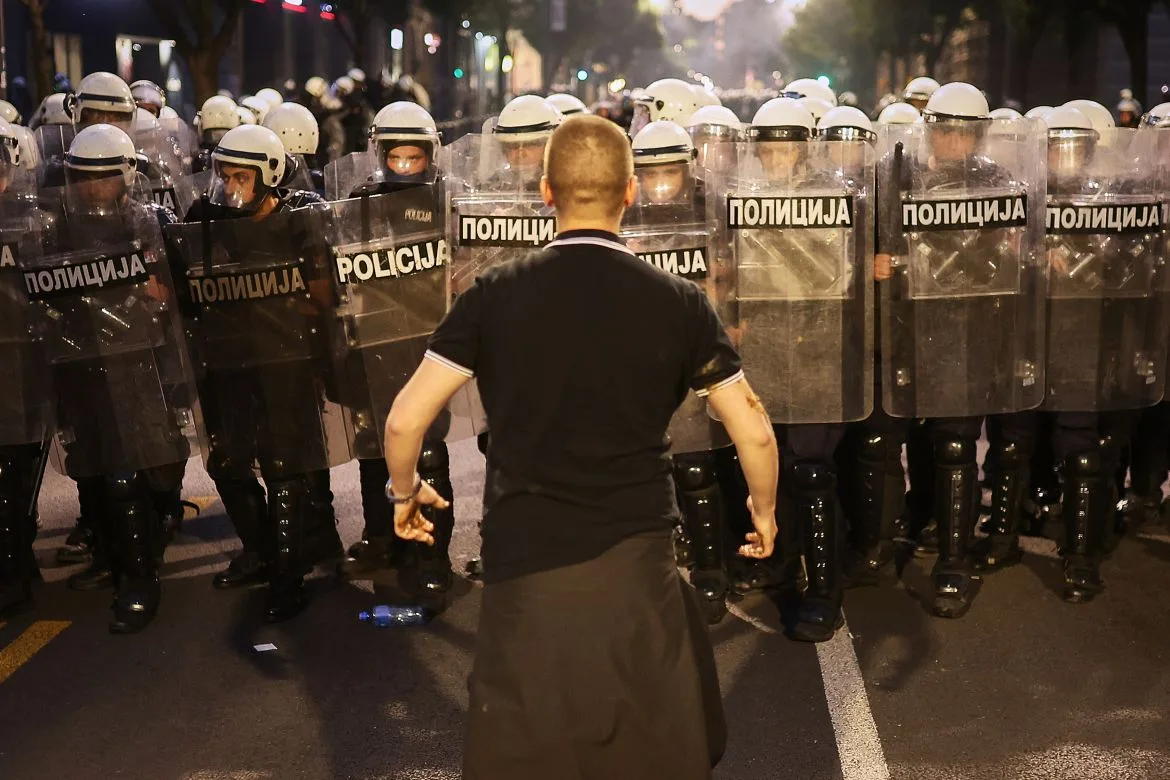
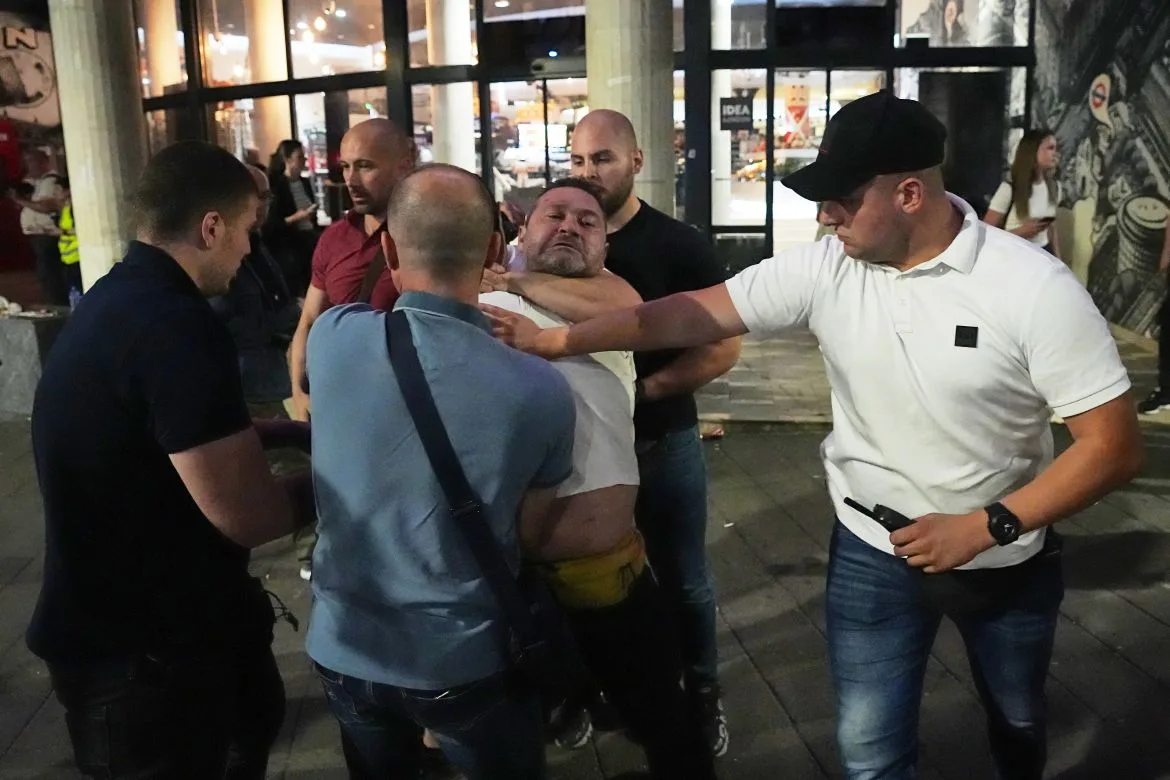
Clashes broke out throughout central Belgrade. Police used tear gas and stun grenades to disperse violent groups near the presidency and city hall [1, 8, 7, 10, 9]. Masked demonstrators threw stones and bottles at police, leading to more than 20 arrests including several dozen protesters [8, 7, 10, 5, 6].
President Vucic denied corruption allegations and said those responsible for the station collapse were punished. He said his term runs until 2027 and he has no current plans to resign [1, 3, 9]. “The state is functioning and will continue to work in line with the law,” Vucic said [3]. He added, “I may very soon submit my resignation, but I have no intention of leaving office in a meaningless fashion” [9].
Protester Dragan Djuric said, "I came here to show how many of us there are, how many unhappy citizens are and that it is a high time to organise election to make things better" [1]. University of Arts rector Mirjana Nikolic said, “This government is ... afraid of those who are defending their dignity and their rights” [1].
The violent clashes escalated late into the night with dozens arrested. Authorities will likely continue to monitor the situation closely as the protests pressure the government to consider early elections or reforms [8, 7, 10, 5, 6].