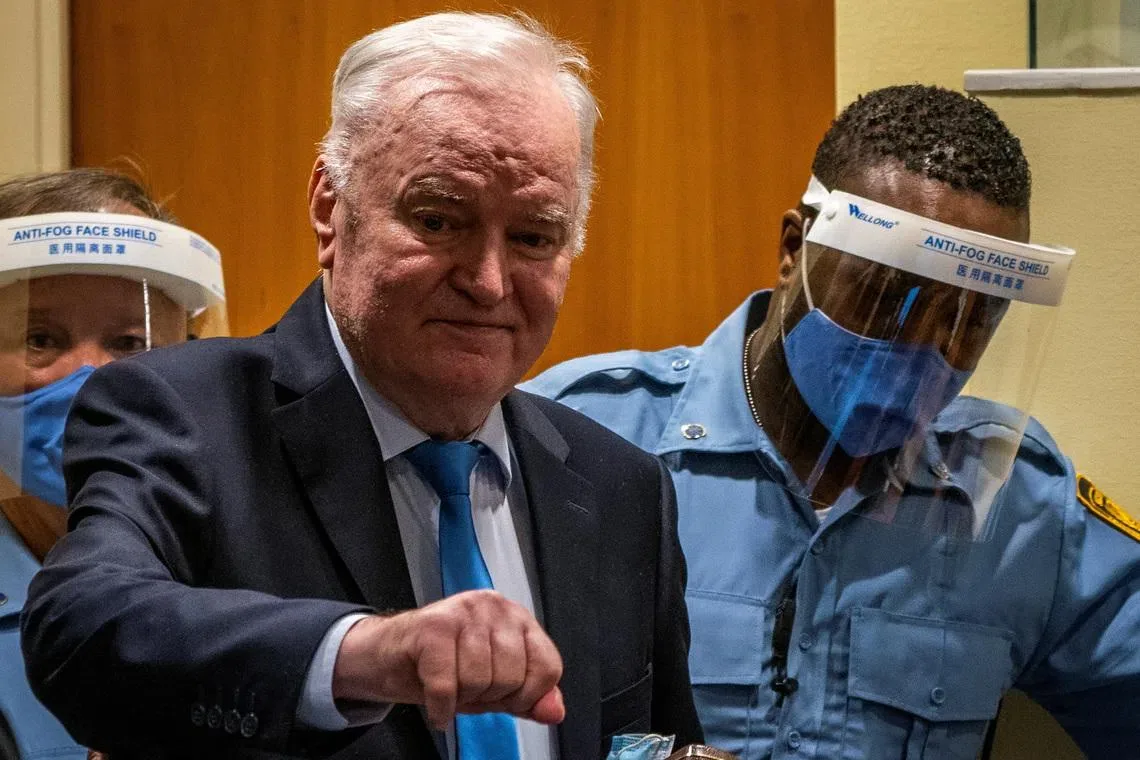
Ratko Mladić, the 84-year-old Bosnian Serb general convicted of genocide, war crimes, and crimes against humanity, was denied early release by a UN war crimes court on May 14, 2026, despite his terminal health condition and suspected stroke [1, 2].
Mladić has served a life sentence since 2017 for his role in the 1992-95 Bosnian war, during which he led Bosnian Serb forces responsible for atrocities including the Srebrenica massacre, where approximately 8,000 Bosniak men and boys were killed. The war resulted in roughly 100,000 deaths and displaced 2 million people [1, 2].
Following his arrest in Serbia in 2011 and a trial in The Hague starting in 2012, Mladić was convicted for genocide, war crimes, and crimes against humanity, and sentenced to life imprisonment [1, 2].
The court acknowledged Mladić's dire health and advancing age but ruled that conditions at the UN detention center in The Hague provide maximal comfort. Judge Graciela Gatti Santana stated, "There is no additional treatment available elsewhere that is unavailable in the Netherlands," underscoring the court's position that his medical care is comprehensive [1].
The ruling also emphasized that "Mladić continues to receive comprehensive and compassionate treatment from qualified doctors, nursing staff, and prison staff," affirming the adequacy of his current care [2].
Mladić's defense and supporters had cited his serious health decline and need for care in a hospital or hospice setting offering Serbian language support as justification for release. The Serbian government expressed willingness to provide guarantees should he be freed [1].
Despite these appeals, the court maintained its denial, upholding the life sentence and incarceration conditions. Mladić remains imprisoned in The Hague, where he continues to receive medical attention in line with the court's ruling [1, 2].