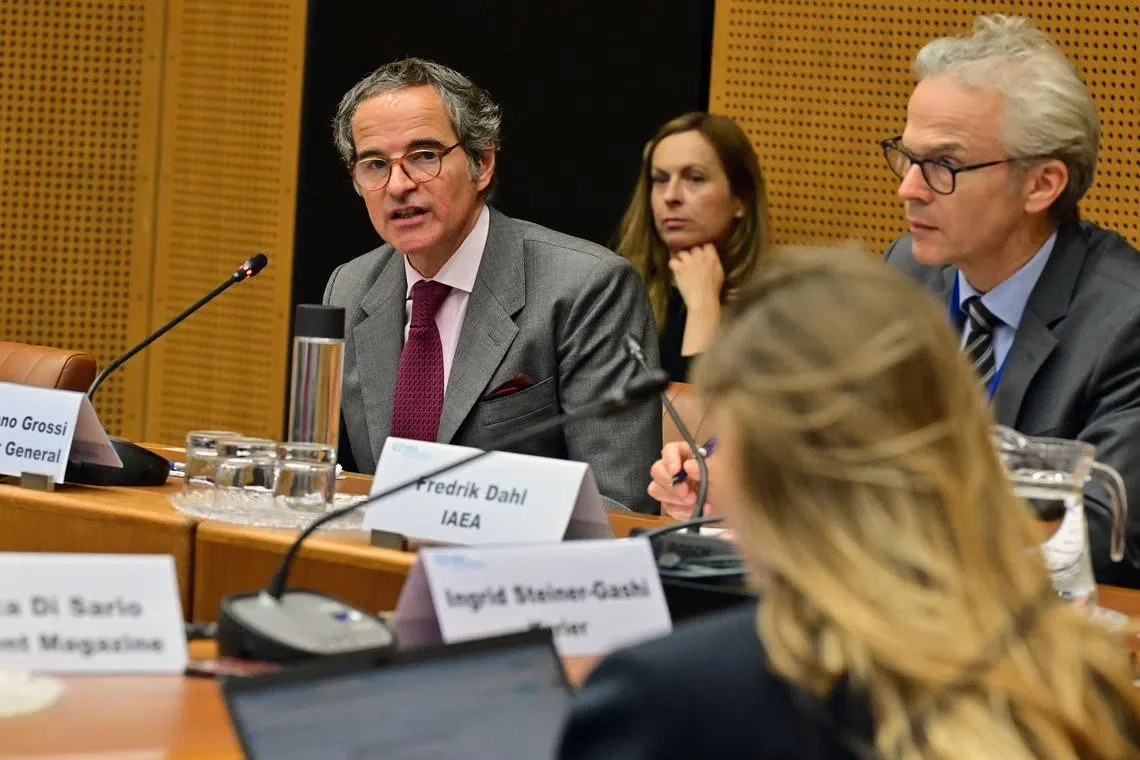
The International Atomic Energy Agency (IAEA) reported today a significant lack of public understanding about nuclear energy in Southeast Asia, which hampers wider acceptance of its use in the region [1, 2]. Rafael Grossi, IAEA Director General, noted, "There is still an important lack of information... and there is an amalgamation of nuclear weapons with nuclear energy" in the ASEAN area [1]. This confusion presents a barrier to informed dialogue as Southeast Asian countries renew interest in nuclear power driven by energy security concerns and the push for cleaner power sources [1, 2].
Vietnam took a major step toward nuclear energy development in March 2026 by signing an agreement with Russia to construct the Ninh Thuan 1 nuclear power plant, which is expected to begin operation in the early 2030s [1, 2]. Meanwhile, Singapore has not yet decided on adopting nuclear power but will undergo an IAEA assessment in 2027 to evaluate its capacity to make an informed decision about deploying nuclear energy [1, 2]. The IAEA is supporting newcomer countries with public opinion surveys and training for nuclear energy spokespersons to improve communication and public outreach [1, 2].
The region’s vulnerability to natural disasters complicates nuclear power plans. Parts of Southeast Asia commonly experience earthquakes, volcanic eruptions, typhoons, and floods [1, 2]. On June 8, 2026, a 7.8 magnitude earthquake struck southern Mindanao in the Philippines, killing more than 45 people and damaging around 54,000 houses [1, 2]. Grossi emphasized that nuclear power plants are "extremely resilient" to such natural phenomena and that many reactors worldwide are built in seismically active areas [1]. He cited the 2011 Fukushima disaster, where a 15-meter tsunami disabled the power supply and cooling systems of reactors, as an example of the extreme conditions nuclear plants must be designed to withstand [1, 2].
The IAEA’s efforts to boost public knowledge and prepare countries in Southeast Asia come amid regional energy challenges and climate change goals. Singapore’s upcoming 2027 assessment will be a critical step in determining its nuclear energy prospects [1, 2].