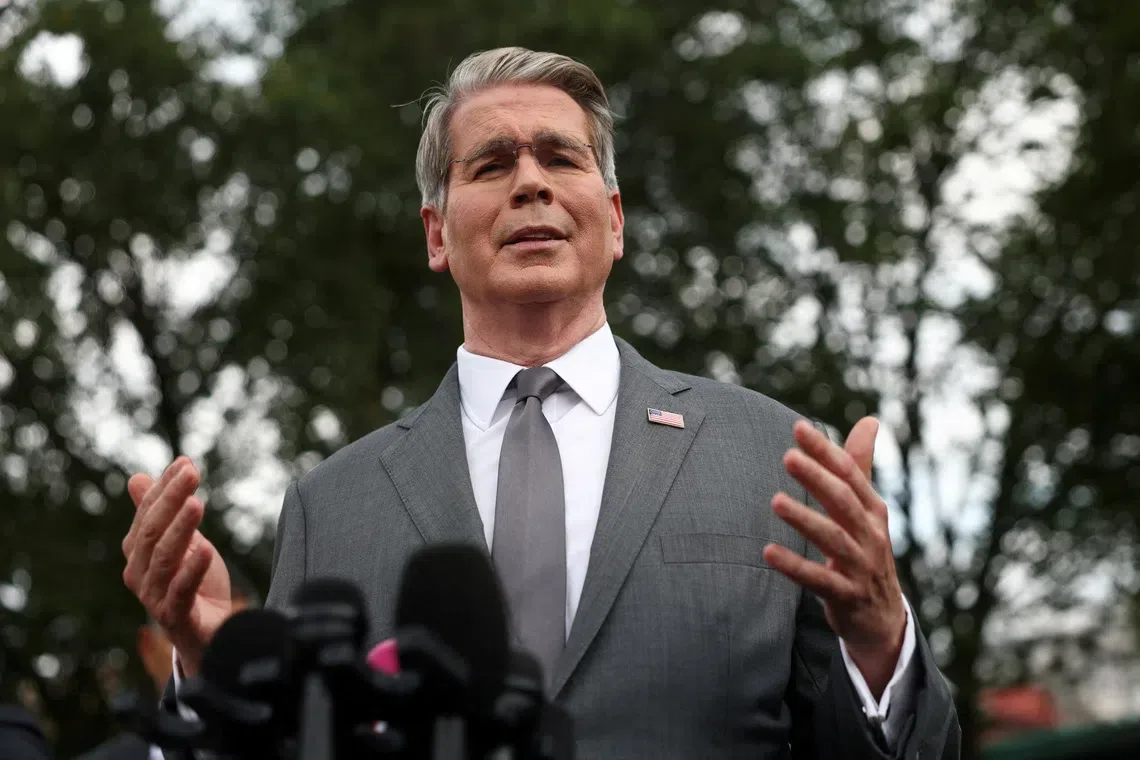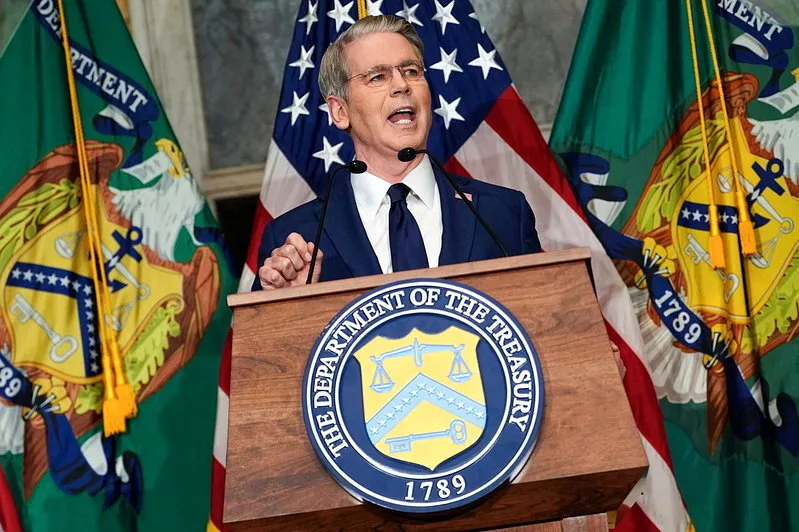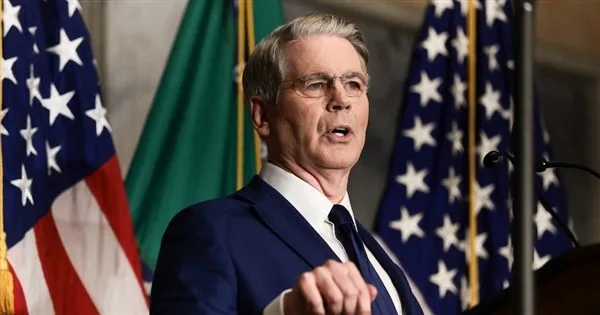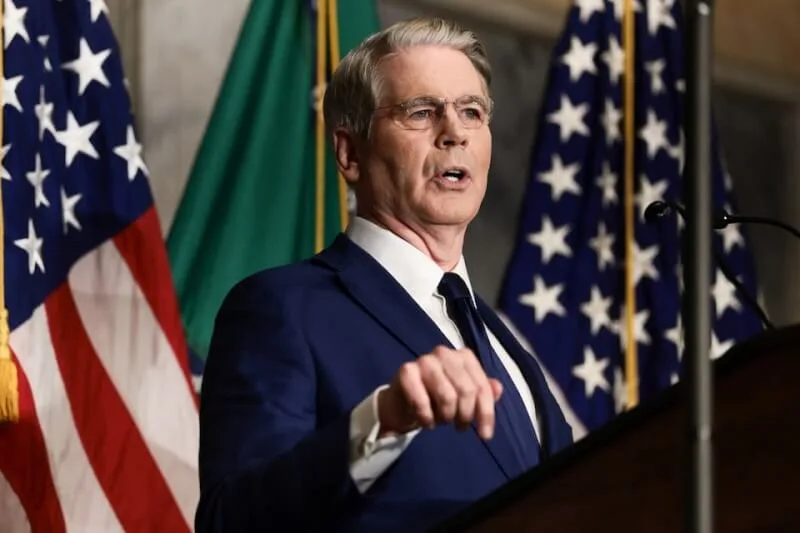
U.S. Treasury Secretary Scott Bessent announced an expansion of secondary sanctions on Iran in a press conference on August 24, 2026, launching "Operation Economic Outcast" to sever the regime’s funding sources and limit its economic reach abroad [1, 2, 3]. Bessent said no entity involved in money laundering for Iran would escape sanctions. "任何代表伊朗協助洗錢活動的實體,都將被踢出美元體系。倒數計時已經開始," he stated, emphasizing the start of a countdown for violators [4].
The broadened sanctions target countries and companies that maintain business links with Iran, including those facilitating evasion tactics such as front companies, third-country operations, and vessel registrations [1]. They specifically focus on five Iranian economic sectors abroad: digital assets, technology, gold, aviation, and shipping [4, 5, 6]. Bessent warned, "沒有人能逃過美國制裁的範圍,若有人協助交易,且成為將伊朗石油轉化為資金、轉化為鎮壓的生態系統一環,他們就會成為被針對的目標," underscoring the goal to dismantle the ecosystem funding repression [5].
President Donald Trump joined Bessent in describing the campaign as an "economic D-Day," aiming to pressure Iran while minimizing military conflict [1, 2, 3]. Trump has been reaching out to global leaders, urging them to halt dealings with Iran's regime [4, 5, 6].
The new sanctions come after the United Arab Emirates suspended trade and financial relations with Iran last week following missile attacks on UAE ships [4, 5, 6]. The announcement triggered a drop in international oil prices on August 24, with western benchmarks falling to $85.01 per barrel for WTI and $92.17 per barrel for Brent crude [7].
Bessent summarized the effort, saying, "美國正式啟動「經濟放逐行動」(Operation Economic Outcast),以切斷伊朗政權的所有其他選擇," highlighting the goal to cut off all alternatives for Iran's funding [6]. The expanded sanctions take immediate effect, signaling heightened U.S. resolve to isolate Iran economically [1, 2, 3].