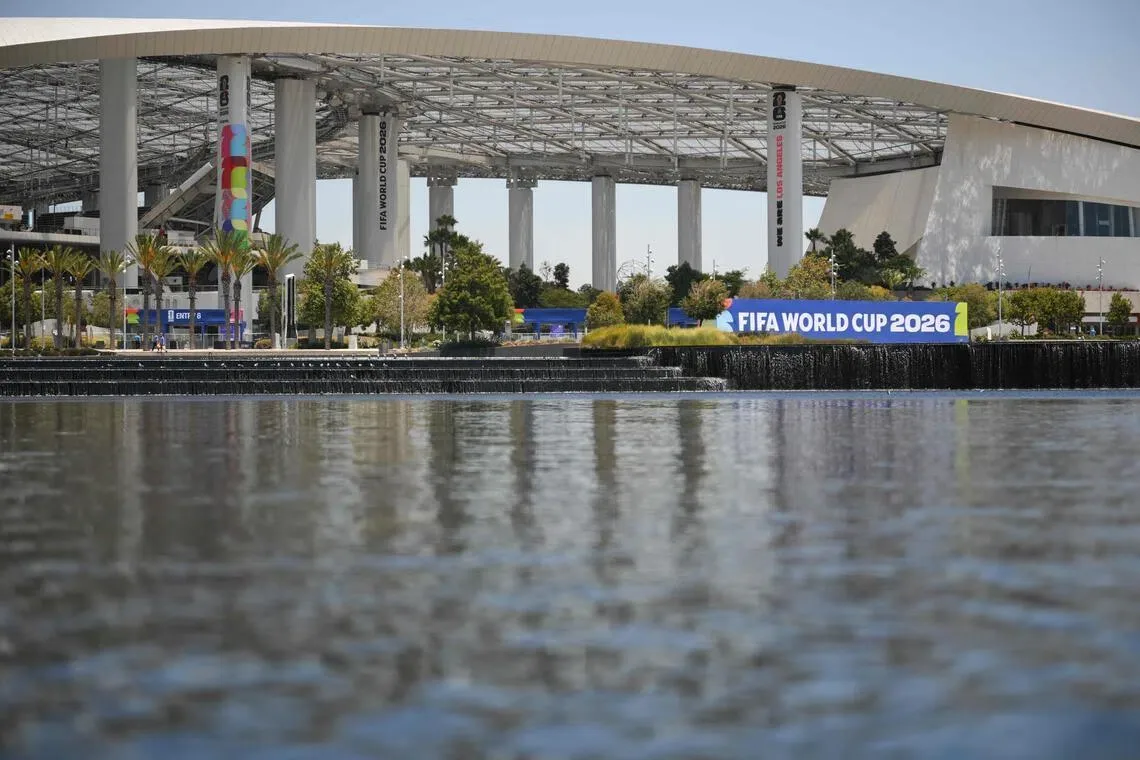
FIFA has enforced a "clean stadium" policy during the 2026 World Cup that bans visible branding of companies not officially sponsoring the tournament at venue sites [1, 2]. As a result, stadiums sponsored by companies such as SoFi, MetLife, and NRG were temporarily renamed with generic titles like Los Angeles Stadium, New York New Jersey Stadium, and Houston Stadium [1, 2].
Unlike previous World Cups, the 2026 venues in the United States, Canada, and Mexico are existing stadiums rather than newly built arenas, making these temporary renamings more prominent than in tournaments like those held in Qatar [1, 2]. Vancouver's BC Place is the sole 2026 venue untouched by this policy, as it does not carry conflicting corporate branding [1, 2].
Atlanta's Mercedes-Benz Stadium was allowed an exception to retain its large rooftop luxury carmaker logo because covering it would have damaged the structure’s infrastructure [1, 2]. FIFA said it is working closely with stadium authorities and host cities to manage brand protection rules while accommodating each venue’s unique operational challenges [1].
Marketing executives expressed frustration with the clean stadium rules. Rick Burton, emeritus professor at Syracuse University’s Falk College of Sport, said, "They're not happy, they paid a lot of money to have visibility in those stadiums but it’s one of these things that they probably could not prevent in this situation" [1]. FIFA explained on its tournament website that stadium official names "have been matched with Host City names and may differ from the common designation used locally" [2].
Some sponsors embraced the policy’s spirit. Ryan Asdourian, Chief Strategy and Marketing Officer at telecommunications sponsor Lumen, joked about their absence from the Seattle stadium by saying, "As international fans fly in from across the world to our city, our stadium, my job is to ensure our brand is nowhere" [1].
The first World Cup game on US soil under these renamed venues was held June 12, 2026, marking the official debut of the clean stadium branding policy in action [1, 2]. Sponsorship deals linked to these venues involved nine-figure sums, underscoring the money at stake for corporate partners [1, 2].