Audi wants turbochargers to remain part of Formula 1’s new engine regulations expected in 2030 or 2031. The manufacturer argues turbocharging improves efficiency and sustainability, regardless of cylinder count [1, 2, 3]. Audi CEO Gernot Dollner said, "That's definitely more important than talking about the number of cylinders. We prefer turbo due to the efficiency aspect." [1]
In contrast, FIA president Mohammed Ben Sulayem supports a return to naturally aspirated V8 engines with minimal hybrid elements and sustainable fuels. Ben Sulayem said V8s are "lighter, simpler and more cost-effective," adding they deliver the "unique, visceral sound that fans around the world associate with Formula 1" while aligning with environmental goals [1]. He aims for rules recalling the pre-turbo-hybrid 2013 era, with engines physically lighter, cheaper, safer, and louder [1].
Audi has no issue with V8 engines, demonstrated by its new Nuvolari supercar launched near Monaco on June 4. It features a four-litre V8 twin-turbo engine with 30% hybrid capacity [1, 2, 3]. This shows Audi’s comfort with V8 architecture while emphasizing turbocharging’s benefits for efficiency and sustainability [1, 2].
Mercedes shares Audi's preference for turbocharged engines but has been less vocal about it [1].
Audi CEO Dollner also stated the company is happy with the current drivetrain concept and favors regulatory stability over rapid changes. "We just entered, we invested in a drivetrain concept, and so we are not keen on changing soon. We are happy with stability," he said [2, 3]. He expects ongoing discussions with the FIA on future regulations, focusing on energy efficiency, cost control, and sustainable fuels [2, 3].
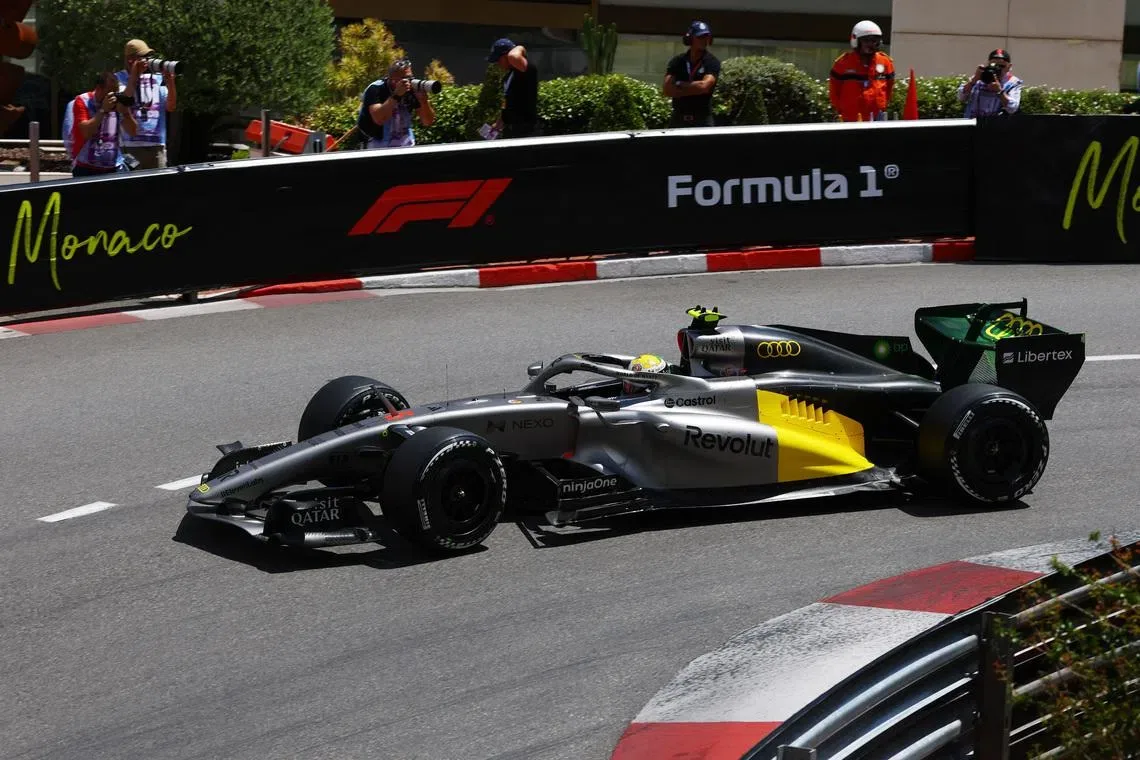
Audi publicly reaffirmed its engine stance during the 2026 Monaco Grand Prix on June 5, coinciding with the Nuvolari supercar launch [1, 2, 3]. The company emphasized a pragmatic approach rather than sticking rigidly to cylinder counts, highlighting philosophy and efficiency as central to the debate [2].
The FIA and manufacturers will continue negotiations on the detailed engine formula for the 2030 or 2031 season, with sustainability and cost key factors to be finalized.