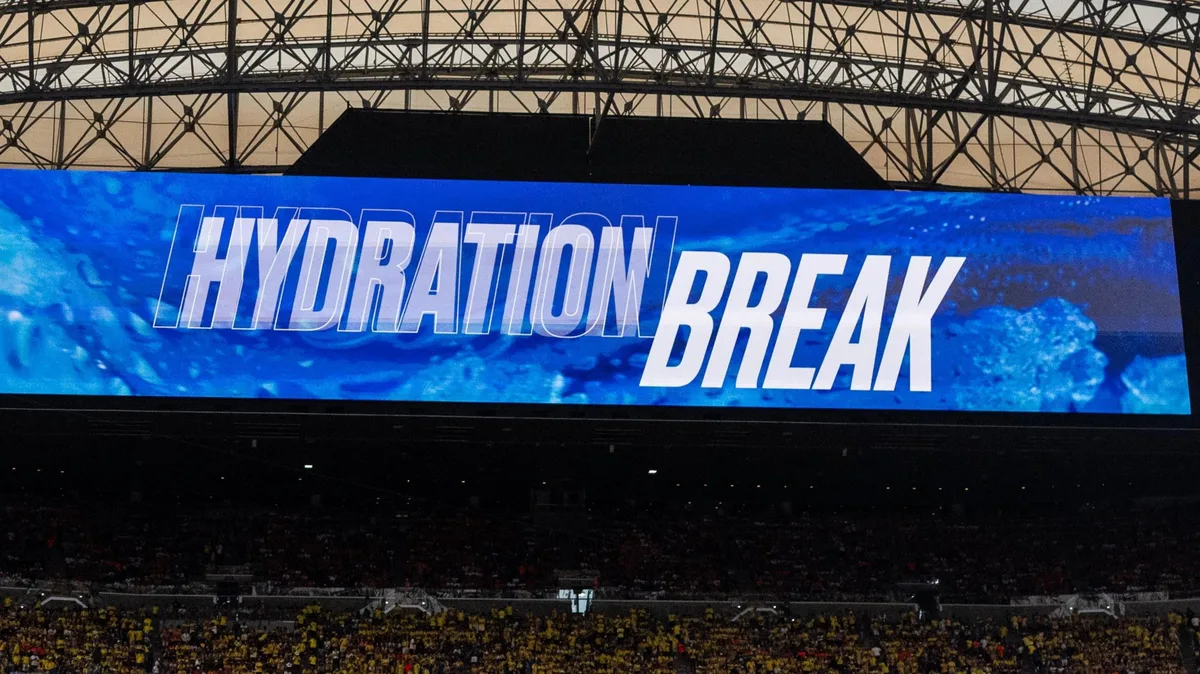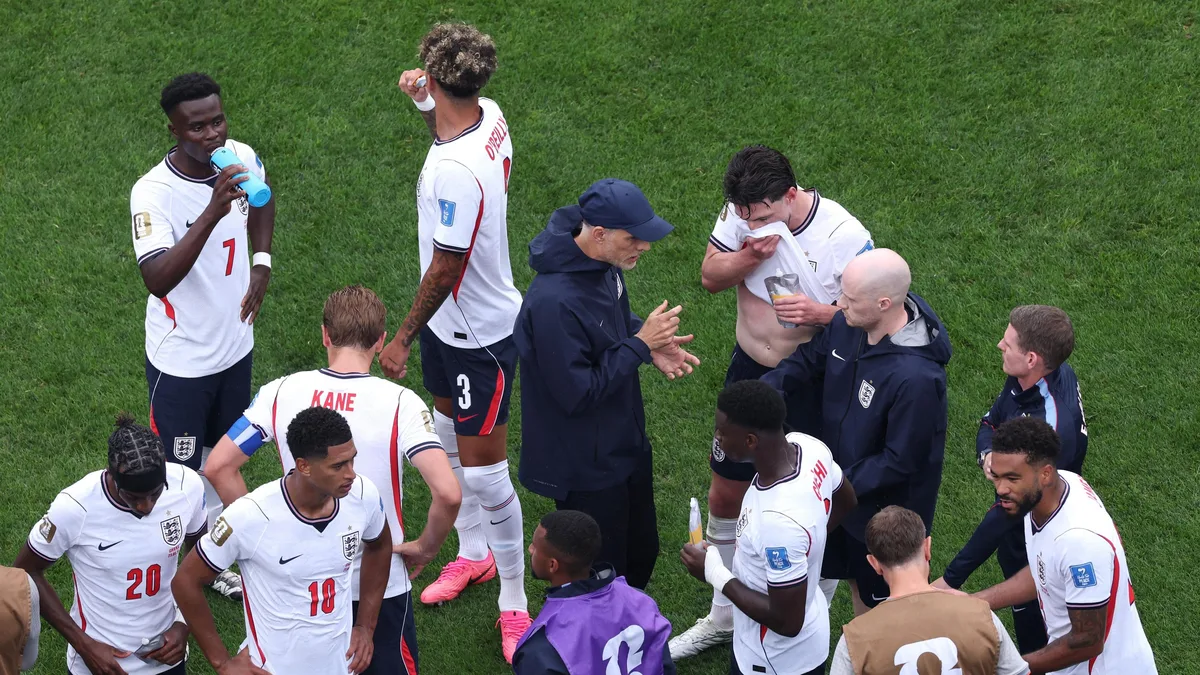
FIFA requires mandatory three-minute hydration breaks at the 22nd and 67th minutes of every World Cup match in North America to help players manage high temperatures, organizers said [1, 2, 3]. FIFA President Gianni Infantino emphasized these breaks bring no new revenue for FIFA since all commercial deals were signed before the tournament. "There is no additional revenue for FIFA, as all commercial agreements were signed well in advance. This is not a financial issue for us. For us, it is purely a sporting matter," Infantino said [1].
The breaks allow coaching staff to give tactical instructions during pauses, offering a moment of rest in a tightly packed 39-day tournament where teams may play up to eight matches [1, 2, 3]. Infantino added that ensuring all teams face equal conditions is critical: "It's very difficult to accept that a coach might have the opportunity to influence a match by making adjustments simply because it's hotter, while in another match, where the temperature is slightly lower, the same coach does not have the same opportunity" [2]. Despite some criticism, data show the breaks have not reduced match intensity or player performance, FIFA said [2, 3, 4].
However, the breaks have provoked criticism from players, coaches, and fans who say the interruptions disrupt momentum and alter the game's nature [2, 3, 4]. England manager Thomas Tuchel said, "The additional break interrupts and changes the identity of the football match" [2]. Uruguay coach Marcelo Bielsa called the division into shorter segments a loss of a fundamental characteristic of the sport [2]. Spain coach Luis de la Fuente and Netherlands captain Virgil van Dijk agree hydration breaks make sense in extreme heat but question their need in cooler or air-conditioned venues [2, 5].
Paraguay coach Gustavo Alfaro offered the strongest criticism, calling the mandatory breaks too long and disruptive. "These are more than hydration breaks. I know this applies to everybody, but I like continuity. Football is continuity and continuity is broken," Alfaro said at a press conference [6]. He described the breaks as splitting the match into four quarters instead of two halves and urged for optional breaks only in extreme heat with agreement from both teams [6, 7]. Alfaro also accused the breaks of serving commercial interests and criticized high ticket prices affecting working-class fans [6].
Paraguay is set to face Australia today in San Francisco’s Group D match, seeking their first consecutive World Cup victories [6, 7].
The mandatory hydration breaks remain in place for all matches in North America, scheduled at the 22nd and 67th minutes, each lasting three minutes [1, 2, 3, 4, 5, 8]. FIFA continues to stand by the practice as a health and sporting fairness measure, rejecting allegations that the breaks aim to increase advertising revenues estimated to exceed $250 million in the United States [1].