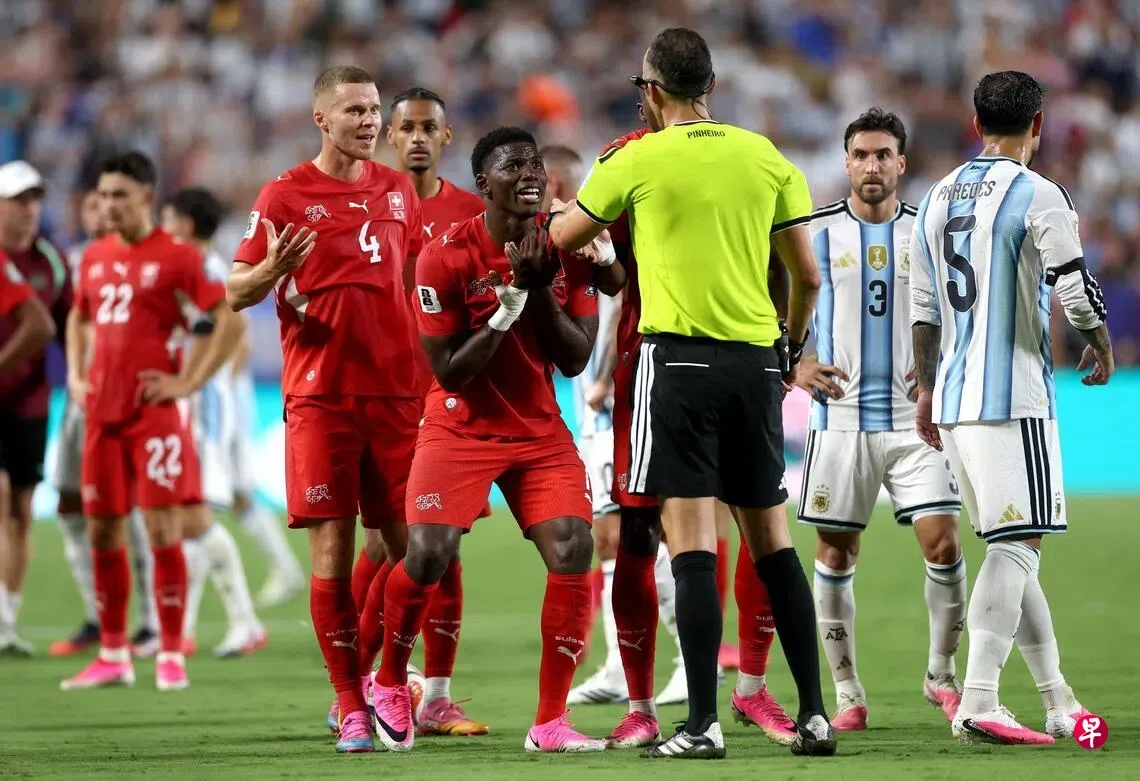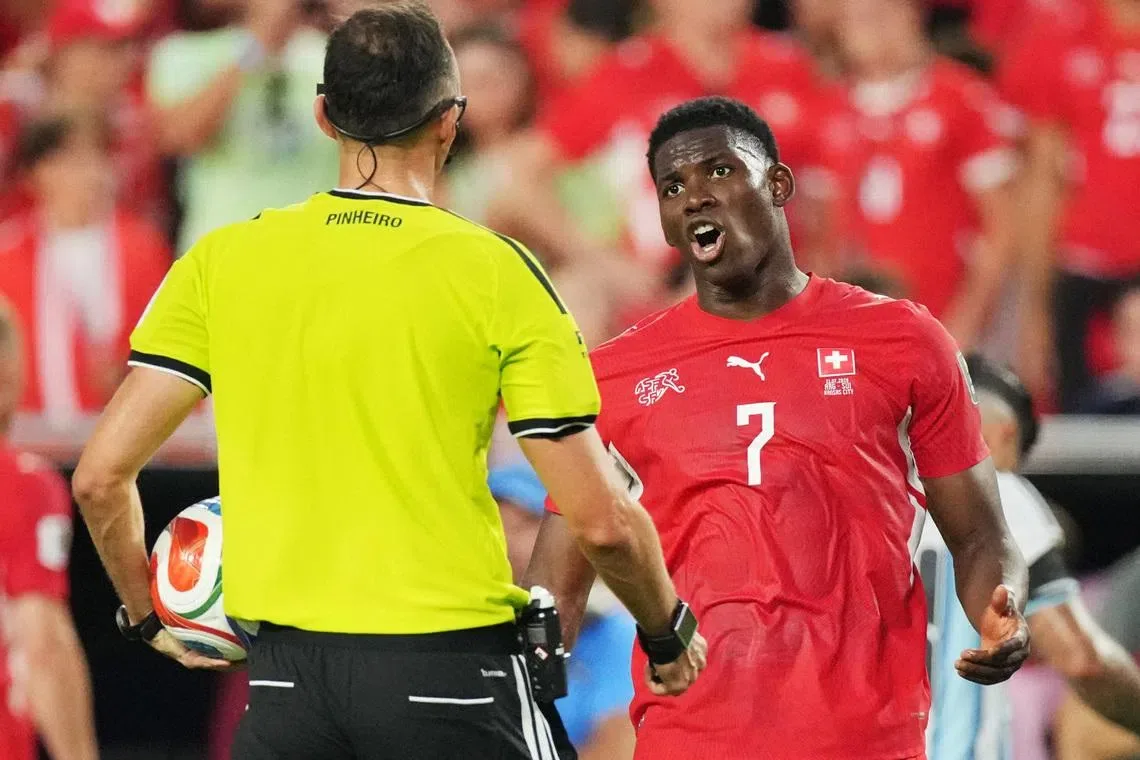
Switzerland forward Breel Embolo, 29, was wrongly sent off in the World Cup quarter-final against Argentina held in Kansas City when he received a second yellow card following a VAR review [1, 2, 3]. The second yellow came after referee Joao Pinheiro initially booked Argentina midfielder Leandro Paredes for a foul on Embolo. However, VAR intervened and informed the referee that Paredes had not actually committed a foul [1, 2, 3].
Following the VAR correction, the referee rescinded Paredes’ yellow card and instead booked Embolo for simulation, resulting in his sending-off [1, 2, 3]. IFAB clarified that VAR’s role allows correction in cases of mistaken identity for bookings but does not permit changing the nature of the offense itself. They determined Embolo’s sending-off was a mistake under these rules [1, 2, 3].
On July 28, IFAB issued an official circular stating Embolo should not have been sent off during that match [1, 2, 3]. The mistaken identity clause for simulation use during FIFA World Cup 2026 was well received by IFAB and will be reviewed in detail for potential updates to the VAR protocol [1, 2, 3].
Switzerland coach Murat Yakin criticized the rule behind Embolo’s red card as "unacceptable," saying it "destroyed our game today" and lamenting how the loss prevented Switzerland from reaching their first World Cup semi-final [1, 3]. Argentina won the match 3-1 after extra time but eventually lost the World Cup final to Spain [1, 2].
The next step will be the implementation of a detailed review of the VAR protocols incorporating the mistaken identity clause for simulation that IFAB has highlighted following the 2026 tournament incidents [1, 2, 3].