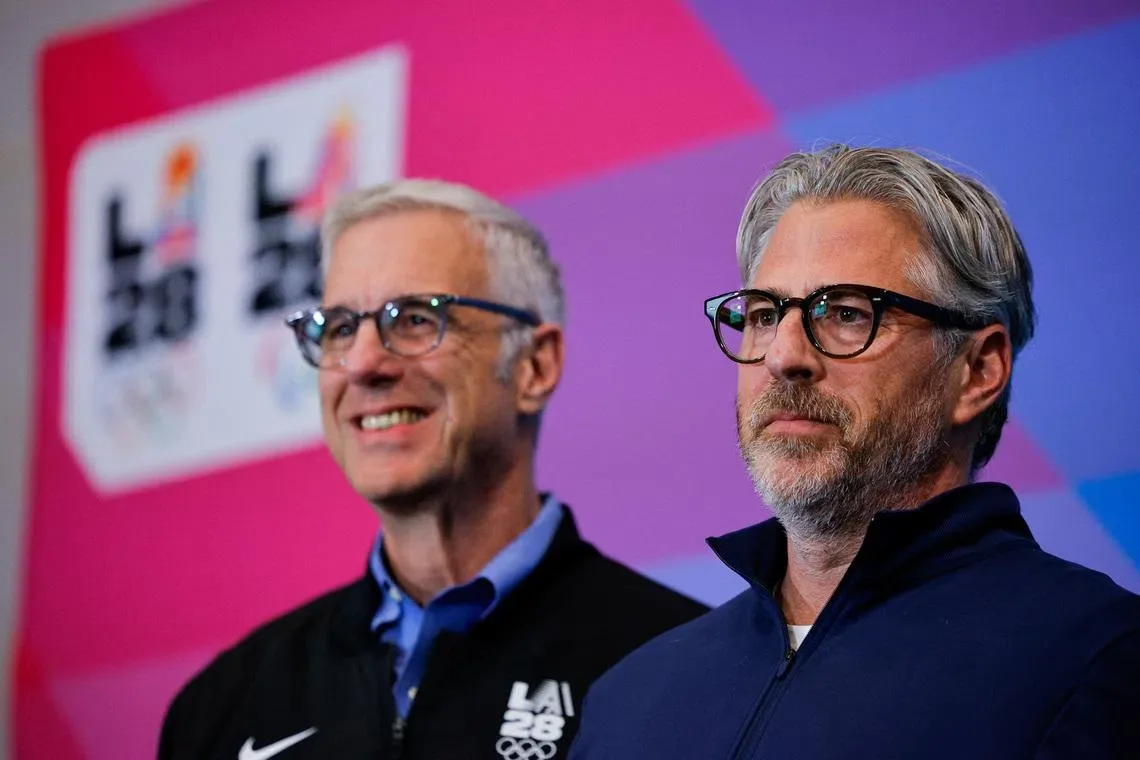
Los Angeles Olympic organizers plan to use the eight soccer matches hosted by the city during the 2026 FIFA World Cup as a major test for transportation, security, and crowd movement before the 2028 Summer Games [1, 2]. These matches, including those held at SoFi Stadium, will provide key data points to fine-tune operations on a large scale [1, 2].
Reynold Hoover, CEO of the LA28 organizing committee, said, "It gives us an opportunity to look at transportation, it gives us an opportunity to look at security, it gives us an opportunity to look at how are they moving fans around. For us, we can take that and then scale it" [1]. Hoover also noted the unprecedented size of the upcoming Olympics: "No one has done an Olympics to this size, to this scale and this scope. There's no book that we can go to" [1].
The LA28 Games are set to be the largest ever, with 50 competition venues, about 15,000 Olympic and Paralympic athletes, 36 sports, and more than 800 events scheduled [1, 2]. The organizing committee has developed a strong partnership with FIFA to leverage lessons learned from hosting the World Cup matches into their Olympic planning [1, 2].
The International Olympic Committee’s Coordination Commission recently met with LA28 organizers to review progress on operations, venues, delivery models, community engagement, the torch relay, economic impact, and sustainability efforts [1, 2]. Hoover said the IOC’s positive assessment made him "even more confident that we're going to deliver a Games like none other" [1].
National Olympic Committees will visit Los Angeles in July 2026 to inspect venues, the Olympic Village, accommodations, and arrivals operations at Los Angeles International Airport [1, 2]. Organizers are also drawing experience from recent and upcoming hosts such as Paris 2024, Milano Cortina 2026, Brisbane 2032, and Utah 2034 to help prepare for the scale of LA28 [1, 2].