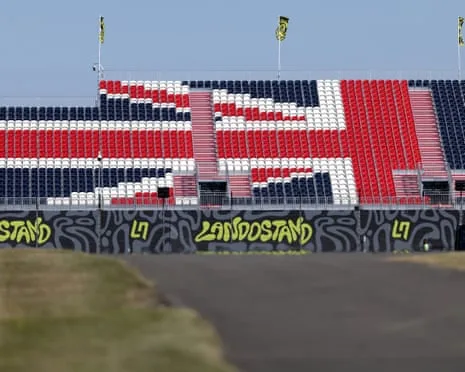
Lando Norris expects this year’s British Grand Prix at Silverstone to be less challenging in his first home race as Formula One world champion due to new engine rules emphasizing electric power and energy management. "Copse will certainly not be quite the same challenge it was over the last few years. Maggots, Becketts, maybe not quite the same challenge, but it’ll still be quick," Norris said, adding the race would still be good to watch [1].
Seven-time world champion Lewis Hamilton, who has won the British GP nine times, said the new power unit regulations will change how cars behave in high-speed corners at Silverstone. "Normally the engine’s screaming as you go into Copse and you’re holding on for dear life as you go through there flat out. This year, the engine will be coasting down most likely. And then Maggots and Becketts is just not going to feel the same because I think you have to lift and coast or something through there for a period of time. So, it’s just a completely different track," Hamilton said [1].
The new FIA rules place greater emphasis on electric components and limit opportunities to deploy full power, forcing drivers to carefully manage energy and recharge batteries during the race. Silverstone is considered an "energy-starved" circuit because it has few heavy braking zones to efficiently recover battery power [1, 2].
To regain energy at the end of the straights, drivers must use a technique called "superclipping," which reduces their speed and sometimes requires lifting off the throttle and coasting through certain corners. This reduces cornering speeds compared with previous years when top speeds at Silverstone corners reached about 300 kph [2, 1].
Hamilton, 41, won at Barcelona last month, marking his first victory since joining Ferrari last year [1, 3]. He added, "I think this is going to be an unprecedented weekend in terms of the power deployment. All us drivers have been talking in the drivers’ chat just how poor the power is going to be through this track. We run out of battery power. There’s only a few corners to charge the engine, so the MGU-K will be switched off for a large portion of the lap. That’s where Ferrari will struggle probably the most" [2].
Norris noted the contrast with last year’s cars, calling this year "less of a challenge" due to the slower, more restrictive power units. "Certainly there’s going to be less challenges on the track itself compared to what you’ve seen in the past few years. We’ve gone from some of the fastest cars in high speed last year and to this year being a little bit less of a challenge," he said [2].
Norris and Hamilton made these comments public on July 2, ahead of the British Grand Prix, offering insight on how the new F1 engine regulations will affect race dynamics and driver strategy at Silverstone [1, 3, 2].