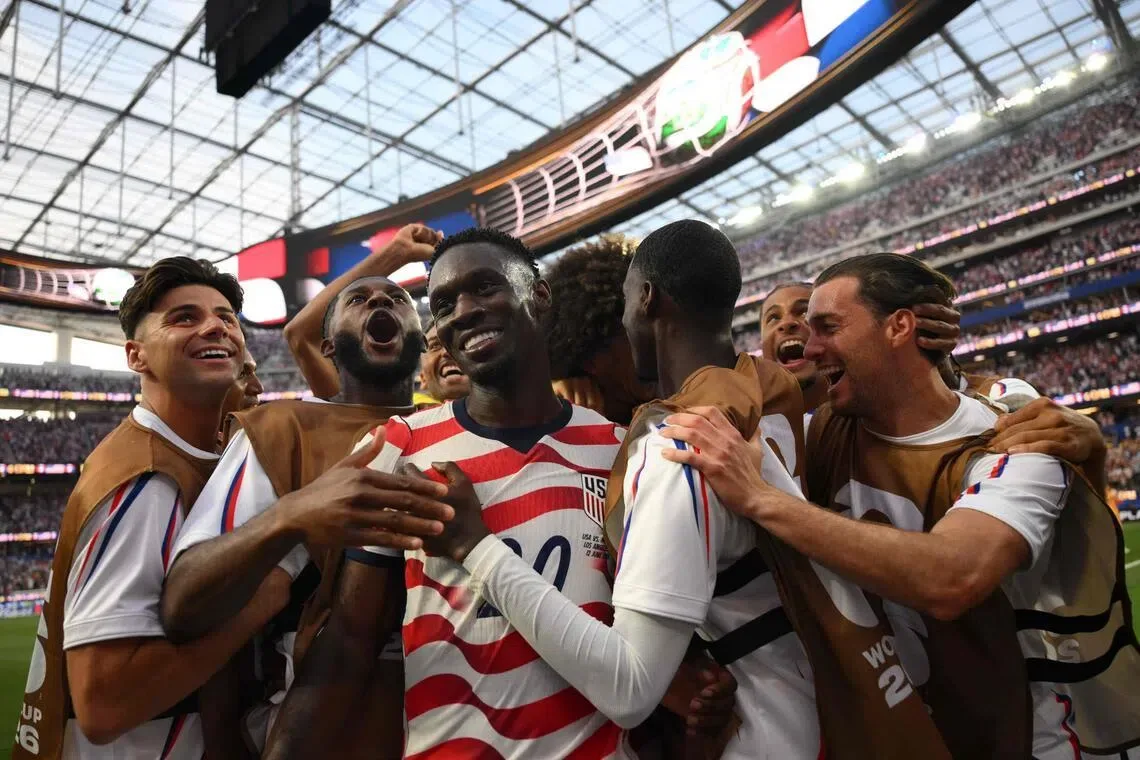
US World Cup striker Folarin Balogun scored twice in the US's 4-1 win over Paraguay on September 7, 2026, drawing attention to a growing debate over birthright citizenship as the Supreme Court prepares to rule on former President Donald Trump's case to end it [1, 2, 3].
Balogun was born in New York because his pregnant mother was visiting family and was unable to travel back, saying, “(My mother) came to the US to visit her sister, and she had her return ticket but then they said that she was too pregnant. So I was born in New York” [1]. Although he grew up in London from the age of one month and identifies culturally as British, he qualified for US citizenship through birthright and chose to represent the United States internationally over England or Nigeria [1, 2, 3]. He told reporters, "The way I was eligible to represent America... I’m not going to be the person to stand in the way of this story" [2].
The US, along with Mexico and Canada, are among the few countries that grant automatic citizenship to anyone born on their soil regardless of parental citizenship status [1, 2, 3]. Former President Trump has petitioned the Supreme Court to end this policy, seeking to restrict birthright citizenship to children born to at least one parent who is a US citizen or lawful permanent resident [1, 2, 3]. Historically, anyone born on US soil automatically gains citizenship under the 14th Amendment [1, 2, 3].
Nearly 25% of players at this World Cup were born in countries different from those they represent, a figure experts say reflects how citizenship rules shape international sports talent recruitment [1, 2, 3]. Marissa Kiss of George Mason University said, “Countries that make citizenship easier to obtain have an advantage in recruiting talent” [3].
The Supreme Court is expected to rule on Trump’s case in early September 2026, while the World Cup continues to spotlight the practical and cultural complexities of birthright citizenship.