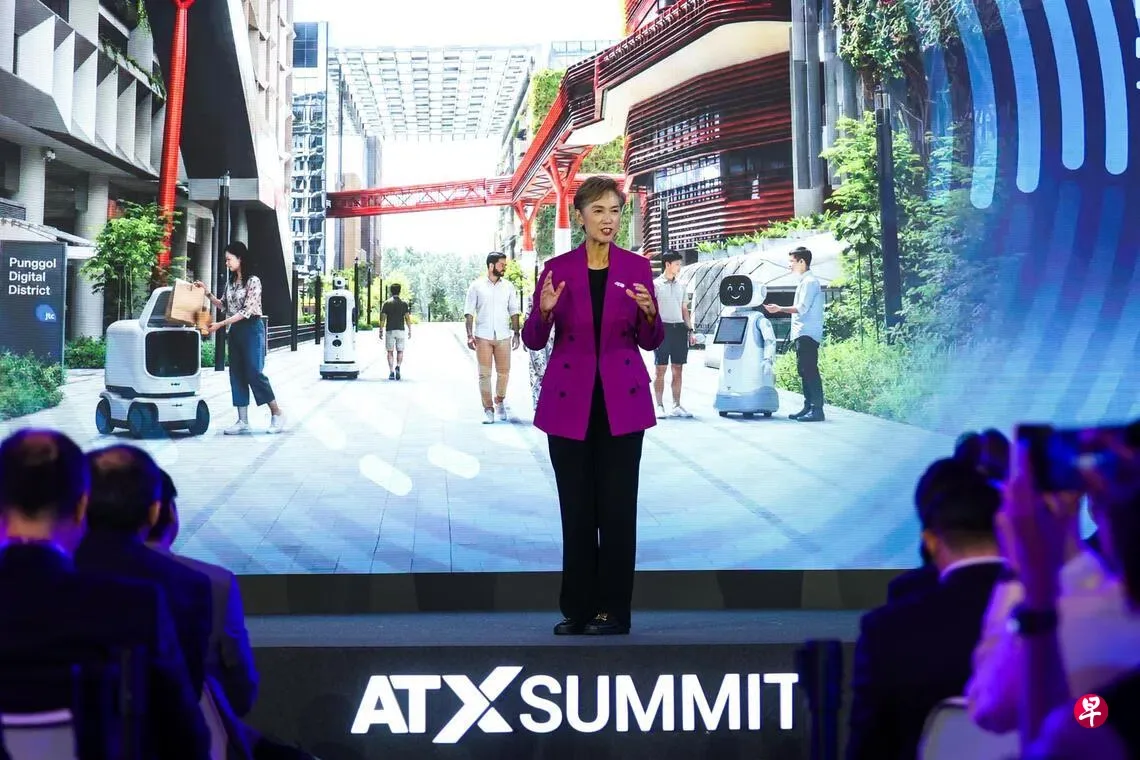
Nvidia announced on May 20 the opening of its first AI research laboratory in Singapore, marking its second research hub in the Asia-Pacific region [1, 2, 3, 4, 5]. The announcement took place at the ATxSummit technology conference held in Singapore [1, 2, 3, 4, 5].
The new lab will focus on embodied AI and efficient AI computation designed to optimize AI models and infrastructure. The goal is to lower costs and improve energy efficiency in AI applications [1, 2, 4, 5]. Embodied AI involves developing technologies such as robots, autonomous vehicles, and drones, which Singapore sees as key to advancing its service and manufacturing sectors [1, 2, 4, 5].
Nvidia's Singapore lab will collaborate closely with local universities, industry partners, and government agencies to accelerate innovation and commercial deployment of AI technologies [1, 2].
This announcement coincides with Singapore’s wider push into AI. The city-state will launch an AI robotics testbed later in 2026, inviting companies including Certis, DHL, Grab, and QuikBot to participate. The testbed aims to enable co-design and validation of AI robotic systems [2, 4].
Parallel to Nvidia’s plans, OpenAI is also establishing its first applied AI lab outside the US in Singapore, aiming to expand to 200 employees in the coming years. OpenAI’s investment is valued at about 74 billion TWD (Singapore dollars equivalent reported) [5].
The opening of Nvidia’s Singapore lab and concurrent AI initiatives highlight the city’s strategic role as a regional hub for advanced AI research and development.
Singapore will proceed with launching the AI robotics testbed later this year as part of its broader strategy to develop and integrate embodied AI technologies into real-world applications [2, 4].