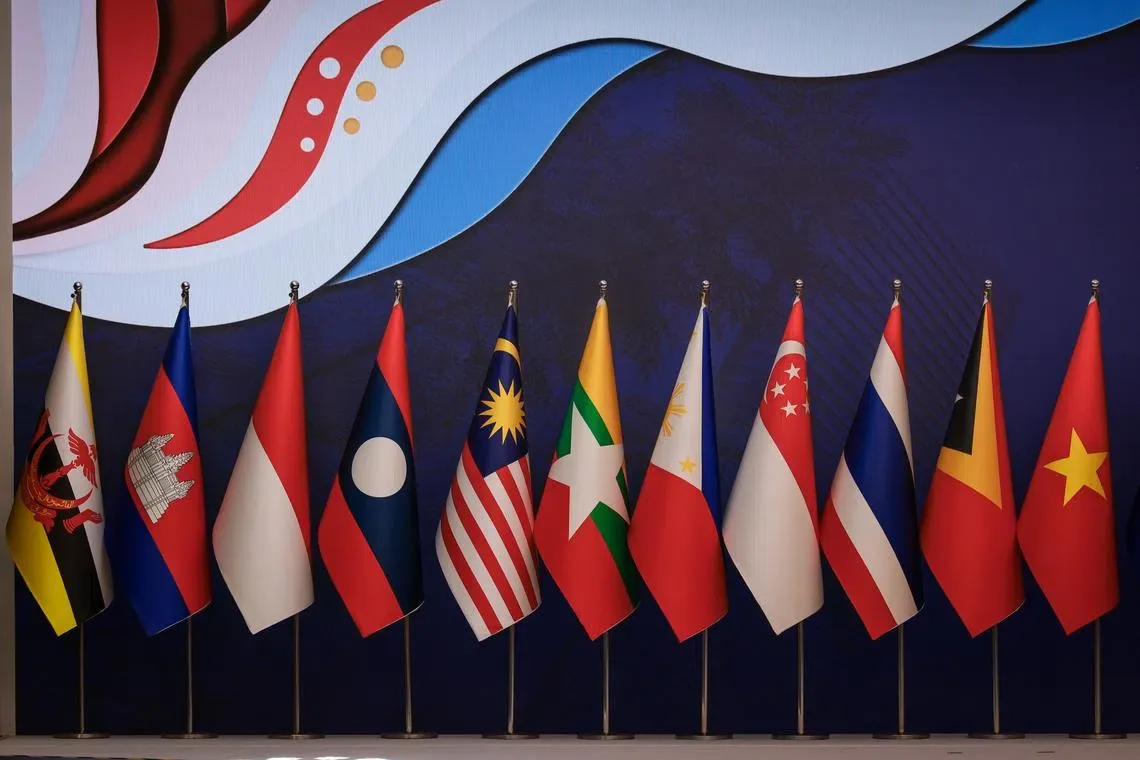
Singapore will assume the ASEAN chairmanship in 2027 and focus on expanding artificial intelligence adoption among micro, small, and medium enterprises (MSMEs), workers, and governments across Southeast Asia [1, 2, 3, 4]. Minister Josephine Teo said, "Next year, Singapore will assume the ASEAN Chair. We will bring more SMEs, workers, and governments together to use AI better" [1].
The country plans to invest in shared digital resources for the region. These include language models, governance toolkits, and programs to build AI capabilities [1, 2, 3, 4]. Singapore also aims to harmonize regional AI governance approaches to enable collective progress [4].
The ASEAN digital economy is expected to surpass US$300 billion by 2025, with significant growth driven by e-commerce and AI adoption [1, 2, 3]. To capitalize on this, effective policies facilitating trusted cross-border data flows and digital trade are essential [1, 2, 3, 4]. ASEAN seeks to finalize the Digital Economy Framework Agreement (DEFA) to establish unified rules that enable these flows [1, 2, 3, 4].
Minister Teo warned against a narrow notion of "AI sovereignty" focused on complete ownership of all AI ecosystem layers. She said, "It would be unrealistic for most countries to seek ownership of every layer of the AI ecosystem, from chips and models to data and applications" [1]. She added, "The oftentimes-narrow framing of AI sovereignty as one of ownership or a race to claim full possession of the entire AI stack is neither realistic nor helpful for most nations because of cost and supply-chain intricacies" [4].
Instead, countries should focus on governing AI effectively, selecting appropriate technology partners, and building strong domestic AI ecosystems [1, 2, 3, 4]. Overly restrictive data policies could hamper innovation and business growth, especially for smaller firms, a potential pitfall the region must avoid [4].
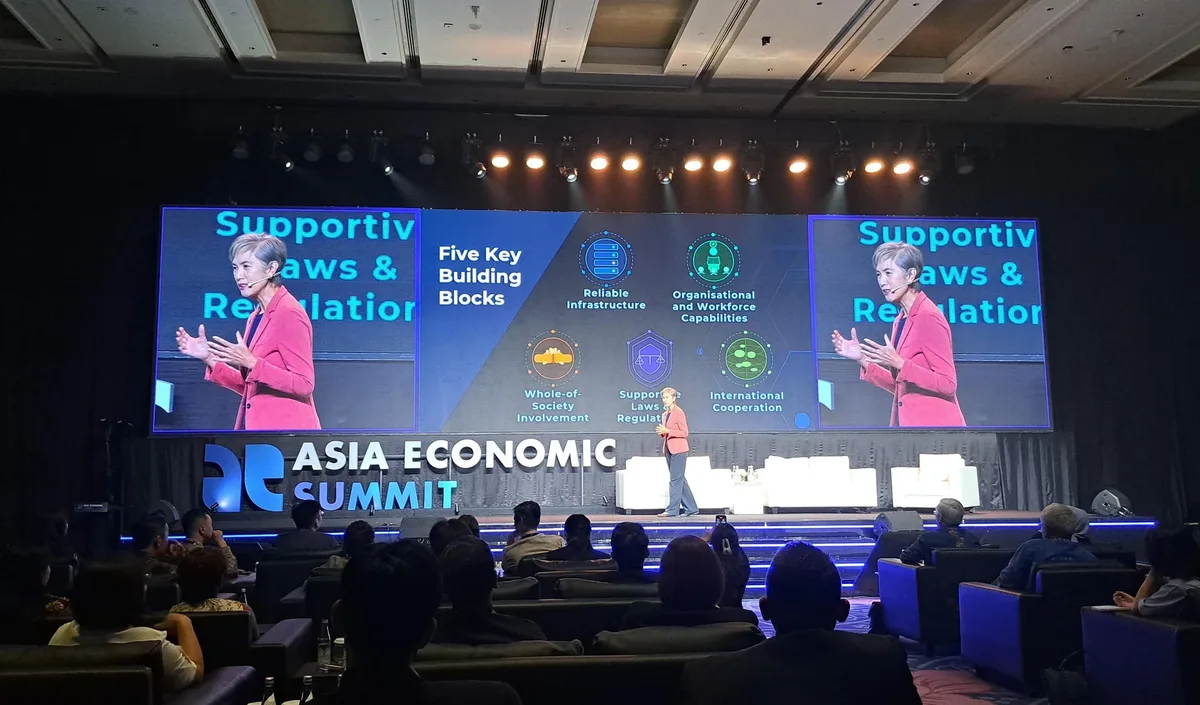
Minister Teo outlined these priorities during her speech at the Asia Economic Summit in Jakarta in June 2026, ahead of Singapore’s ASEAN chairmanship the following year [1, 2, 3, 4]. Singapore’s leadership in 2027 will focus on widening regional AI use and supporting policies for cross-border digital trade.