Global wealth held by high net worth individuals (HNWI) with at least $1 million in investable assets reached $98.3 trillion in 2025, an 8.7-9% increase from the prior year, according to multiple sources [1, 2, 3, 4, 5, 6, 7]. The millionaire population rose by nearly 2 million to a record 25.3 million worldwide [1, 2, 3, 4, 5, 6, 7]. Ultra-high net worth individuals, those with over $30 million, grew fastest, reaching 250,000 people globally [1, 4, 5, 6].
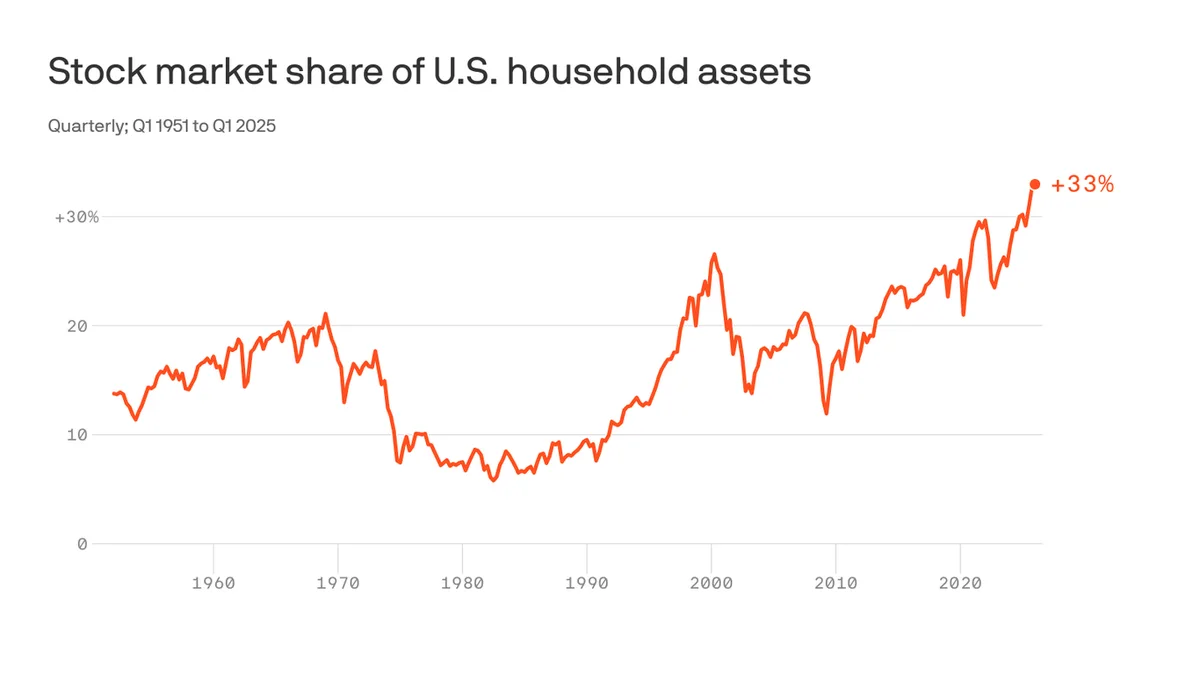
The United States led in new millionaires, adding approximately 736,000 to reach around 8.7 million total millionaires by the end of 2025 [1, 2, 3, 4, 5, 6, 7]. US household wealth portfolios grew about 18% from end-2024 to end-2025, largely due to an AI-driven rally in the stock market. Household equity holdings hit a record 33% of total wealth, the highest share since record keeping began in 1989, raising concerns about growing wealth inequality as the top 1% held about 32% of US wealth [1, 8, 4, 7]. JPMorgan analysts noted that the rise in retail investors’ equity holdings has made them key drivers of the bull market in recent years [8].
The Asia-Pacific region recorded the highest wealth growth rate at around 10.5%, fueled by strong gains in South Korea, China, Hong Kong, and Japan. Japan added about 436,000 new millionaires, while China saw 154,000 newly minted millionaires in 2025 [1, 2, 3, 4, 5, 6, 7].
In contrast, the Middle East’s high net worth population declined by roughly 1.4%, attributed partly to falling oil prices and regional conflicts [1, 2, 3, 4, 6].
The AI investment boom and optimistic outlook on AI technologies were key drivers behind the global stock market rally that boosted wealth among high net worth individuals. Analysts cited companies like SpaceX, Anthropic, and OpenAI, which are expected to go public soon, as potential sources of additional millionaires and billionaires [1, 2, 3, 4, 6, 7].
By January 2026, HNWIs had increased their allocation to equities to about one-quarter of their portfolios, while the share held in alternative investments declined, though many investors plan to expand their holdings in private equity [4, 6].
The $98.3 trillion held by global millionaires is nearly equivalent to more than half of the world’s 2024 GDP, estimated at $111 trillion [1, 2, 3, 4, 6].
Jared Murphy of BlackRock called the $100 trillion in global wealth "a staggering amount of money" and "a huge business opportunity" [2, 3, 4]. Kartik Ramakrishnan of Capgemini attributed the growth mainly to "AI value uplift" [2].
The next major wealth impact may come from IPOs of leading AI-focused companies in 2026, potentially further expanding the millionaire and billionaire ranks worldwide [1, 2, 3, 4, 6, 7].