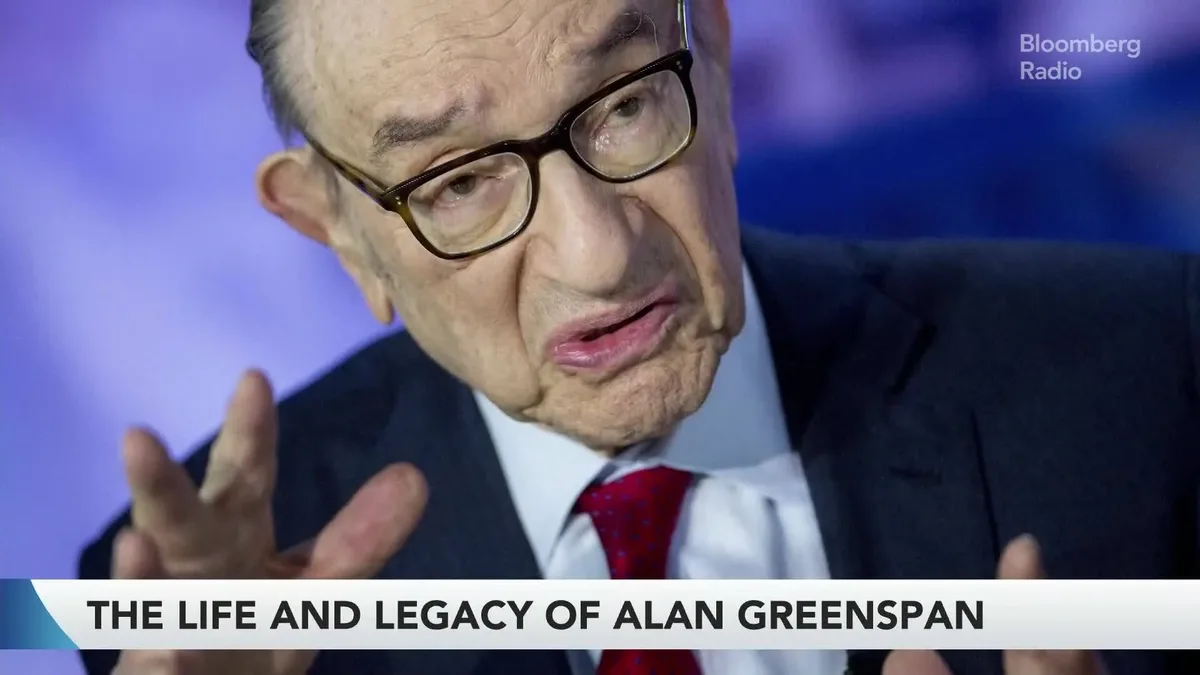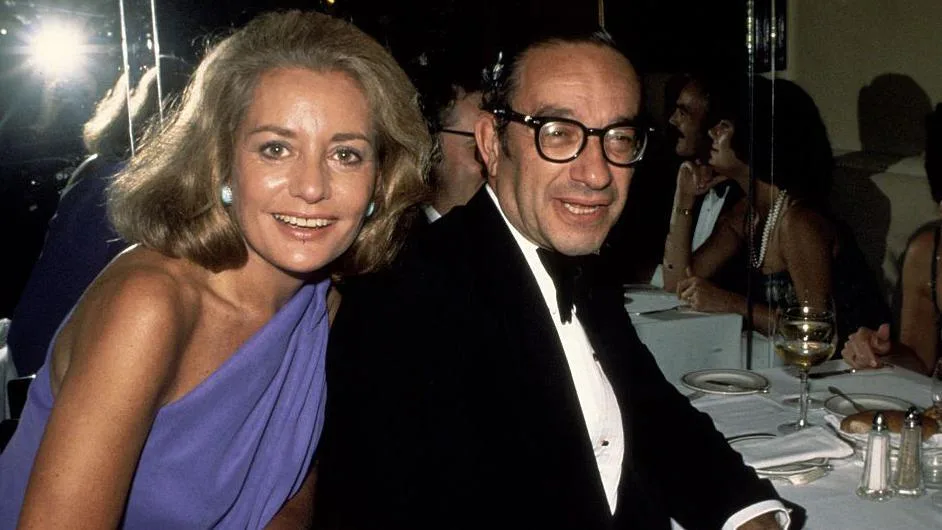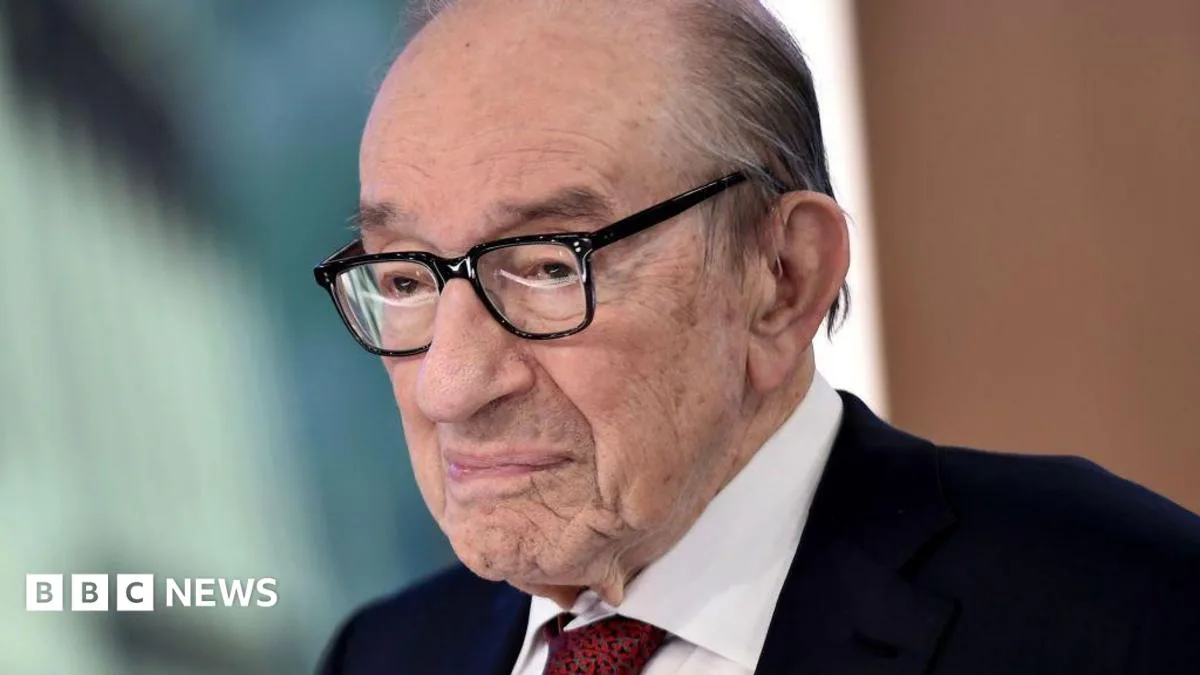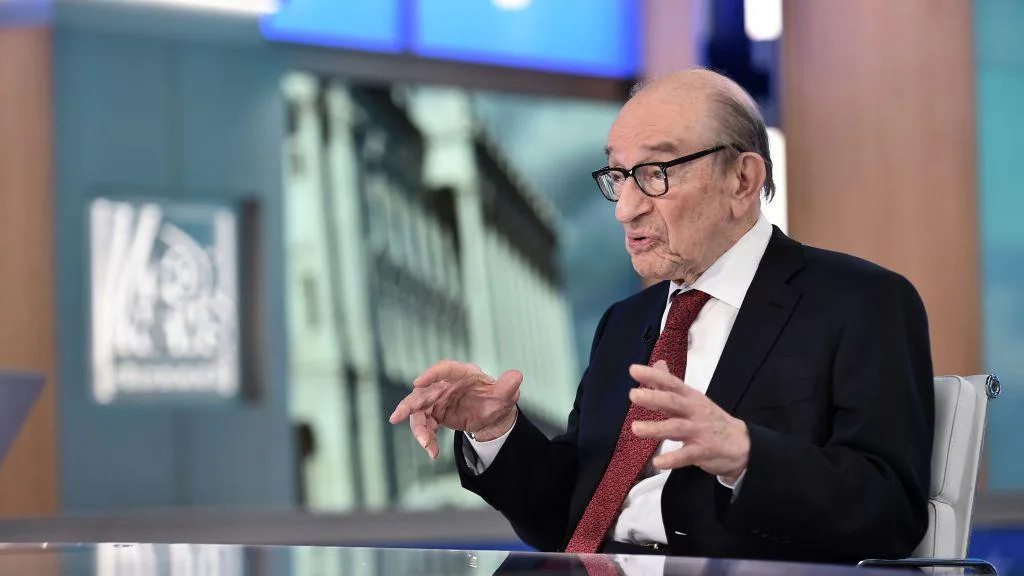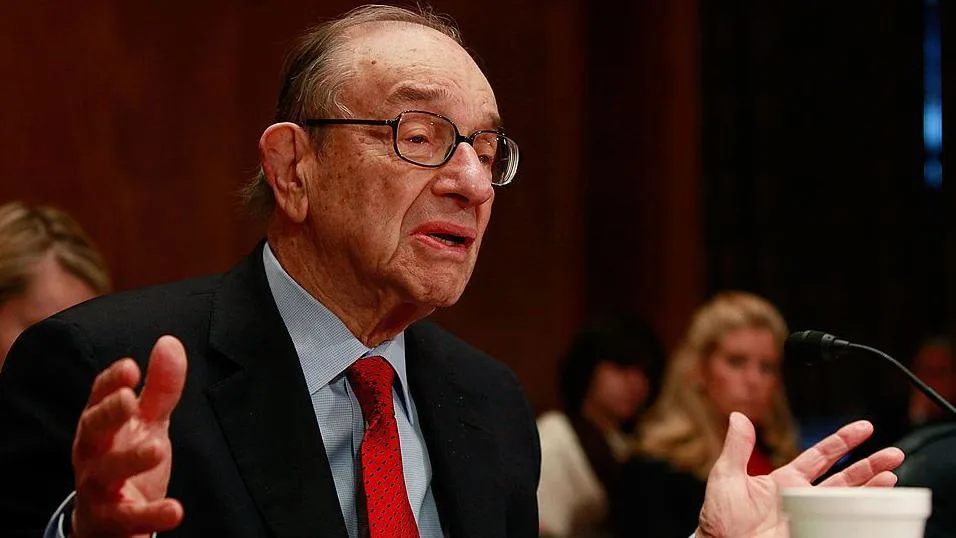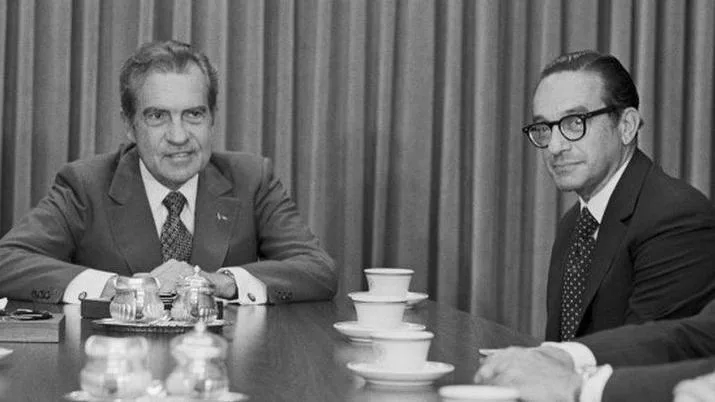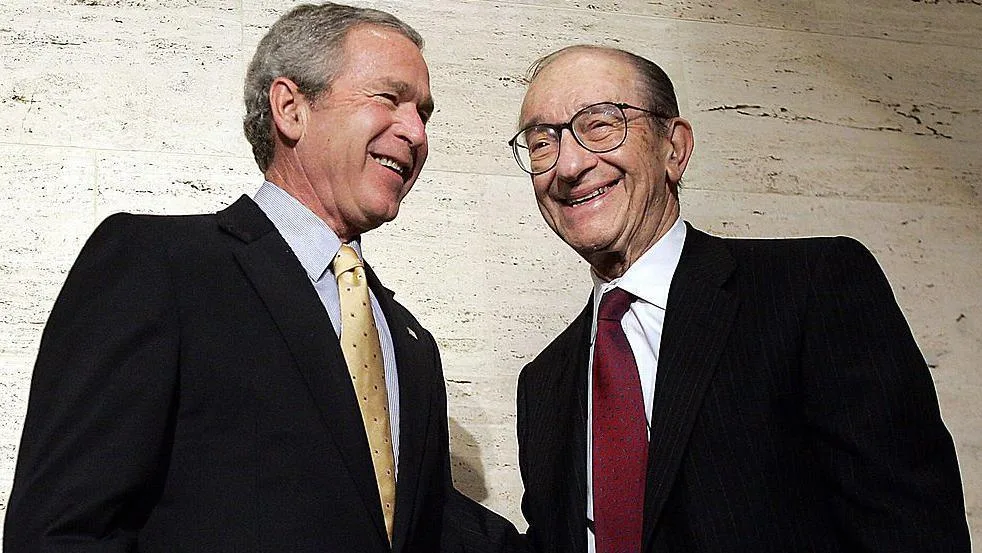
Alan Greenspan, the longtime chairman of the U.S. Federal Reserve, died yesterday at age 100 from complications of Parkinson's disease at his home in Washington, D.C., his wife Andrea Mitchell said [1, 2, 3, 4].
Greenspan led the Fed for 18 years, serving five terms under four presidents from 1987 until his retirement in January 2006 [5, 6, 4, 7]. His tenure included overseeing the second-longest economic expansion in U.S. history, which lasted 10 years from March 1991 to March 2001 [4, 7]. Andrea Mitchell, NBC News chief Washington correspondent, described him as "a giant of a man who helped shape the US economy for decades under presidents of both parties, but was always honest in acknowledging his mistakes" [5].
Born on March 6, 1926, in New York City, Greenspan was raised by a single mother who worked in a furniture store [5, 6]. Before his career in economics, he was a talented clarinet player who studied at Juilliard and toured professionally [5, 6]. He enrolled at New York University at age 19 and became a passionate advocate for free markets, influenced by the philosophy of Ayn Rand [5, 6].
Known as an influential economist, Greenspan’s policies left a lasting mark on U.S. monetary policy and the broader field of economics [6]. He famously coined the phrase "irrational exuberance" in 1996 to warn of overly optimistic asset prices [5, 8]. He was dubbed the "God in the machine" of American finance at the height of his influence [5].
His leadership saw a long period of stable growth and contained inflation, with prescient judgments such as predicting the mid-1990s productivity surge would keep inflation in check [4, 7]. Yet critics argue his policies also fueled asset bubbles like the dot-com boom and laid groundwork for the 2007–2009 financial crisis [5, 6, 4, 7]. Economist Stephen Oliner said the "deification" Greenspan enjoyed before the crisis was never fully deserved, nor was the harsh criticism he faced afterward [4].
Andrea Mitchell, married to Greenspan since 1984, said he had "irrational exuberance" not only for economics but also for baseball, music and sports [1, 2]. She called him brilliant and kind, saying being his life partner was "the joy of my life" [3].
Alan Greenspan’s death marks the end of a defining career in American economic history. His legacy will be debated, but his impact remains clear. His official retirement as Fed chair was in January 2006, and his death yesterday at age 100 was announced by his wife today [1, 2, 4, 7].