Amazon announced an expansion of its less-than-truckload (LTL) shipping service to cover any destination across the United States, opening the offering to all businesses beyond its own network effective June 10 [1, 2, 3]. LTL shipping carries freight too large for parcel service but smaller than full truckloads by combining shipments from multiple customers on one trailer [1, 2, 3].
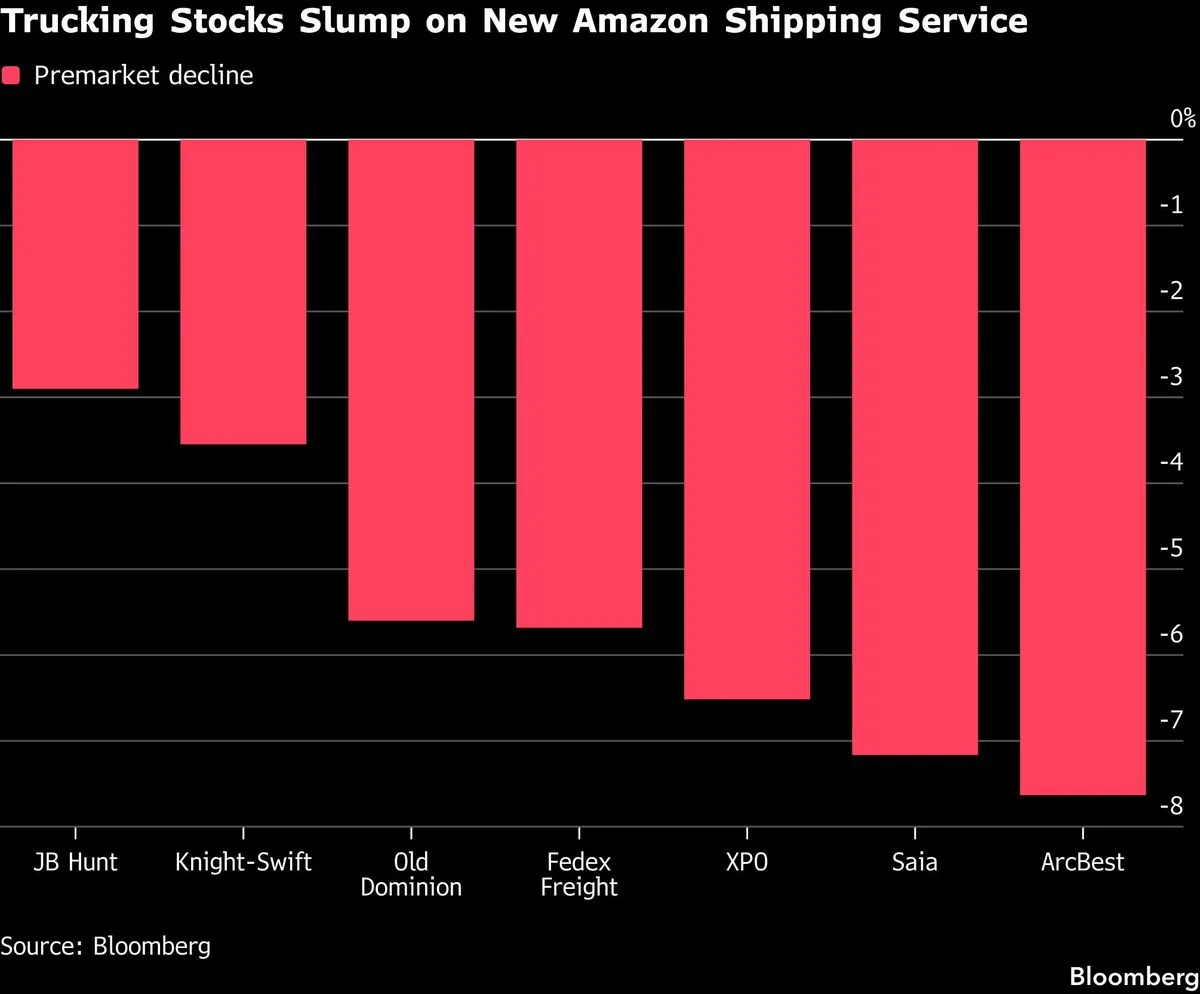
Shares of major LTL carriers plunged following the announcement. Old Dominion Freight Line shares dropped between roughly 6% and 10% during the day, with sources reporting a 10% initial fall, about 6% in premarket trading, and more than 6% thereafter [1, 2, 3]. FedEx Freight shares, which recently began trading independently after a spinoff from FedEx Corp on June 1, declined between approximately 3% and 10% [1, 2, 3]. Saia shares fell in a range from about 5% to 10% [1, 2, 3]. Other freight carriers such as ArcBest and XPO Logistics also saw declines of 4% and 5% respectively [3].
Amazon has built a vast logistics network over recent years, including 80,000 trailers and 24,000 containers, aiming to reduce reliance on external carriers [3]. The new LTL service is part of Amazon Supply Chain Services, a suite of logistics and freight solutions unveiled last month designed to offer end-to-end supply chain support [2, 3]. Amazon is increasingly offering logistics services for other businesses, raising concerns among established carriers about heightened competition [2, 3].
Jim Ruiz, director of Amazon Freight, said, "The feedback from Amazon selling partners using our LTL service was clear: the technology, visibility, and reliability were exactly what they needed — and they wanted to use it more broadly. Now Amazon LTL can move your freight wherever it needs to go, servicing destinations nationwide for businesses of all sizes" [3].
The announcement came on the heels of FedEx Freight’s June 1 spinoff from FedEx Corp. The market reaction indicates investor anxiety about how Amazon’s expanded logistics reach could disrupt established LTL freight carriers.
Amazon’s LTL expansion marks its first nationwide opening of the service beyond internal usage. The stock selloff in key trucking companies reflects immediate investor reaction to the competitive threat. Market watchers will look to how quickly Amazon gains traction offering LTL freight to third parties. The next milestones will include delivery of Amazon Supply Chain Services capabilities and customer adoption rates over coming quarters.