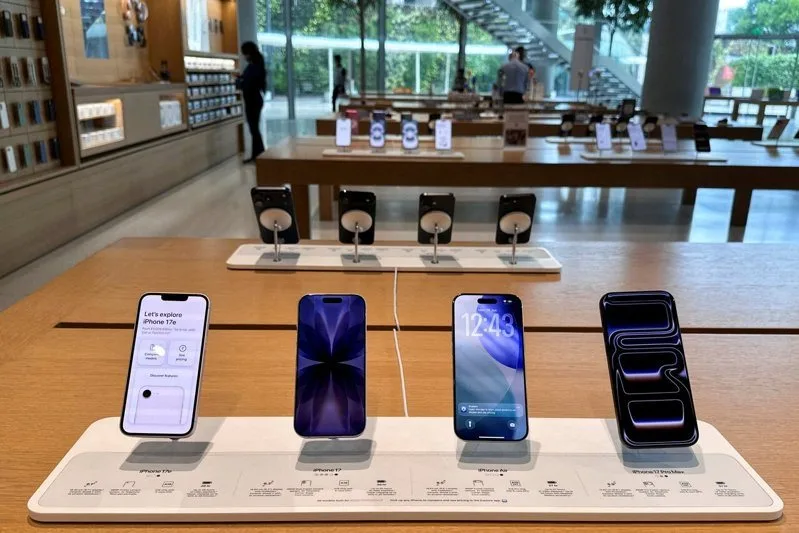
Apple and Broadcom announced a $30 billion multi-year agreement extending their technical partnership through 2031. Broadcom will develop and supply a range of customized ASIC chips for multiple future generations of Apple products, with production concentrated in the United States [1, 2, 3].
The deal marks Apple's largest US manufacturing investment to date, committing more than $30 billion overall. More than 15 billion chips covered by the agreement will be produced in the US, accompanied by a major expansion of Broadcom’s semiconductor manufacturing facilities in Fort Collins, Colorado [3, 4, 5, 6, 7, 8, 9, 10].
Broadcom plans to invest approximately $1.5 billion to upgrade and enlarge its Fort Collins plant to support advanced RF components and custom ASIC chip production. Apple CEO Tim Cook emphasized the importance of locally made advanced components, saying, “在科林斯堡生產的尖端零組件,對於提供客戶期待的卓越效能與連網能力至關重要” (“The advanced parts produced in Fort Collins are critical to delivering the performance and connectivity customers expect”) [4, 5, 6, 7, 8, 9, 10].
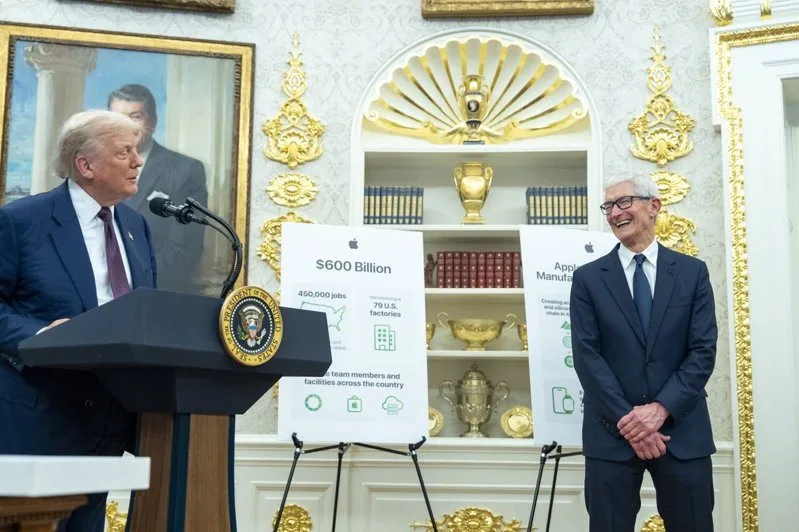
This agreement aligns with Apple's broader $600 billion US investment initiative to bolster domestic semiconductor manufacturing capabilities [4, 5, 7, 8, 9, 10]. Broadcom CEO Hock Tan highlighted the deal's significance, stating, “我們在這裡開發突破性科技,讓全球人們彼此連結” (“We are developing breakthrough technologies here that connect people worldwide”). He added Apple’s commitment will help expand Broadcom's manufacturing footprint in Colorado [6, 8].
The customized ASIC chips will support growing functions related to artificial intelligence workloads and wireless connectivity standards including Wi-Fi, Bluetooth, 5G, and GPS [11, 7, 8, 9, 10]. Although Broadcom has historically supplied Apple with wireless communication chips, recent years saw Apple develop some Wi-Fi and Bluetooth chips in-house, such as the N1 chip [11].
This deal also reflects Apple’s strategic effort to diversify its chip supply chain and reduce reliance on Taiwan Semiconductor Manufacturing Company (TSMC), amid geopolitical and tariff-related concerns. However, the RF chips supplied by Broadcom represent a smaller portion of device component costs compared to Apple’s more expensive A and M series chips produced by TSMC overseas [7, 9, 10].
Apple publicly announced the expanded cooperation with Broadcom between August 5 and 8, 2026, with official statements confirming the size of the investment, volume of US chip production, and plant upgrades [7, 8, 9, 10]. The investment will continue to support US-based chip manufacturing efforts through 2031.