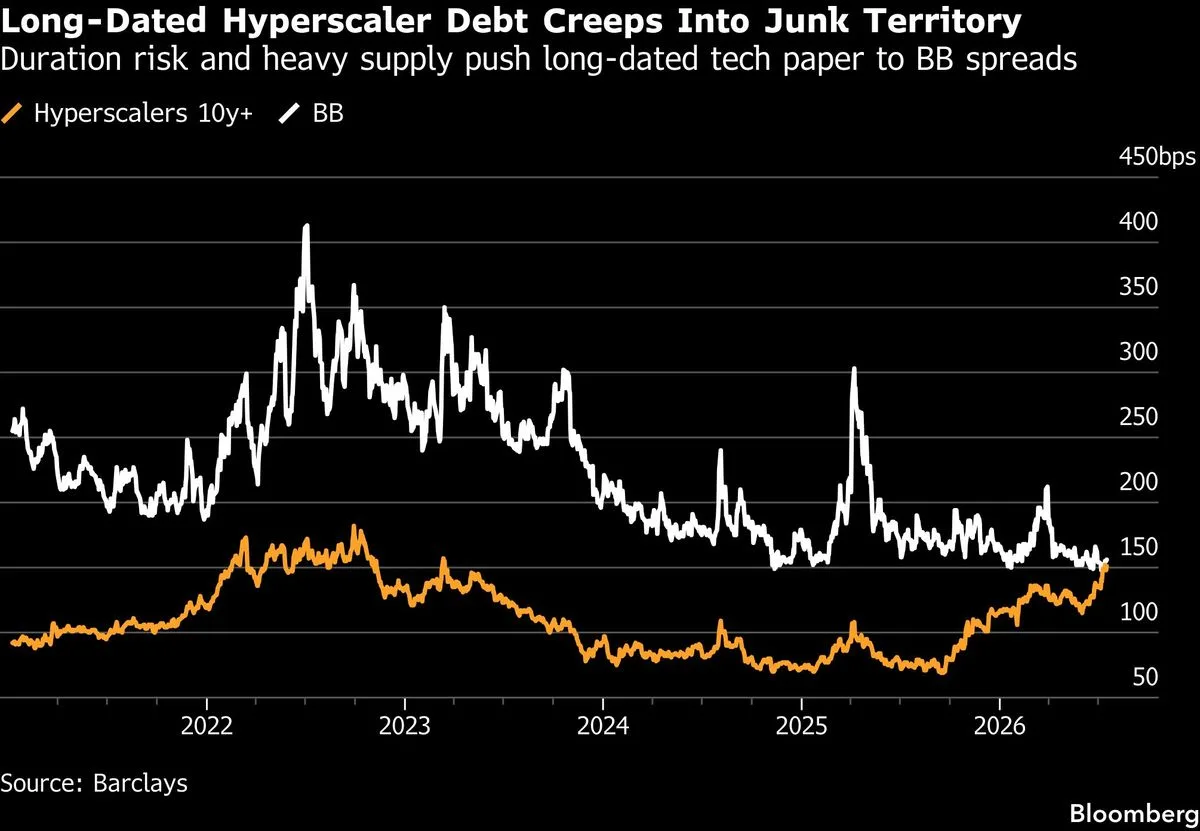
Debt from the six biggest technology companies accounts for 8.6% of the US high-grade corporate bond market’s duration times spread (DTS), surpassing the 7.3% share held by the six largest Wall Street banks, data as of July 23, 2026, shows [1]. Despite representing about 4% of principal outstanding debt versus roughly 9% for banks, these tech hyperscalers borrow for longer periods, increasing their exposure to interest rate risks [1].
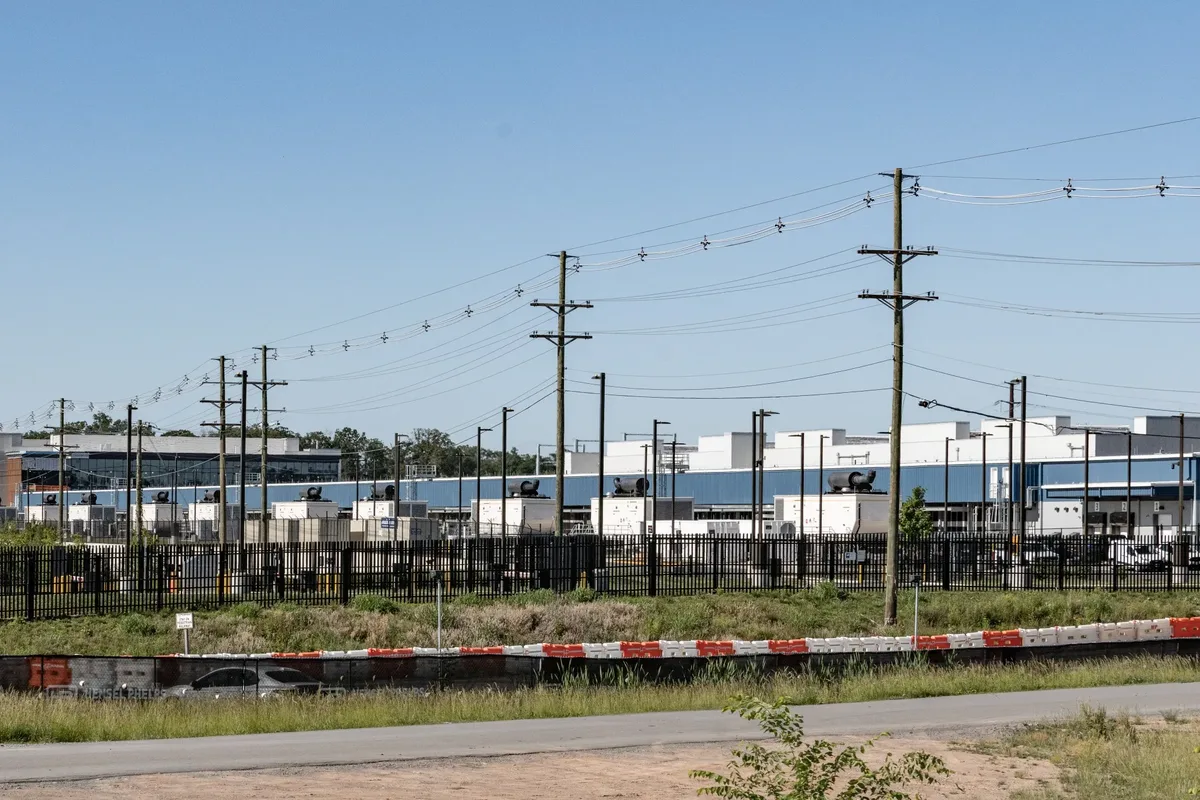
The top tech firms include Alphabet, Amazon, Oracle, SpaceX, and Meta, which have all intensified capital expenditures tied to artificial intelligence and data center expansion [1]. Alphabet raised its 2026 capital spending forecast to as much as $205 billion, fueling market concerns about further bond sales linked to AI investments [2, 1, 3]. Meta Platforms plans a bond sale next week for a new data center project [2, 1].
Credit spreads on bonds of major technology companies such as Alphabet, Amazon, Meta, and Oracle have widened recently amid investor worries over rising AI-related capital spending and debt risks [3]. Oracle’s five-year credit default swap (CDS) reached multi-year highs as markets questioned its debt outlook and AI investments; S&P Global downgraded Oracle’s credit rating to BBB- in early July 2026, putting it just above junk status [3]. Barclays analyst Andrew Keches said Oracle’s CDS has become a liquid hedge on "AI capex, OpenAI execution and broader data-center spending narratives" [3].
Rising energy costs, including oil prices above $100 per barrel, are also driving higher capital expenditures for hyperscalers building new data centers [3]. An anonymous credit fund portfolio manager said the debt situation is "creating intense discussions between bond and equity investors who have exposure to the biggest names in tech" [3].
John Fekete, head of tradeable credit at Crescent Capital, warned that concentration risk is now the biggest danger: "If investors begin questioning the return on AI infrastructure spending, the resulting repricing could ripple through the entire bond market" [1].
Big tech’s growing influence on corporate bond market risk was highlighted in reports published July 25, 2026, amid ongoing concerns over Ai-driven capex and debt issuance from the sector [2, 1]. Meta’s bond sale linked to its data center is expected next week, marking a key near-term event for monitoring market reactions [2, 1].