Broadcom reported a fiscal second-quarter revenue miss and issued a disappointing sales growth forecast on June 4, 2026, failing to meet investors’ expectations and causing its stock to plunge 12-15% [1, 2, 3, 4, 5, 6]. The company’s weak outlook led to a broad selloff in US chip stocks and technology shares, triggering declines in AI-linked equities along with pullbacks in Nasdaq 100 and S&P 500 futures [1, 2, 3, 7, 4, 8, 9].
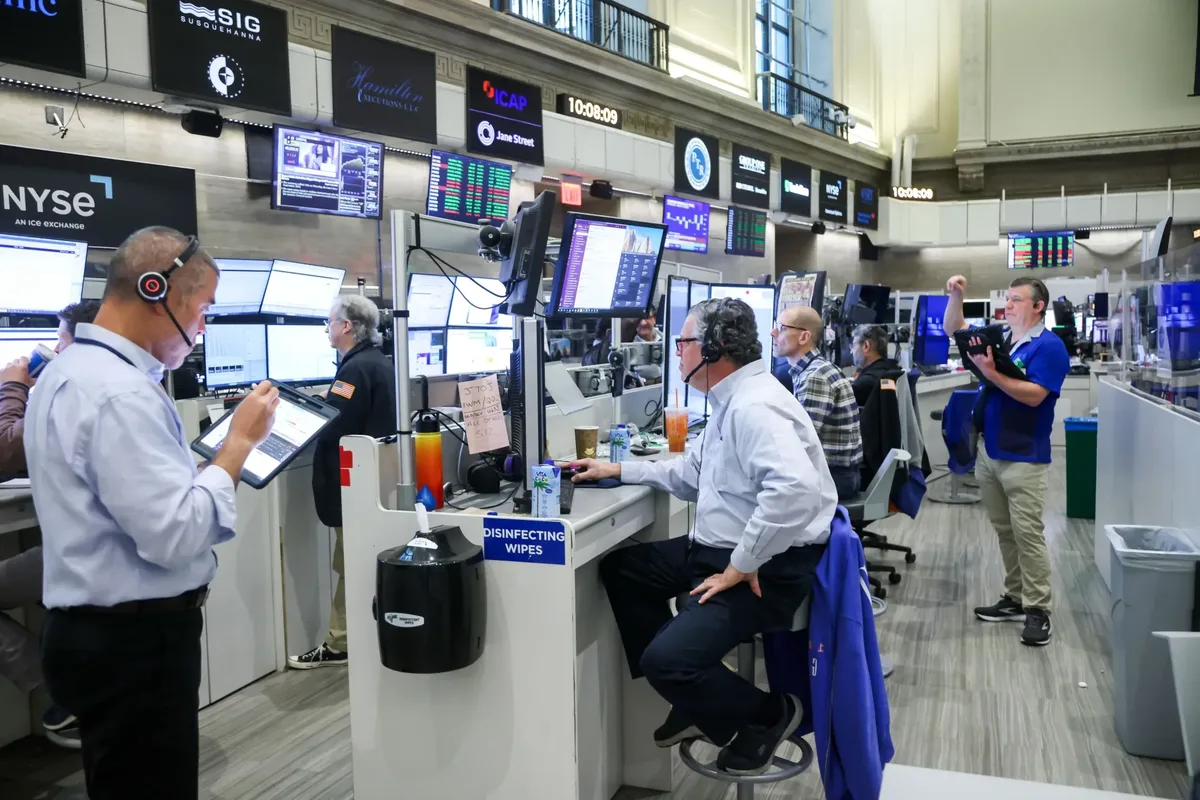
At market open on June 4, the S&P 500 dropped around 0.5%, while the Nasdaq Composite fell about 1% following Broadcom’s report. The Dow Jones Industrial Average, however, edged up by roughly 0.6% [1, 4, 10]. The chip sector had experienced a strong rally, the best since 1999, but analysts described the recent gains as parabolic ahead of Broadcom’s disappointing results. Matt Maley from Miller Tabak said, "The rally off the March lows has been an extremely strong one... If the earnings report from Broadcom is the catalyst for a pullback that lasts more than a day or two, it would actually be healthy for the stock market" [11].
The weakness extended beyond the US. On June 5, Asian technology shares fell sharply, led by South Korean chipmakers Samsung Electronics and SK Hynix. Samsung’s stock declined nearly 7%, while SK Hynix lost more than 8% following the US chip selloff [6]. Andrew Jackson of Ortus Advisors noted, "After such massive gains a 'correction' for recent winners was (and still is) sorely needed for a reset" [6].
The selloff continued as US stock futures kept falling on June 5 amid fading chip momentum and anticipation of the US May jobs report [7, 11, 8]. The report showed 172,000 new jobs added, stronger than expected, reinforcing expectations of Federal Reserve tightening. Mark Malek of Siebert Financial said, "You're not talking about a labour market that's doing fabulous, but you're also not looking at a labor market that's completely crumbling. It's healthy for the market to pull back a little bit and slow down" [8, 9, 12].
Market sentiment stayed cautious with futures pricing in nearly a 100% chance of a Fed rate hike by the end of 2026, amid ongoing inflation and geopolitical tensions in the Middle East [8, 9]. Consumer staples and healthcare sectors outperformed in the broader US market as investors rotated away from tech [3, 11, 9].
Broadcom’s results and the latest US jobs data appear to have set the tone for the week’s trading. Investors will now watch closely for any Fed comments or policy signals in the coming weeks as the chip sector seeks to stabilize amid the ongoing pullback [8, 9].