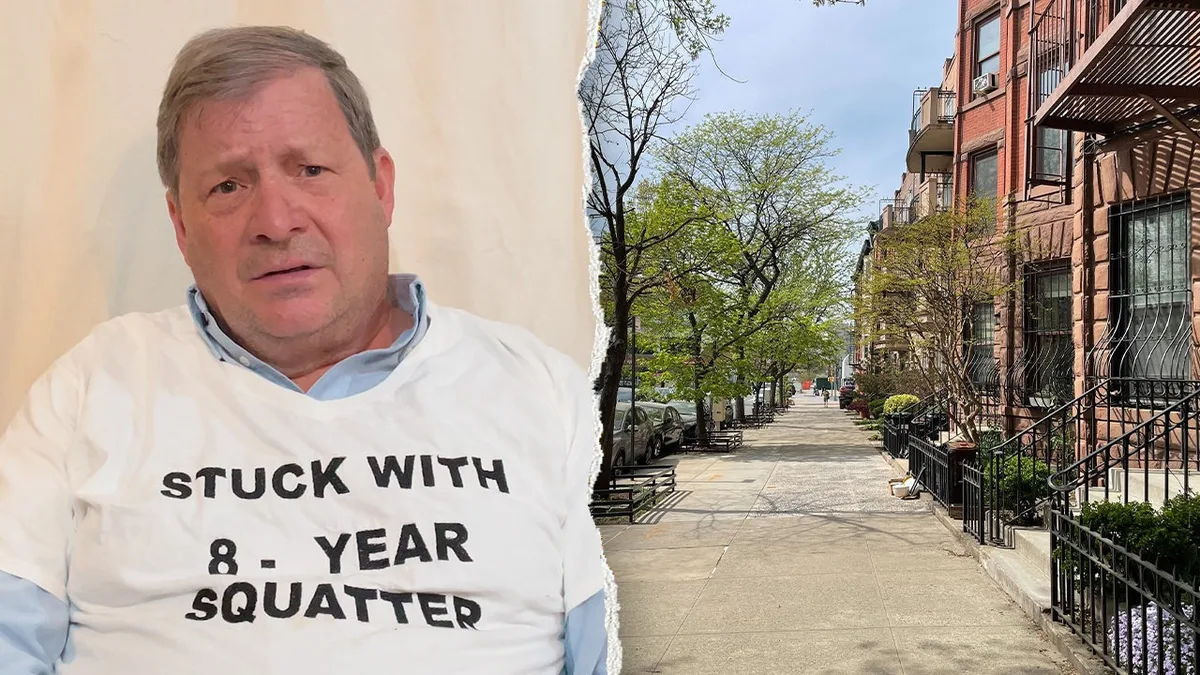
Brooklyn landlord Thomas Diana has been embroiled in a legal battle for nine years to remove a woman who moved in as a live-in companion for an elderly tenant in 2014 [1, 2]. The elderly tenant died in 2016, which escalated the dispute over the woman’s tenancy status and rent obligations into prolonged litigation [1, 2].
Diana claims he has lost $325,000 in unpaid rent and legal fees due to the drawn-out court fight [1]. The tenant originally responded to a Craigslist ad to become a live-in companion at the Brooklyn apartment [1, 2].
Diana says courts repeatedly delay the case and blame frequent lawyer changes by the tenant's side, who has switched legal representation at least eight times during the proceedings [1, 2]. "This has gone on for nine years. Nothing about this is justice," Diana said. He added, "Every time the case gets close to resolution, there’s another delay, another lawyer change, another new story" [1].
The tenant’s lawyers reject Diana’s description of their client as a "squatter" and maintain that a judge found the apartment was wrongly removed from rent-stabilization protections [1, 2]. Tenant attorney Casey Gilfoil called Diana’s claims “a sad attempt to harass our client out of her rent-stabilized apartment, and he will not be successful” [1].
A key legal issue is how to calculate the legal rent and damages, with some funds currently held in escrow pending court resolution [1]. Diana counters that no fraud was found by the judge and that he acted following guidance from the New York State Division of Housing and Community Renewal when destabilizing the apartment. "The judge ruled there was no fraud. She said I incorrectly destabilized the apartment. I did it as they told me to," Diana said [1].
Diana also denies the tenant has any significant rent savings based on her income history [1].
The court case, spanning nearly a decade since 2014, involves multiple delays, lawyer changes, and disputed legal points around rent stabilization and tenancy rights [1, 2]. The next scheduled court proceedings to determine rental obligations and damages have yet to be announced.