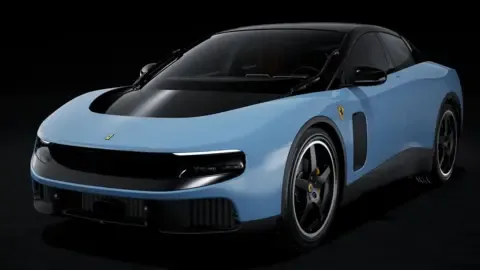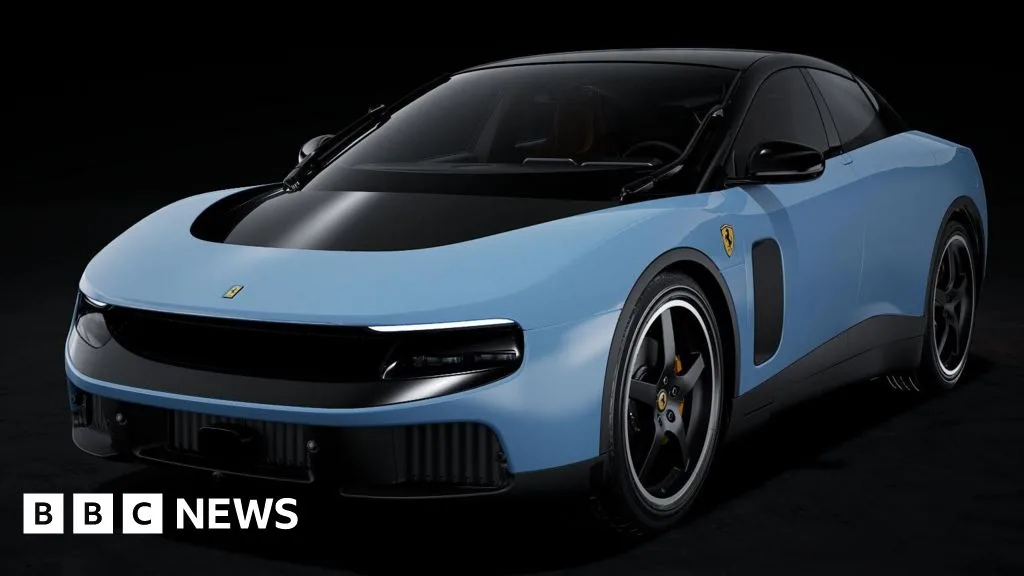
Ferrari unveiled its first fully electric vehicle, the Luce, a five-door, five-seat sedan, during a gala event in Rome on May 25, 2026 [1, 2, 3, 4, 5, 6]. Priced at approximately €550,000 (about $640,000), the Luce marks a major shift from Ferrari’s typical internal combustion sports cars towards electrification and practicality [2, 7, 8, 9, 4, 6]. The car accelerates from 0 to 62 mph (100 km/h) in 2.5 seconds and reaches a top speed above 190 mph (310 kph) [1, 2, 5]. It weighs about one ton more than Ferrari’s hybrid models and uses four electric motors, one at each wheel, delivering instant acceleration with an artificial engine sound [5].
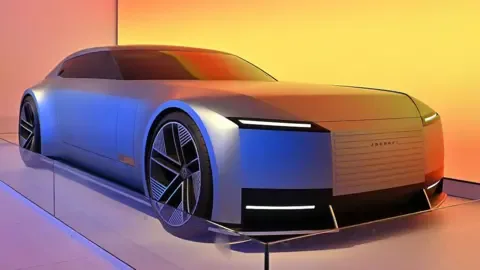
Designed by LoveFrom, the collective led by former Apple design chief Jony Ive and Marc Newson, the Luce emphasizes smooth, aerodynamic surfaces, moving away from Ferrari’s signature muscular style [1, 2, 7, 8, 4, 5, 6]. Ferrari CEO Benedetto Vigna called the launch a “very, very important day” and defended the vehicle’s price, saying, “Innovation has to be paid for,” and orders came from both existing and new customers after the unveiling [7, 8, 9, 4]. Vigna added the Luce “has nothing to do with electric cars you have seen from other players,” claiming its design and performance are unique [7]. Ferrari plans to continue producing various powertrains beyond all-electric cars [7, 9].
Despite Ferrari’s confidence, the Luce received sharp criticism. The company’s shares fell 7-8% in Milan trading on May 26, reflecting investor unease [2, 3, 8, 4, 6]. Former Ferrari chairman Luca Cordero di Montezemolo said the Luce risks “the destruction of a legend” and suggested removing Ferrari’s iconic badge from the car [1, 8, 5, 6]. Italy’s Deputy Prime Minister Matteo Salvini said the Luce “looks like anything but a car from the prancing horse” and questioned what founder Enzo Ferrari would think [1, 5, 6]. Across social media, some users compared the Luce unfavorably to cheaper electric vehicles like the Nissan Leaf and various Chinese EVs [1]. Analysts noted it is too early to judge commercial success and pointed to Ferrari’s history of controversial models eventually gaining market acceptance [8, 6].
The launch followed a three-step reveal starting last year, beginning with core technology and concluding with the full presentation in Rome [2, 7, 4]. The event involved strict secrecy, with phone and camera restrictions to prevent leaks [4]. Ferrari’s 2030 plan expects fully electric vehicles to constitute about 20% of its lineup, down from initial estimates, keeping fuel-powered cars dominant [2]. Ferrari’s brand strategy is shifting from two-seat sports cars towards larger, practical models like the Luce sedan and Purosangue SUV [2, 8, 5, 6].
Classic Ferrari collectors view the backlash as enhancing demand and value for traditional combustion models [10]. The company’s next confirmation of Luce production and deliveries is expected later this year as orders continue to arrive [7, 8, 9].