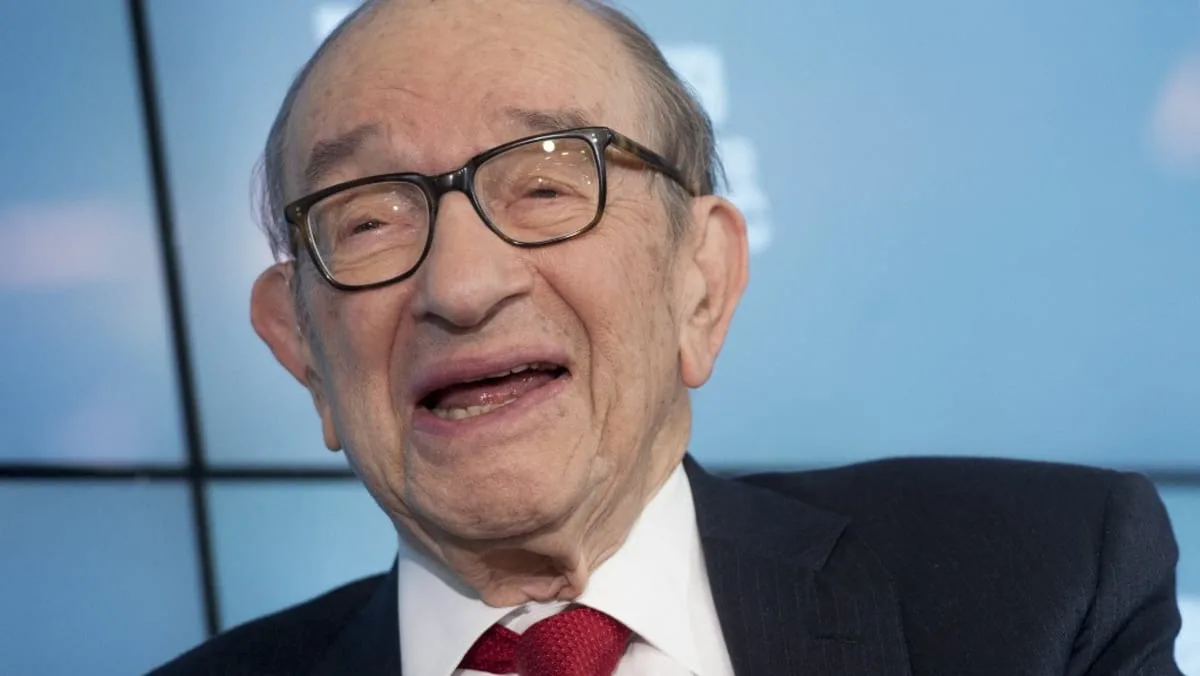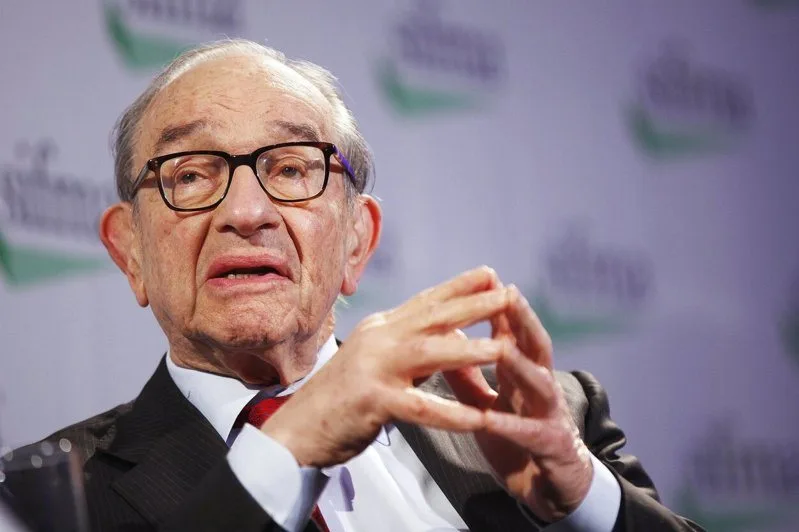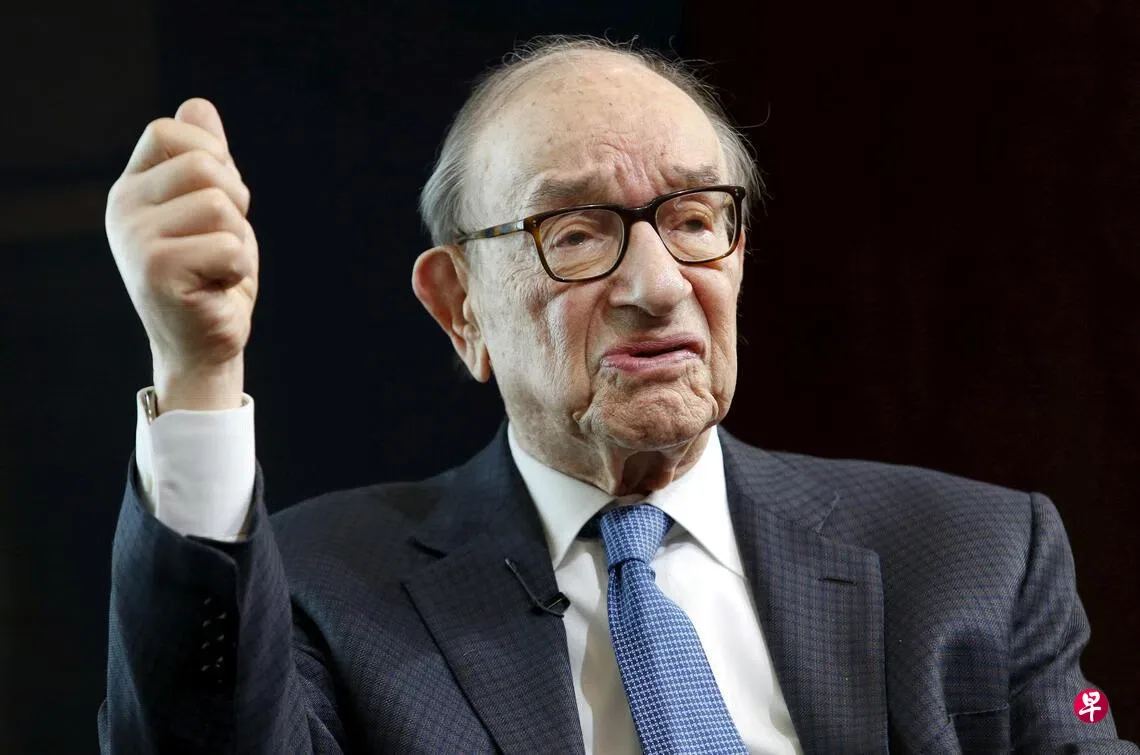
Alan Greenspan, the former Chairman of the U.S. Federal Reserve, died on June 22, 2026, at his home at the age of 100, according to his wife Andrea Mitchell [1, 2, 3, 4, 5, 6]. Mitchell said Greenspan died from complications related to Parkinson's disease and described him as "a great man who made outstanding contributions to the U.S. economy under presidents of both parties and was always candid about his mistakes" [1, 4].
Born March 6, 1926, in New York City, Greenspan was a Jewish economist who served as Fed Chairman from August 1987 to January 2006, under four U.S. presidents [1, 3, 4]. His tenure lasted about 18 and a half years, the second longest in Federal Reserve history [3, 4, 5].
Shortly after taking office, Greenspan helped stabilize financial markets in the wake of the October 1987 "Black Monday" stock market crash by assuring liquidity [4, 7, 8]. He led the U.S. through a long economic expansion from March 1991 to March 2001, one of the longest on record [1, 2, 3, 6]. He also navigated crises including the 1990-91 recession, 1997-98 Asian and Russian financial crises, the 2000 dot-com bubble burst and the 9/11 attacks [1, 3, 6].
Greenspan was known for his complex, often opaque communication style aimed at minimizing market volatility [3, 9, 10]. His 1996 warning of "irrational exuberance" was widely seen as an alert to stock market overvaluation, briefly rattling investors [3, 9, 10]. In a 2013 reflection, he said fear drives markets more than euphoria and that bubbles form gradually but collapse quickly when panic strikes [3].
Greenspan drew criticism for his support of deregulation and low interest rates, which critics say contributed to the 2007-2009 financial crisis [1, 3, 4, 6]. He denied responsibility for the housing bubble, stating in a 2007 interview, "Sometimes I am criticized and I should be, but this time I am innocent" [3, 4]. He also publicly criticized presidents George W. Bush and Donald Trump for attempts to interfere with Fed independence [3, 4].
Andrea Mitchell announced Greenspan's death today, marking the end of a century-long life that spanned major shifts in American economics and policymaking [4].
Greenspan’s career began with his birth in New York City on March 6, 1926, and included his appointment as Fed Chairman in August 1987 by President Ronald Reagan [1, 3, 4]. He officially retired from the Fed chairmanship in January 2006 [1, 3, 4].