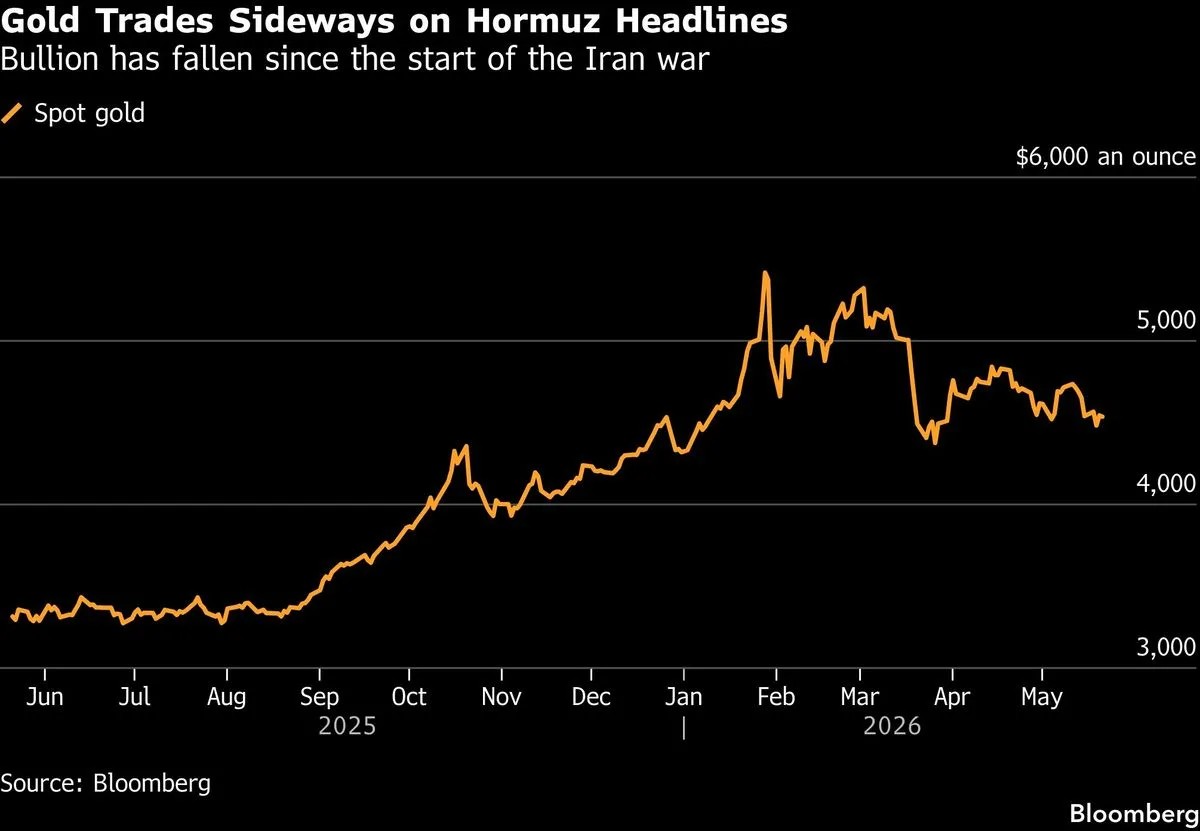
Gold prices rose modestly and held gains near $4,540 an ounce in trading from May 20-21, 2026, following US President Donald Trump's comments on progress toward a US-Iran truce. Trump said the US is in the “final stages” with Iran, generating optimism that the long-running Middle East conflict might be nearing an end and easing bets on further interest-rate hikes [1, 2, 3, 4].
On May 20, gold prices increased by up to 0.4%, trading within a range spanning about $4,499.69 to $4,585 an ounce across different markets and times [1, 2, 3, 4]. The day before, bullion had gained roughly 1.4% [1, 2]. Despite these gains, gold prices remain down about 13-14% since the Middle East war erupted in late February 2026, when conflict involving Iran first broke out [2, 3].
The recent rise in gold was supported by a retreat in the US dollar and Treasury yields on May 20-21, which typically benefits gold because it is priced in dollars and pays no interest. US Vice-President JD Vance said the US and Iran "have made a lot of progress in their talks and neither side wants to see a resumption of the military campaign" [1, 2, 3, 4].
President Trump authorized a new wave of attacks on Iran the week of May 18 but postponed them after Gulf allies requested more time for negotiations. Iran sent a proposal on May 17 via Pakistani mediators, but the White House judged it lacked meaningful improvement [3, 4]. This cautious diplomacy helped lift gold prices as geopolitical tensions eased somewhat.
Citigroup analysts noted that if the Strait of Hormuz situation deescalates, macroeconomic headwinds against gold will ease and prices may bottom out. They added that a prolonged closure could shift worries to stagflation, a scenario that tends to benefit precious metals historically [2]. OCBC strategist Vasu Menon said, "We continue to see gold as a useful hedge against global uncertainties given significant political and economic changes happening globally" [3].
The Federal Reserve’s April meeting minutes, released May 20, reminded markets that officials warned rates might need to rise if inflation stays persistently above target. Philadelphia Fed President Anna Paulson said the current rate levels are "appropriate for the moment," but that it was "healthy" investors are considering scenarios where rates could still go higher [2, 4].
Silver, platinum, and palladium prices showed only minor changes alongside gold moves in the May 20-21 period, with spot silver trading between roughly $74.55 and $78.68 an ounce [2, 3, 4].
On May 21, gold prices traded slightly lower near $4,538 an ounce in Singapore, reflecting some profit-taking after recent gains [2]. The market will watch for further progress in US-Iran talks and upcoming inflation data to gauge the direction of gold and interest-rate expectations.