Rob Kaplan, vice-chairman at Goldman Sachs and former president of the Dallas Fed, said Thursday the Federal Reserve may need to raise interest rates as soon as September if inflation remains elevated [1, 2, 3]. Kaplan cautioned that rate increases usually come in a series rather than as a one-off move, with two or three hikes likely if the Fed acts [1, 2, 3]. "If inflation prints don’t cool between now and we get to September, I actually think the balance of risks suggests it would be wise to take some action, either in September or in the fall," Kaplan said [1].
Half of the Federal Reserve members expect at least one rate hike by the end of this year, according to recent Fed projections [1, 3]. Investors have shifted expectations accordingly, now pricing in a 0.25 percentage point increase by October, reversing earlier forecasts of rate cuts beginning in March 2027 [1]. Citigroup remains one of the few firms predicting easing this year, but pushed back its anticipated rate cut from September to October [1].
The Fed held its latest policy meeting Wednesday under new chair Kevin Warsh, who kept rates steady for the fourth consecutive meeting but sent a hawkish signal on inflation [3]. The Fed's dot plot released at the meeting shows officials now expect one quarter-point hike by year end, a notable change from March's forecast of no hikes and a rate cut [3]. Warsh confirmed he did not submit a rate forecast, prompting speculation about potential changes to Fed communication or policy frameworks [3].
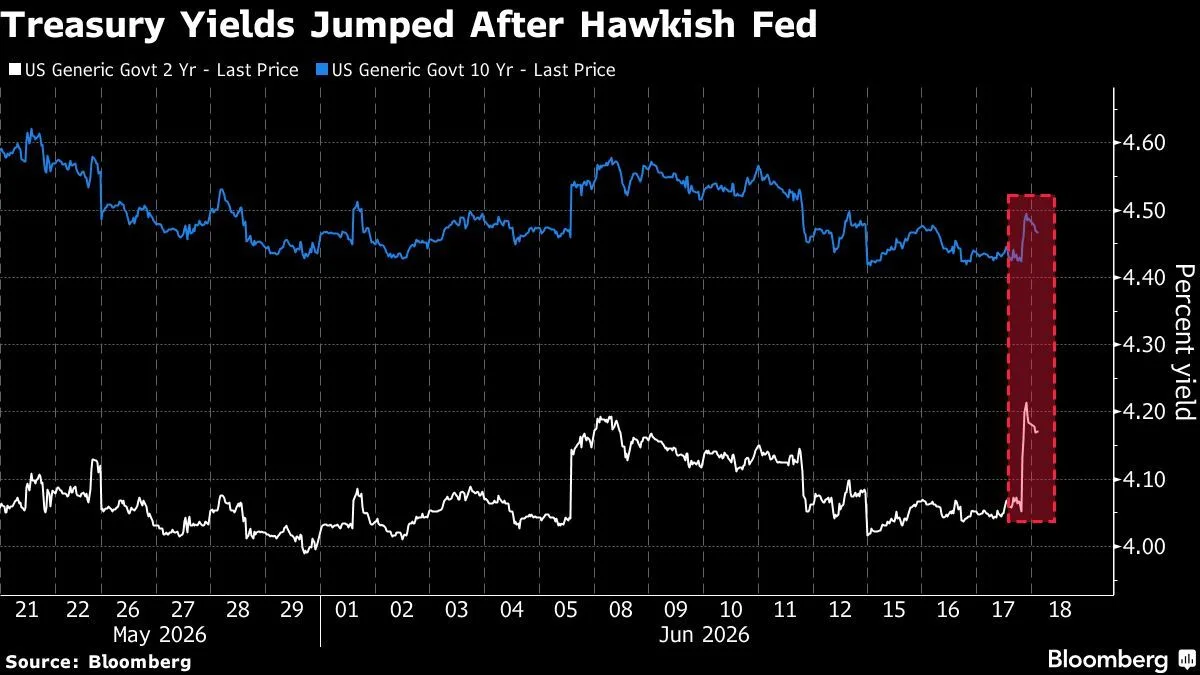
Kaplan also warned against over-interpreting the Fed's recent dot plot, noting it may not yet reflect geopolitical developments such as the US-Iran deal [1]. As of Asian trading June 18, the two-year Treasury yield stood at 4.17%, reflecting markets adjusting to the possibility of tighter monetary policy [1].
The Fed will closely monitor inflation data over the coming months to assess the need for rate hikes this fall.