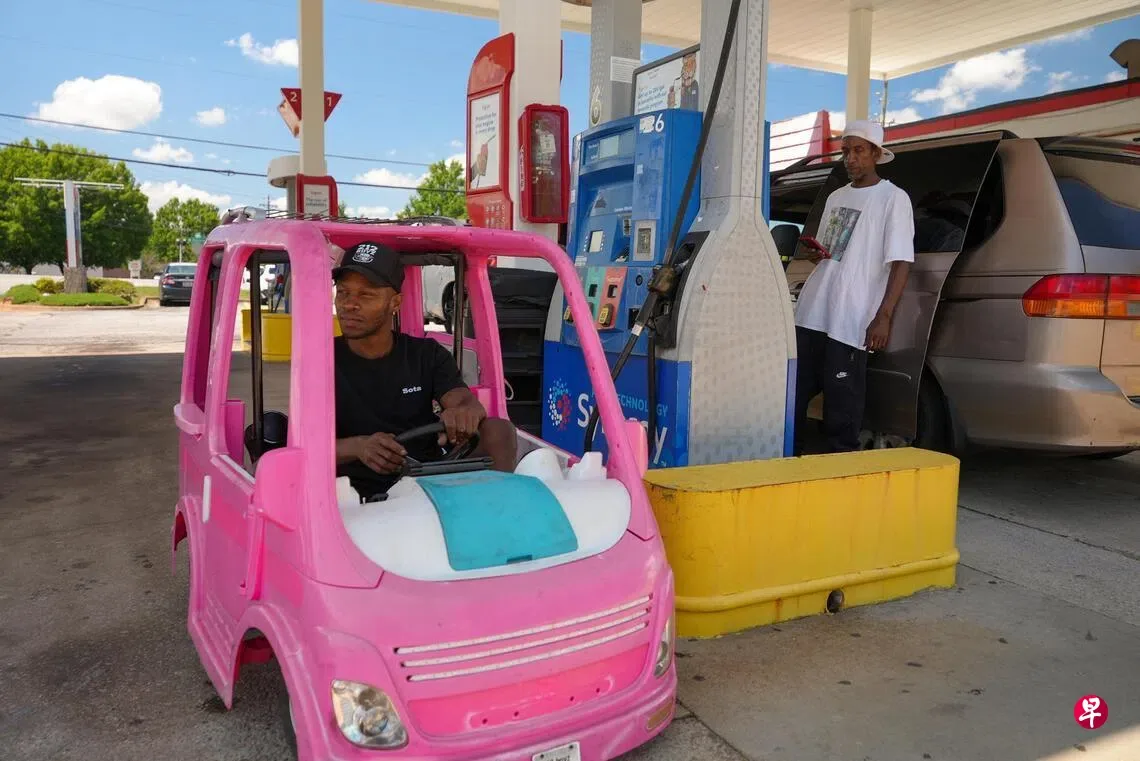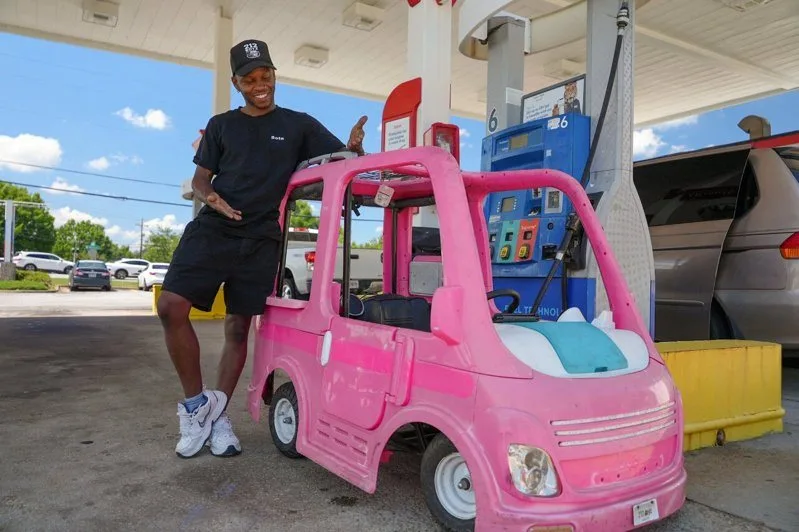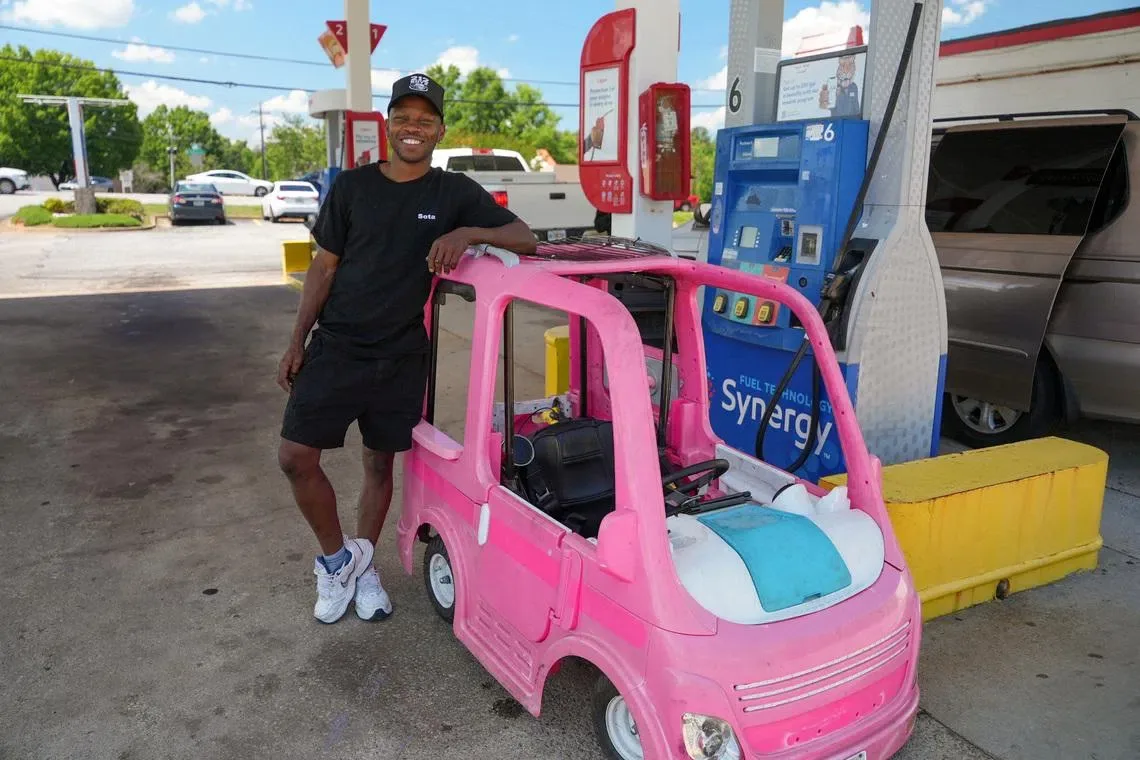
Mali Hightower, a 30-year-old from Ellenwood, Georgia, modified a broken pink Power Wheels Barbie Dream Camper by fitting it with a 4.54-liter single-piston engine from a power washer. She now uses the toy car as a low-cost alternative for short trips, saying, "I drive this when I can" [1]. The modified vehicle stands less than 1.2 meters tall and has a grocery rack on top, providing practical use despite its size [1, 2, 3].
Hightower's regular 1996 Mercedes-Benz convertible costs about $90 to fill with gasoline. Rising fuel costs have pushed her to rely more on the creative solution. She also commented in Mandarin, "油价越来越贵了,我只能想办法应对。我不能再开平时那辆车,只能开我的迷你小车," expressing how she must adapt to soaring prices [4].
As of May 18, 2026, the average U.S. price for regular gasoline reached roughly $4.50 per gallon, a jump from approximately $3 before the Iran conflict began in late February [1, 2, 3, 4, 5]. Prices can spike as high as $9 per gallon near freeways, leading people like content creator Dafne Flores from Washington state to switch to public transit when visiting Los Angeles. Flores said, "We’re used to expensive gas prices, but never this expensive," echoing the rare peak costs [1, 2, 3].
Nationwide, 44% of Americans have cut back on driving according to an Ipsos poll released April 28, reflecting widespread attempts to reduce fuel expenses [1, 2, 3, 5]. Public transit use has increased, with Bangor, Maine’s bus system experiencing a 21% growth in ridership since January 2026. Laurie Linscott, a Bangor bus manager, noted the rise covers "every walk of life," showing broad demographic shifts toward alternative transport [6, 2, 3, 5].
Some summer camp operators now promote overnight programs as a way for parents to save on driving fuel costs, adding another response to higher prices [1, 5]. Meanwhile, electric vehicle drivers, including many Tesla users, avoid gas price shocks. Elon Musk pointed to growth in autonomous driving across U.S. cities as part of this trend [5].
The gas price surge is strongly shaping how Americans move, with individuals and communities seeking alternatives. The next key data point will be updated fuel price reports expected later in May 2026 [1, 2, 3, 4, 5].