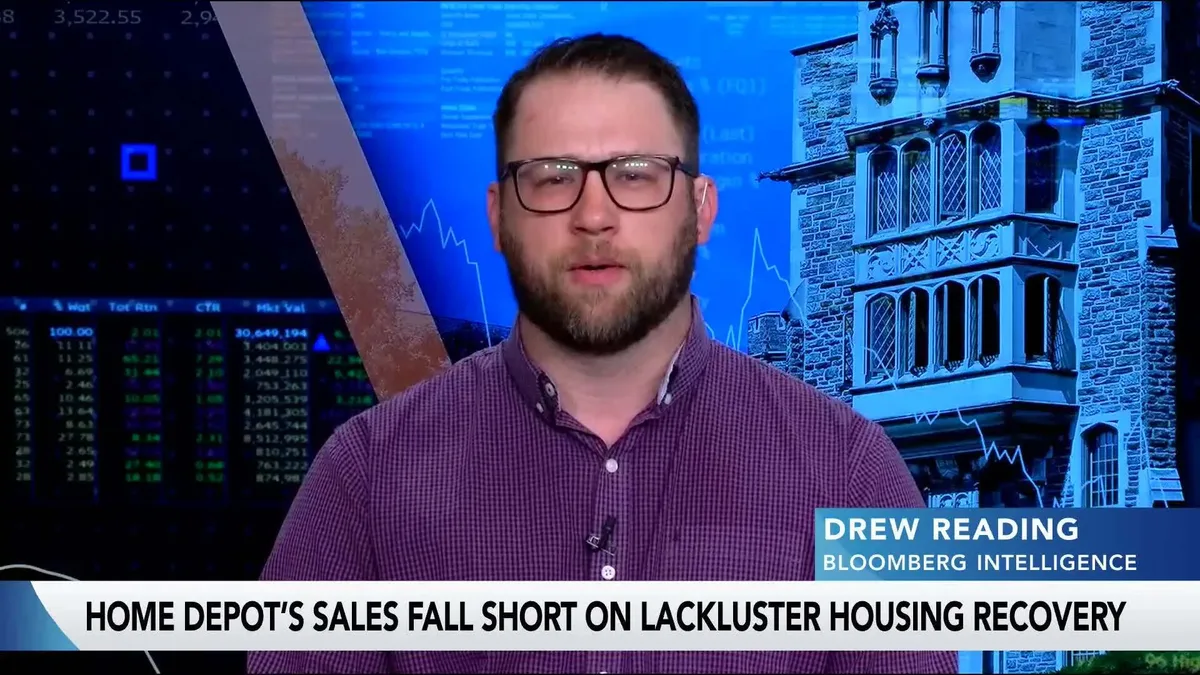
Home Depot reported same-store sales growth of 0.6% for the first quarter ended May 3, missing expectations due to muted housing demand and elevated borrowing costs in the U.S. housing market [1, 2]. The company's total revenue for the quarter rose 4.8% year-over-year to $41.77 billion, beating analyst estimates of $41.52 billion [2].
Earnings per share declined 3.7% to $3.43 but still exceeded the forecasted $3.41 per share [2]. About 55% of Home Depot's sales come from professional customers, while 45% stem from do-it-yourself homeowners [2].
Rising mortgage interest rates and increased bond yields have weighed on housing-related stocks, creating a challenging environment for retailers like Home Depot [2]. CEO Ted Decker acknowledged the difficulties posed by high rates in a sluggish housing market. He said, "We are probably all spending too much time in economics in the home improvement industry these days. If it's higher for longer on rates in a slow housing market, we're just going to have to keep working our way through this period of moderation, keep focusing on controlling what we can control and take share in the marketplace" [2].
The market has reacted by lowering Home Depot's stock price targets, with some analysts cutting estimates from $420 to $360 per share due to the impact of rising interest rates [2].
Home Depot's results were reported publicly on May 19 by Bloomberg and CNBC following the end of the quarter [1, 2]. The company continues to navigate the slow housing market by focusing on operational control and market share gains.