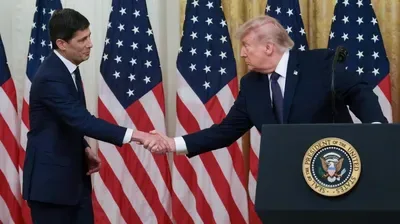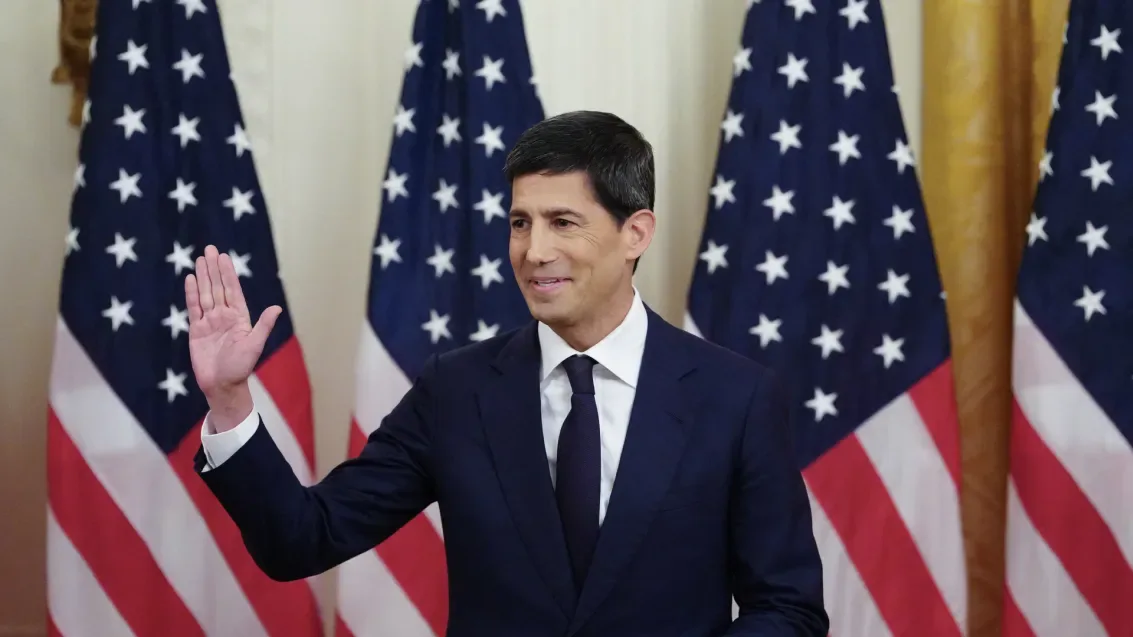
Kevin Warsh was sworn in as chair of the US Federal Reserve in a White House ceremony on May 22, 2026, succeeding Jerome Powell whose term ended but remains a governor through January 2028 [1, 2, 3, 4, 5, 6, 7]. Warsh, 56, will serve a four-year term as Fed chair and a 14-year term as governor [2, 5, 6].
Warsh promised a "reform-oriented Federal Reserve" aiming to lower inflation, support stronger economic growth, and raise real take-home pay. "To fulfil this mission, I will lead a reform-oriented Federal Reserve, learning from past successes and mistakes," he said [3]. He also pledged to maintain Fed independence despite pressure from the Trump administration [2, 3, 4, 6].
President Donald Trump praised Warsh's independence but continued to pressure for significant interest rate cuts. Trump said, "I want Kevin to be totally independent... Don’t look at me, don’t look at anybody, just do your own thing and do a great job," while criticizing Powell for delayed rate cuts, nicknaming him "Too Late" [2, 3, 4, 5, 6, 7]. Trump also criticized Fed involvement in issues beyond inflation, such as climate and diversity policies [4].
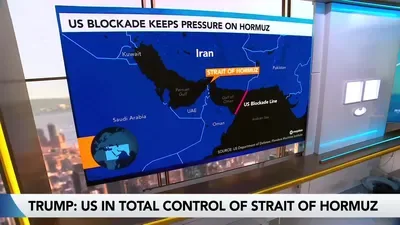
Warsh takes over a Federal Reserve increasingly hawkish amid inflation concerns. Inflation rose to 3.8% year-on-year by April 2026, the highest in three years, driven by a 17.9% jump in energy prices [3, 8, 6]. Fed officials at the April 28-29 meeting noted inflation risks fueled by the Iran war and energy prices, with many favoring potential rate hikes if inflation persists above the 2% target [9, 10]. Ryan Sweet of Oxford Economics said building consensus to move rates will be difficult anytime soon [10].
Warsh has previously expressed a desire to cut rates and shrink the Fed's balance sheet, which contrasts with many policymakers now favoring firmer policy [9, 2, 10, 5]. Fed governor Stephen Miran will leave the board as Warsh is sworn in [2, 5].
Warsh’s first policy meeting as chair is scheduled for June 16-17, 2026, with no immediate rate changes expected [10, 6]. The Fed chair will face the challenge of balancing inflation pressures with political demands for rate cuts amid ongoing geopolitical risks.