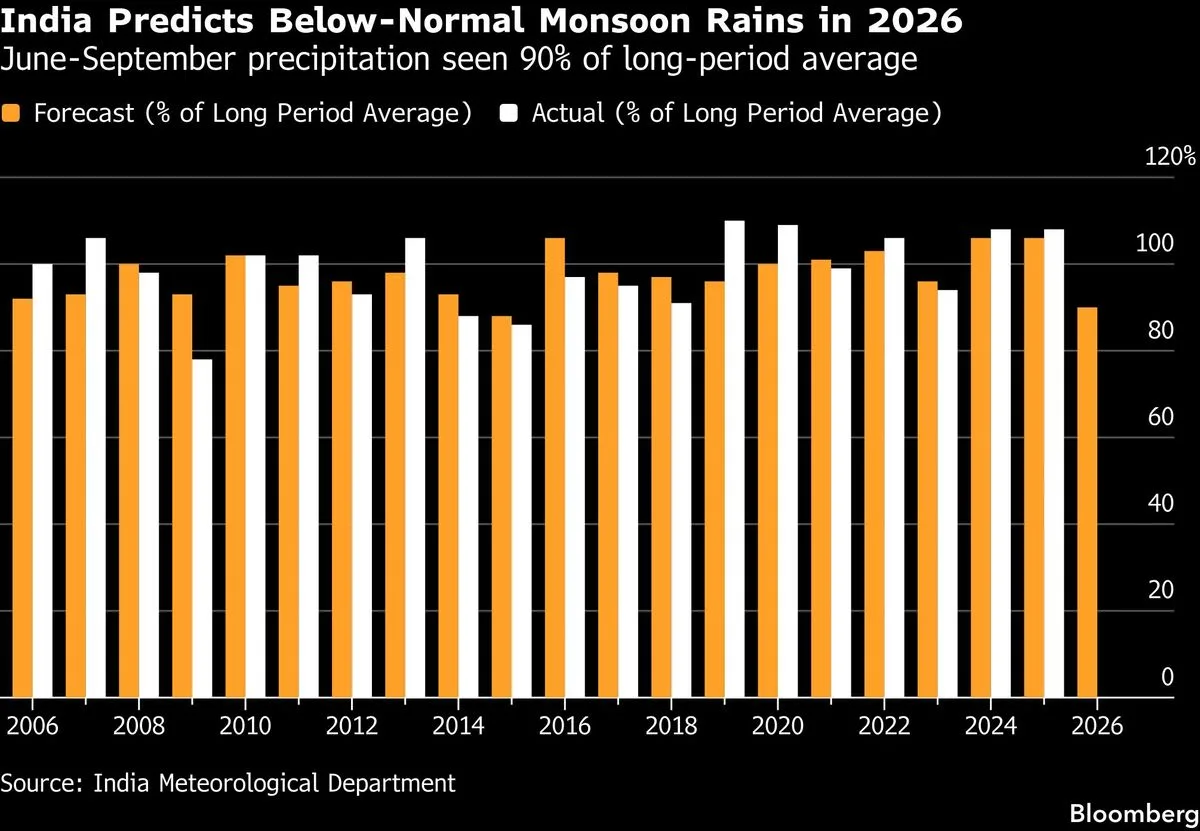
India’s Meteorological Department (IMD) announced on May 29 that monsoon rainfall for June to September 2026 is expected to be 90% of the long-term average with a 4% margin of error, down from an April forecast of 92% [1, 2]. M. Ravichandran, Secretary at the Ministry of Earth Sciences, said, "Cumulative rains during the June-September season are likely to be 90% of the long-term average ... The prediction carries a 4% margin of error" [1].
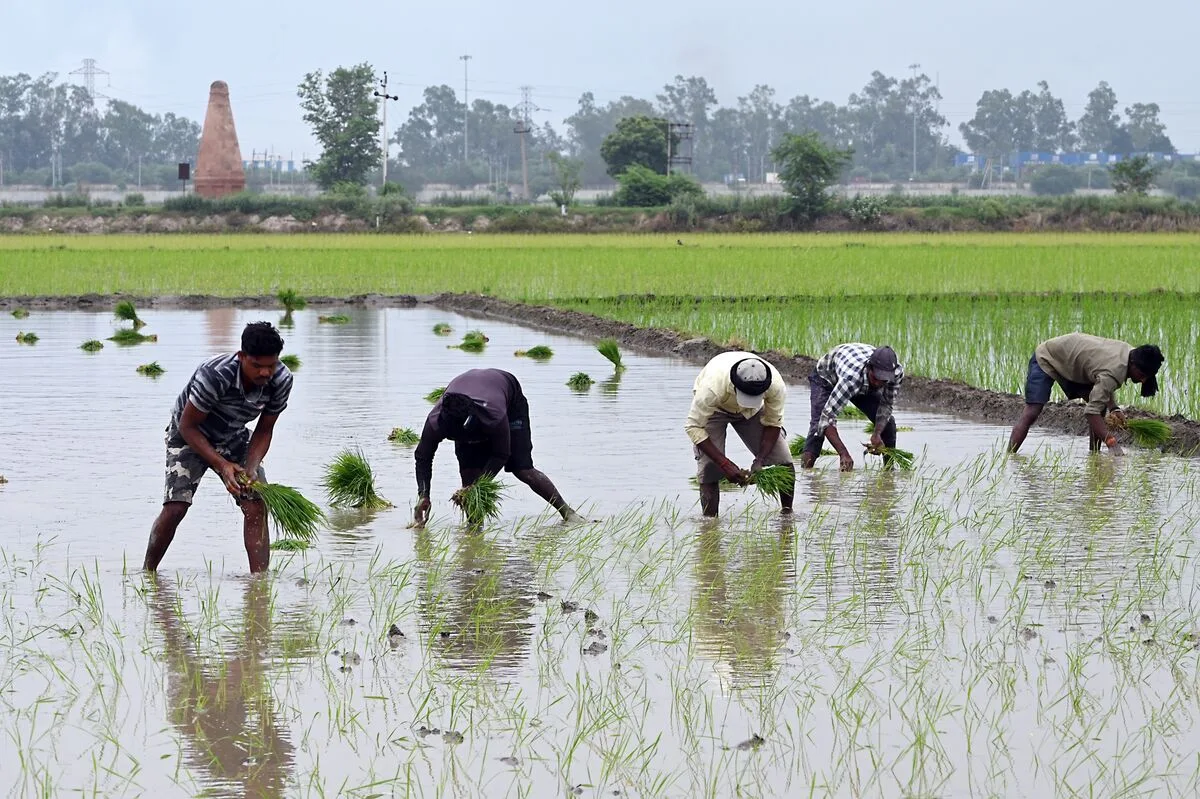
The lowered forecast follows expectations of a likely El Niño event that typically suppresses monsoon rainfall activity across the Indian subcontinent [2]. The southwest monsoon season normally begins around June 1 in southern India and progresses northward over four to six weeks [2]. Hundreds of millions of farmers rely on these rains to irrigate key crops such as rice, sugarcane, and cotton [2].
Economists warn that the below-normal monsoon could disrupt efforts to keep food inflation in check. Suvodeep Rakshit of Kotak Mahindra Bank said, "The IMD’s forecast of a below-normal monsoon will be a substantial risk for orderly evolution of food inflation over the next few months" [2]. Poor rainfall may force greater reliance on diesel pumps for irrigation, thus increasing fuel demand amid ongoing energy supply constraints in the Middle East [2].
Reflecting concerns over domestic supplies, the Indian government in May banned sugar exports through at least September 30, 2026, to protect the domestic market amid poor rains [2]. Meanwhile, local fuel retailers raised gasoline and diesel prices four times during May 2026, likely linked to increased demand and tight global supplies [2].
The IMD forecast and government measures come ahead of the critical June-September monsoon season, a key period for India’s agriculture and economy. The rainfall outcome will be closely watched as the season progresses.