India is considering a significant reduction in taxes paid by foreign investors on its sovereign bonds, a move recommended by the Reserve Bank of India and currently under serious review by the Finance Ministry [1, 2]. The deliberations aim to ease the tax burden on foreign investors to help curb the Indian rupee's recent depreciation, which has weakened more than 6% against the US dollar in 2026, making it Asia's worst-performing currency [1, 2].
Currently, foreign investors pay both short- and long-term capital gains taxes on Indian bonds, with interest income taxed at about 20%. This is a steep increase from earlier rates: until 2023, a 5% tax concession on bond interest income applied but was then discontinued [2]. The higher tax levels are cited by foreign investors as a deterrent compared to other emerging markets such as Indonesia, Malaysia, Mexico, and South Africa [2].
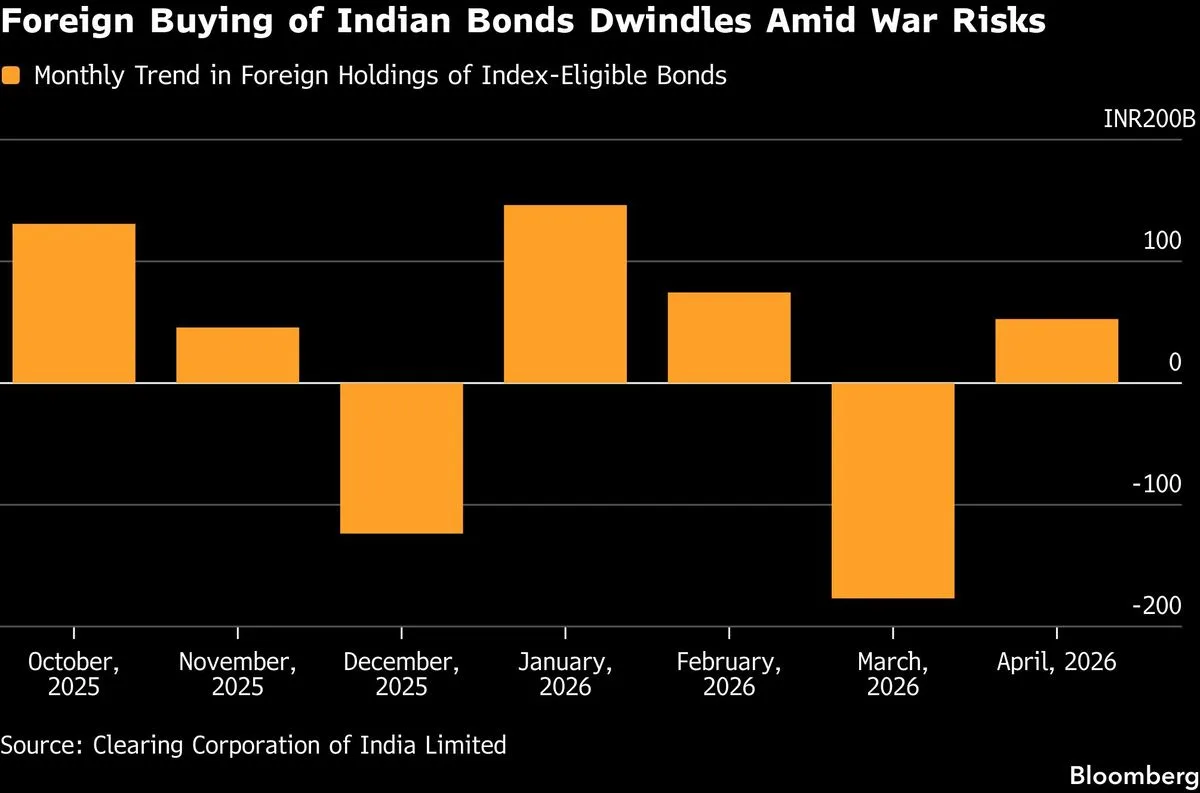
Foreign investors own just 3% of India's roughly US$1.3 trillion sovereign debt market, indicating limited foreign participation [2]. The proposed tax cuts aim to align India's policies with global norms, encouraging greater foreign capital inflows amid challenges such as inflation and currency weakness. Officials see tax policy reform as part of Prime Minister Narendra Modi's long-term vision to achieve developed nation status by 2047 [1, 2].
Market reactions to the tax reduction news were immediate. The rupee reversed recent losses, and the yield on the 10-year Indian government bond fell as much as 5 basis points to 7% before partially retracing [2]. Policymakers have also taken other steps, like limiting trading position sizes, to stem rupee depreciation [2].
Despite the positive signals, concerns remain. Edwin Gutierrez, head of emerging market sovereign debt at Aberdeen Investments, said the tax change "is modestly positive but that’s not going to overcome the overall negative sentiment in the Indian bond market. Inflation is weighing most on Indian bonds and keeping foreign investors from buying Indian debt" [2].
India ended the 5% tax concession on foreign bond interest income in 2023, a key background to current discussions [2]. The Finance Ministry is expected to finalize decisions on the tax policy changes in the near term as it seeks to attract greater foreign investment to stabilize the rupee and deepen bond markets [1, 2].