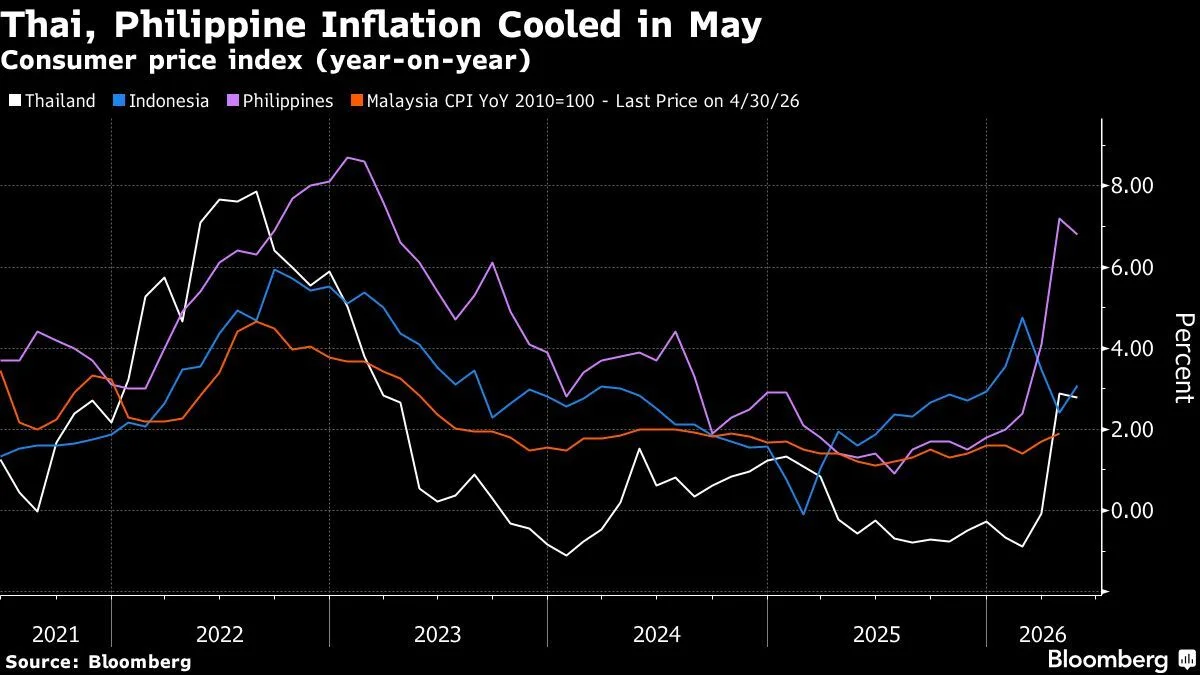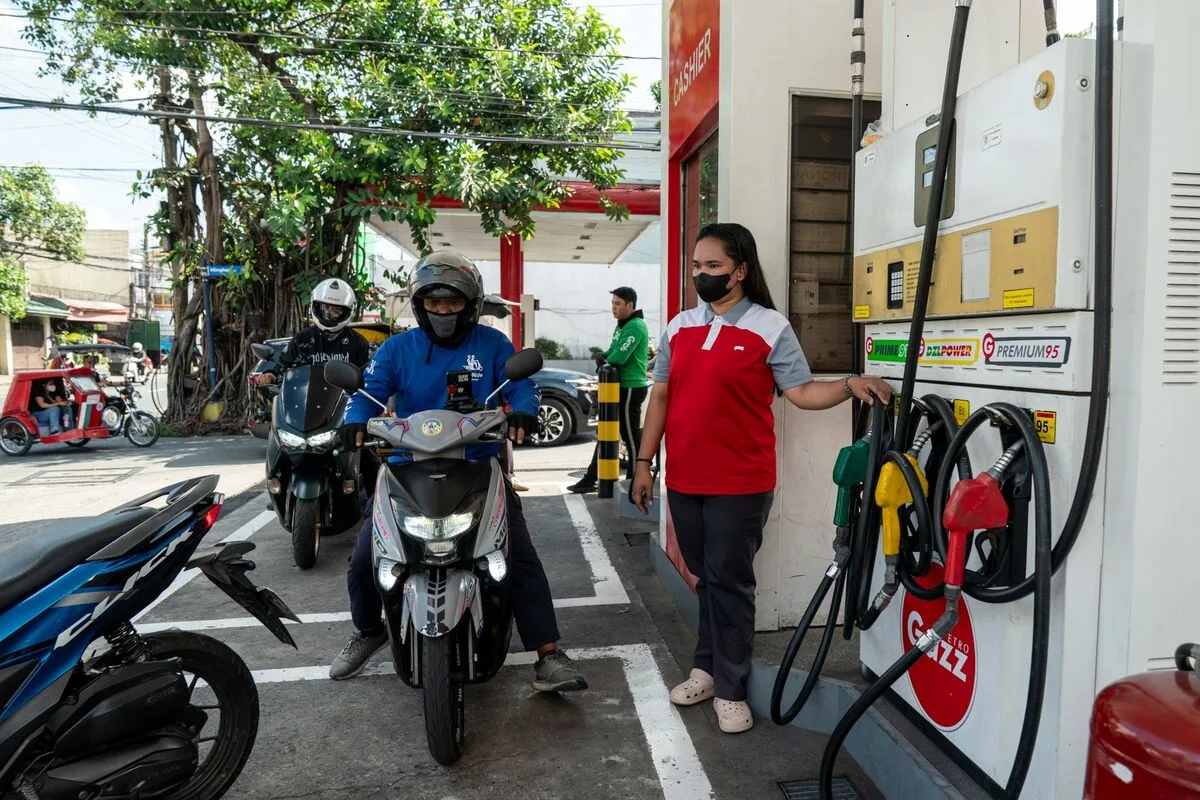
Inflation in the Philippines slowed to 6.8% year-on-year in May 2026 from 7.2% in April, though it remains above pre-war levels and expectations, according to reports released in early June [1, 2]. Thailand's inflation also eased to 2.79% in May from 2.89% in April [1, 2]. Falling oil prices helped reduce inflationary pressures in both countries by lowering costs in energy, transport, and food sectors [1, 2].
Consumer spending in the Philippines softened in May as households adjusted to managing costs [2]. Brian Tan, an economist at Barclays Plc, said the latest inflation figures "will take some of the wind out of the Bangko Sentral ng Pilipinas’ (BSP) sails in terms of the urgency for off-cycle policy tightening" [2]. However, inflation in the Philippines is expected to remain above the BSP’s 2%-4% target through April 2027, keeping alive the possibility of a 25-basis-point interest rate increase in June 2026 [2].
Thailand faces the prospect of rising inflation in the second half of 2026, potentially exceeding the Bank of Thailand’s 1%-3% target [2]. The central bank’s key rate is currently low at 1%, which may give it room to hold off on rate hikes despite the inflation pressures [2].
The easing in oil prices partly reflects ongoing global diplomatic efforts, including US-Iran negotiations in May 2026 aimed at a ceasefire, which have taken some heat out of energy markets [2]. Still, there is no clear resolution in sight to the Iran conflict, which poses an ongoing risk to Southeast Asian economies heavily reliant on Middle Eastern oil supplies [2].
The inflation trends in May provide some breathing space for central banks in both countries before considering further monetary tightening [1, 2]. The markets will closely watch the BSP’s rate decision expected in June 2026, as inflation remains above target in the Philippines and could shape policy stance for the months ahead [2].