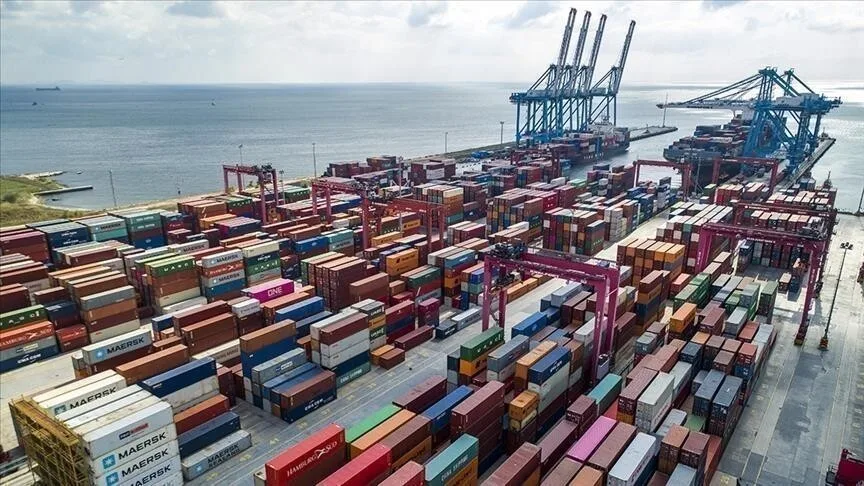
Japan's exports grew 17% in May compared to a year earlier, the fastest pace since November 2022 and beating market expectations of 16.2% [1, 2]. Semiconductor exports jumped 61.2% in value terms, fueled by strong global demand for AI-related technology [1, 2]. Automobile exports increased 16.4% year on year during the month, contributing significantly to the export surge [1, 2].
Imports also rose but at a slightly slower pace than expected, increasing 12.5% year on year in May, the fastest since January 2025 but below the forecast of 12.8% [1, 2]. Petroleum imports fell 28.5%, impacted by disruptions linked to conflict in the Middle East [2]. This regional instability also caused a 32% drop in exports to the Middle East, while exports to China rose 17.9% and to the US climbed 12.5% [2].
Despite the sharp rise in export values, export volumes increased only 0.5%, indicating that the growth was largely driven by higher prices and the weaker yen's effect on valuations [2]. The yen's weakness improved Japan's export competitiveness but raised import costs and domestic inflation pressures [1, 2].
Japan’s economy expanded 0.5% sequentially and 1.8% on an annualized basis in the first quarter, with exports remaining a key growth driver [1, 2]. On June 16 or 17, the Bank of Japan raised its policy rate by 25 basis points to 1%, the highest level in over 30 years, aiming to counter inflation and yen weakness [1, 2].
Business sentiment among large manufacturers improved in June, with the Reuters Tankan survey showing a rise to +13 from +8 in May [1]. Regarding market reactions, reports differ as one source noted a 0.5% drop in the Nikkei 225 index after the export data release, while another recorded a 0.72% rise [1, 2].
The Bank of Japan’s next policy meeting is expected to monitor these trade and inflation developments closely.