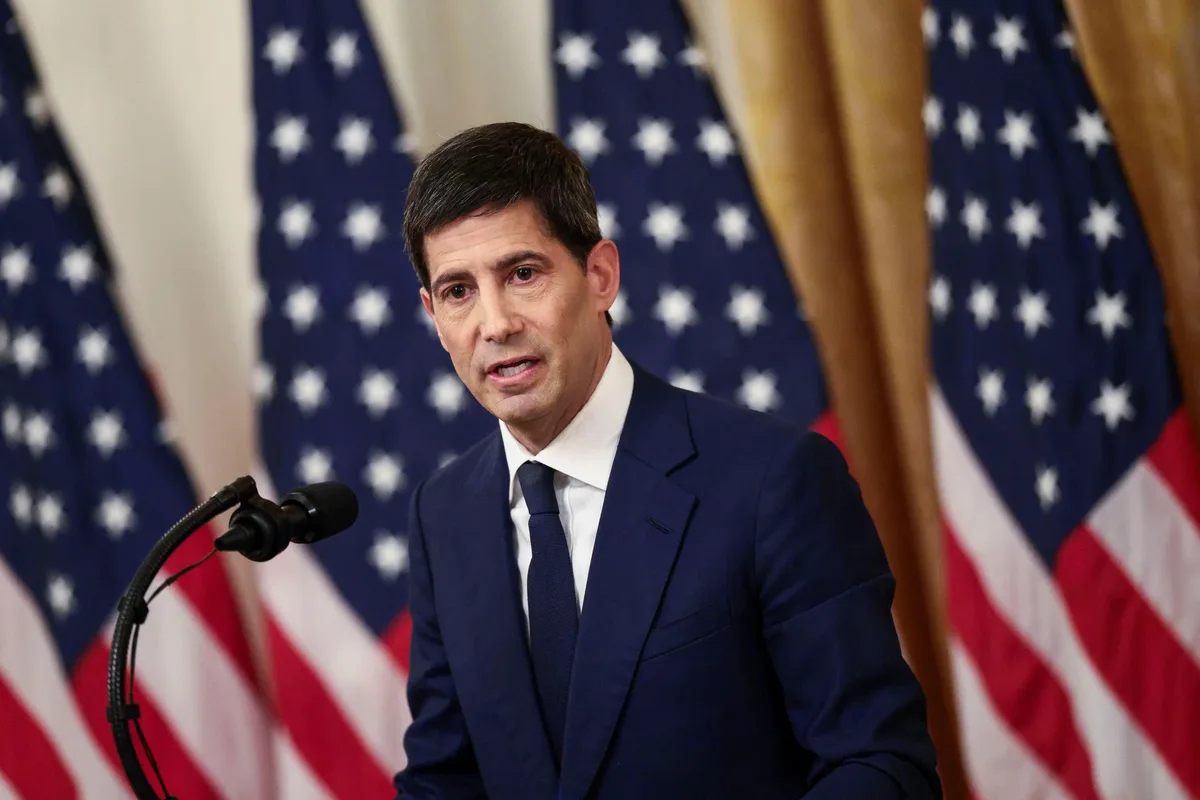
Kevin Warsh took the oath as Federal Reserve chairman at a White House ceremony on May 21, becoming the first Fed leader since Alan Greenspan in 1987 to do so there [1, 2].
Warsh inherits an inflation rate notably above the Fed’s 2% target, with the preferred inflation gauge rising 3.8% year-over-year through April, the highest since 2023 [3]. Amid this, the Fed faces renewed challenges from energy shocks tied to the Iran conflict and inflationary pressures linked to advances in artificial intelligence [3, 4, 5].
Market expectations have shifted in recent months. While earlier forecasts suggested potential rate cuts in 2026, recent data and Fed signals now point to possible further tightening rather than easing [3]. "There is no appetite for cuts. Warsh has to be able to get markets to price out the hikes that they have put in place — that is the biggest challenge for him this year," said Stephanie Roth of Wolfe Research [3].
Former President Donald Trump publicly stated he expects interest rates to fall "very quickly," but he also said Warsh should maintain the Fed’s independence [3, 1, 2, 5]. In contrast, market consensus remains cautious, largely expecting rates to hold steady over most of this year [1, 2, 5].
US Treasury Secretary Scott Bessent met Warsh for breakfast on May 28 and expressed confidence in his balanced approach. "我相信他會做正確的事以平衡通膨與經濟成長," Bessent said [1, 2, 6, 5]. He added he has never pressured a Fed chairman to cut rates during such meetings, referring to his past with Jerome Powell, and did not do so with Warsh either [1, 2, 5].
Warsh has advocated reducing central bank discretion, favoring rule-based monetary policy frameworks such as the Taylor rule [4]. He also is expected to reform Fed communication strategies, reduce reliance on forward guidance, and manage the central bank’s balance sheet more cautiously to maintain credibility and independence [4].
Warsh will lead the Federal Open Market Committee with a data-driven, consensus-building style as inflation and economic conditions evolve [4]. The next significant data points on inflation and economic growth will be closely watched to gauge how Warsh sets monetary policy amid these pressures.