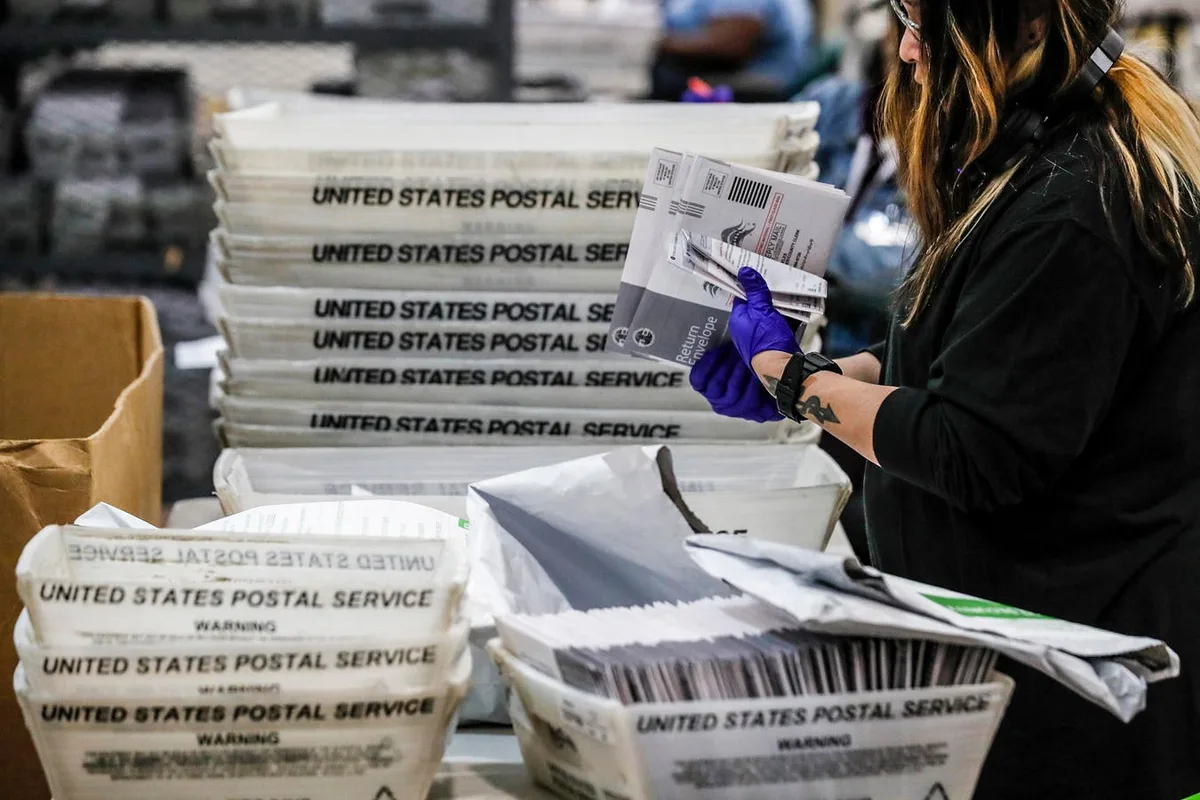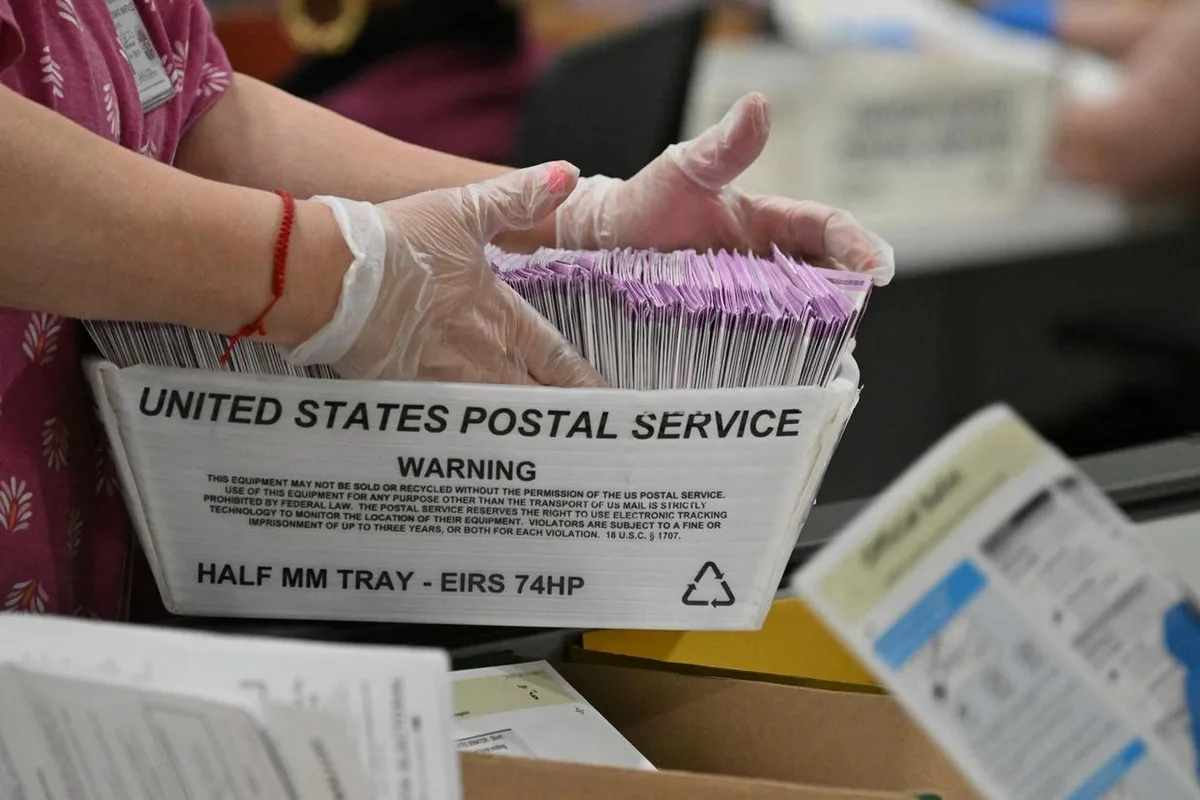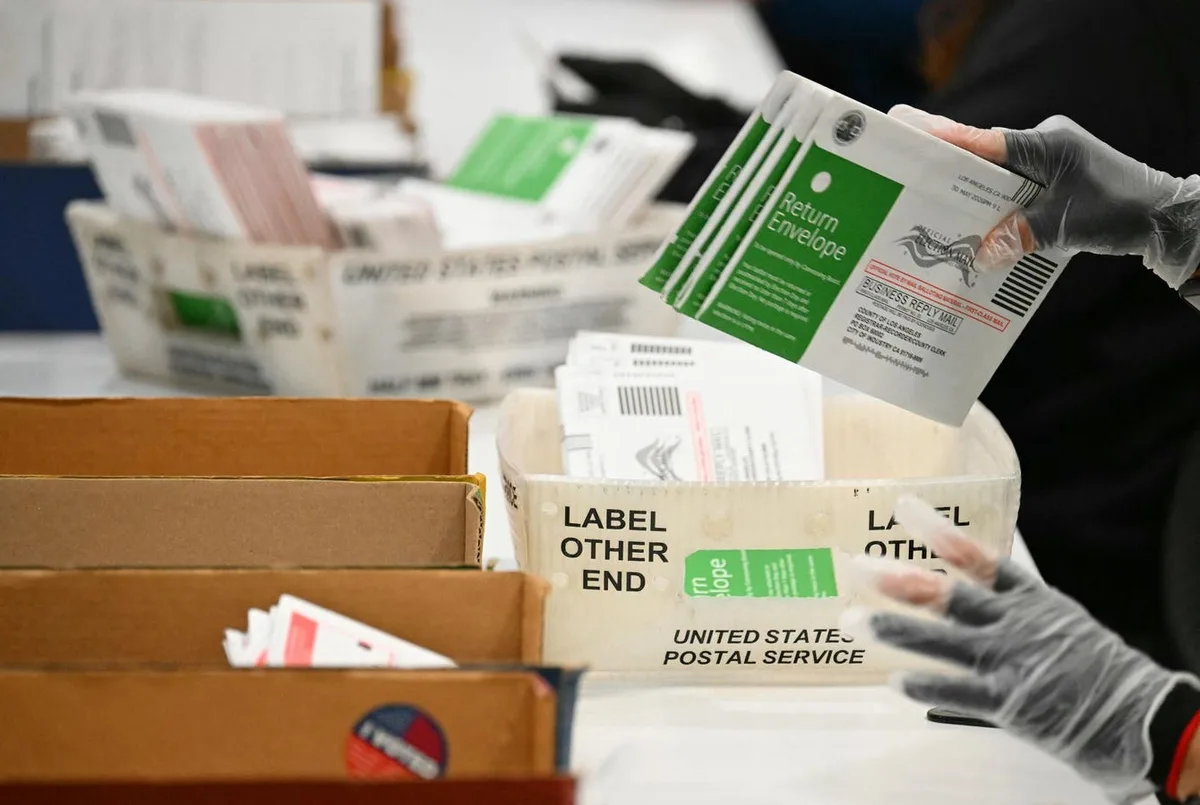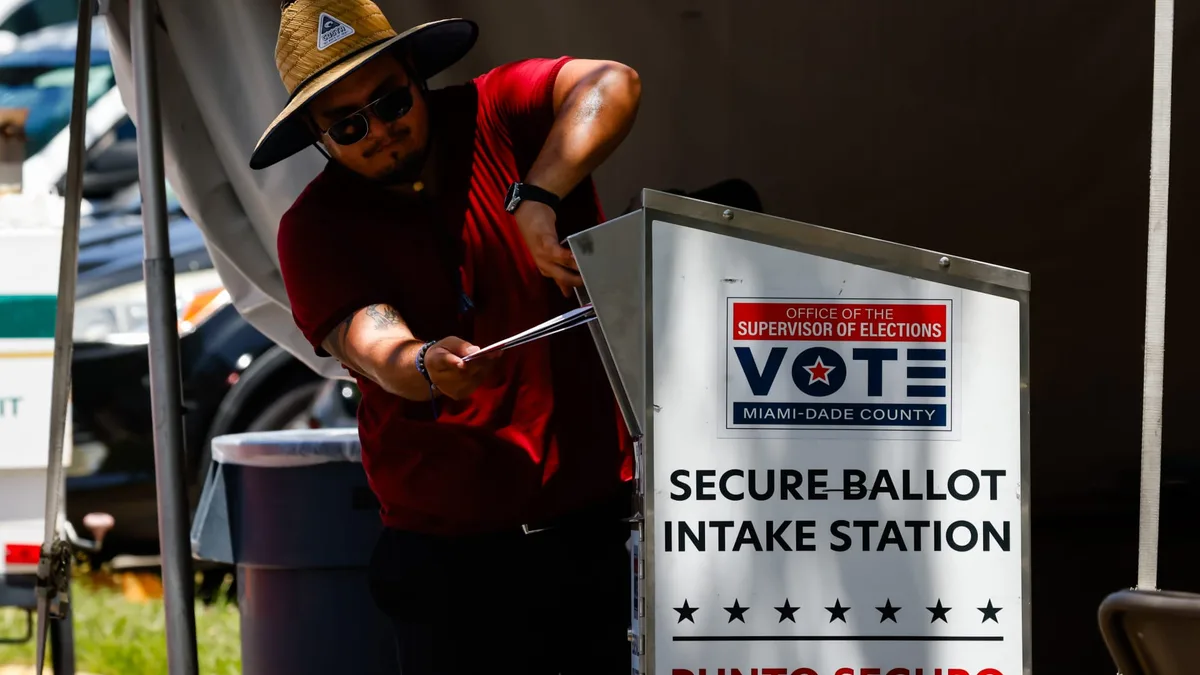
The U.S. Postal Service finalized a 95-page mail-in ballot rule on August 21, 2026, based on former President Trump’s March 2026 executive order. The rule requires election officials to submit voters’ names and addresses to a federal portal and mandates USPS employees verify unique barcoded ballot envelopes against that portal before accepting outgoing ballots [1, 2, 3, 4, 5].
Voting rights groups and Democratic-led states, including 23 states plus Washington D.C., have repeatedly sued to block the rule. They argue the new requirements impose last-minute hurdles that could prevent eligible voters from receiving ballots and create chaos ahead of the November midterms [1, 6, 2, 3, 4, 5]. Jonathan Diaz of the Campaign Legal Center said, "It would be, I think, functionally impossible for some places to comply with these rules... It could prevent eligible voters from receiving ballots and prove catastrophic for election administration and for voters" [6].
In late August, Massachusetts U.S. District Judge Indira Talwani initially blocked the rule on August 24. However, after a 6-3 Supreme Court ruling on August 26 determined the legal challenges were premature because the USPS had not yet published a final rule, Judge Talwani lifted her injunction the same day. She stated, "While the voting rights groups... have substantial arguments... I am compelled by the Supreme Court’s ruling to throw out my earlier ruling blocking the USPS policy" [1, 2, 3, 5].
Despite the Supreme Court decision, Judge Talwani issued a new temporary restraining order on August 27 blocking the rule again for at least 14 days. She cited practical impossibility for jurisdictions to comply before November and noted the potential for disruption [4, 5]. New York Attorney General Letitia James called the rule "an unlawful federal overreach" and said, "States are responsible for processing our elections, and the USPS does not have the authority to decide who can and cannot vote by mail" [1, 4]. She also said, "Across the country, states are already deep into preparations for the 2026 elections. Now, at the last moment, the federal government is attempting to meddle in those preparations and potentially threaten countless Americans' right to vote" [1]. California Attorney General Rob Bonta added, "We've secured an early win blocking this unlawful attempt to restrict mail voting. President Trump must keep his hands off our elections" [4].
The White House responded by blaming "extreme Democrats who refuse to enact basic commonsense measures that ensure Americans, and Americans only, decide our elections" [6]. The rule itself does not require voters to take any new actions but imposes federal requirements on election officials and USPS workers [6, 3, 5].
The case remains active with a hearing scheduled before Judge Talwani on September 3, 2026, where she will decide whether to prolong the block or allow the mail-in ballot rule to take effect before the midterms [5].