Wells Fargo reported a 17% year-on-year rise in Q2 net income to $6.41 billion, or $2.00 per share, exceeding expectations of $1.72 per share due to strong trading and loan business growth [1, 2, 3]. CEO Charlie Scharf said consumer spending, lower delinquencies, and strong credit performance across segments boosted results, though he noted margin pressures from expanding lower-margin businesses [1, 3]. Wells Fargo's net interest income increased 5% to $12.32 billion with average loans up 12% year-on-year, led by growth in credit card and auto loans [1, 2, 3]. Despite the earnings beat, shares declined amid an unchanged annual forecast and slight compression in net interest margin [1, 3].
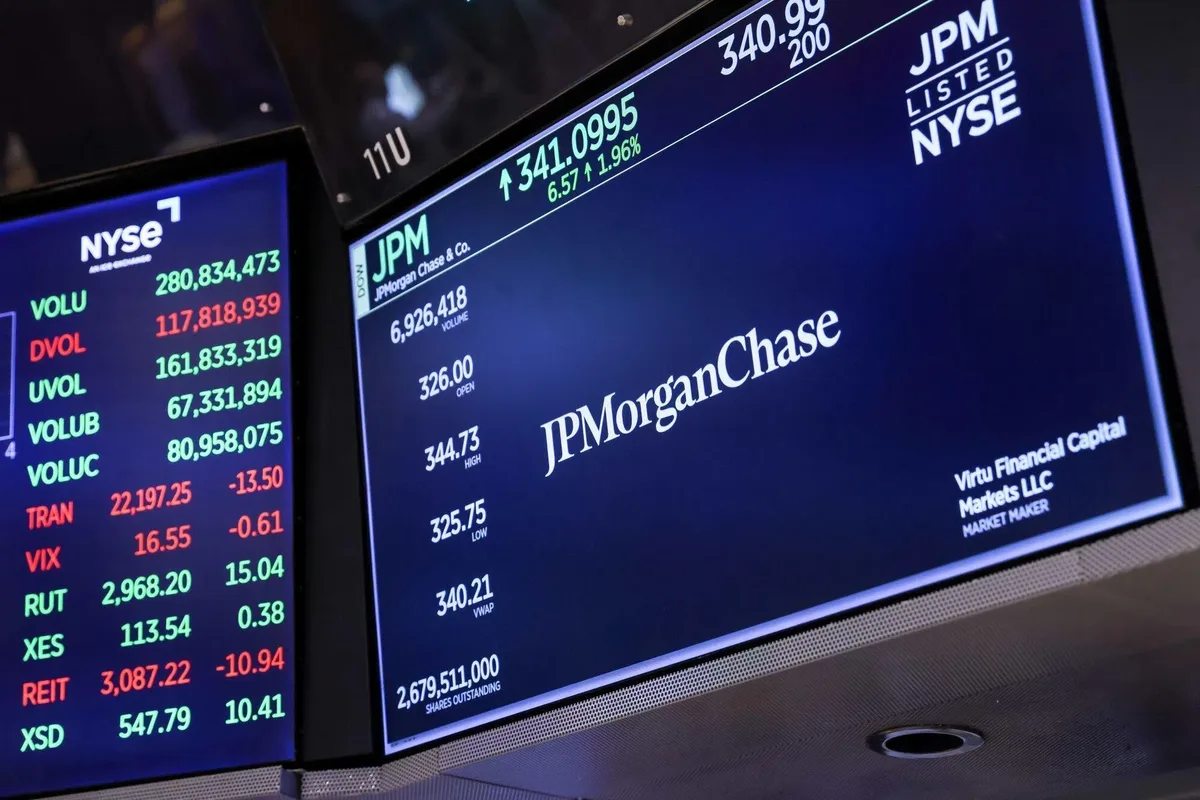
JPMorgan Chase reported a record Q2 profit with adjusted revenue of $58.02 billion and earnings per share of $7.70, marking a 41% increase in net profit year-on-year [4, 5, 6]. Its stock trading revenue almost doubled, rising 86% to $6.03 billion, while net interest income grew 10% to $25.5 billion benefiting from higher interest rates and loan expansion [4]. CEO Jamie Dimon described the market as "very healthy, active and enthusiastic," with high asset prices and trading volumes boosting the quarter’s results but cautioned on continuing geopolitical and inflation uncertainties [4]. JPMorgan raised its full-year net interest income forecast by $1.5 billion to $96.6 billion, excluding market businesses [4].
Bank of America delivered Q2 net income of $9.1 billion, or $1.21 per share, beating analyst estimates of $1.13 per share. The bank posted record trading revenue of $7.1 billion, a 34% increase compared to last year [7, 8]. Morgan Stanley reported net revenue of $21.35 billion and earnings per share of $3.46, driven by strong performance in wealth management and stock trading [9].
BlackRock announced record assets under management of $15.34 trillion for Q2 2026 supported by strong ETF inflows and rising stock markets. The investment manager beat profit estimates with earnings per share of $13.91 against expected $12.59 [10, 11]. CEO Larry Fink highlighted robust market fundamentals and deep global client relationships as key drivers [10].
US equity markets ended June with the largest quarterly gains since 2020, buoyed by optimism on corporate earnings despite ongoing geopolitical tensions [10, 4, 11]. June inflation cooled more than expected as energy costs eased, prompting markets to price a higher likelihood of the Federal Reserve pausing rate hikes in July [4].
PayPal shares jumped over 21% in premarket trading on July 15 following reports that Stripe and Advent International planned to acquire the payments company for $60.50 per share, valuing it above $53 billion [4]. Apple’s new generative AI service, "Apple Intelligence," received regulatory approval for use on iPhones in China the same day [4].
Wells Fargo, Bank of America, JPMorgan Chase, and Morgan Stanley reported their Q2 results on July 14, followed by BlackRock and market updates on July 15. JPMorgan Chase’s raised net interest income forecast underscores continued focus on lending amid market uncertainty [1, 7, 10, 4, 5, 2, 8, 6, 3, 9, 11].