Oil prices stayed elevated on Wednesday as the Iran conflict kept the Strait of Hormuz under severe disruption, with Brent above $107 a barrel and U.S. crude near $102. [1]
The market has been rattled by worries that shipping through the key waterway could remain heavily constrained. The Strait of Hormuz carries about 20% of global oil flows, and no ocean-going tankers were observed at Iran’s Kharg Island for several days, according to the data cited. [1, 2]
U.S. President Donald Trump rejected Iran’s response to a U.S. peace proposal and said the ceasefire was on “massive life support,” while also telling reporters, “we have Iran very much under control.” [3, 4, 1]
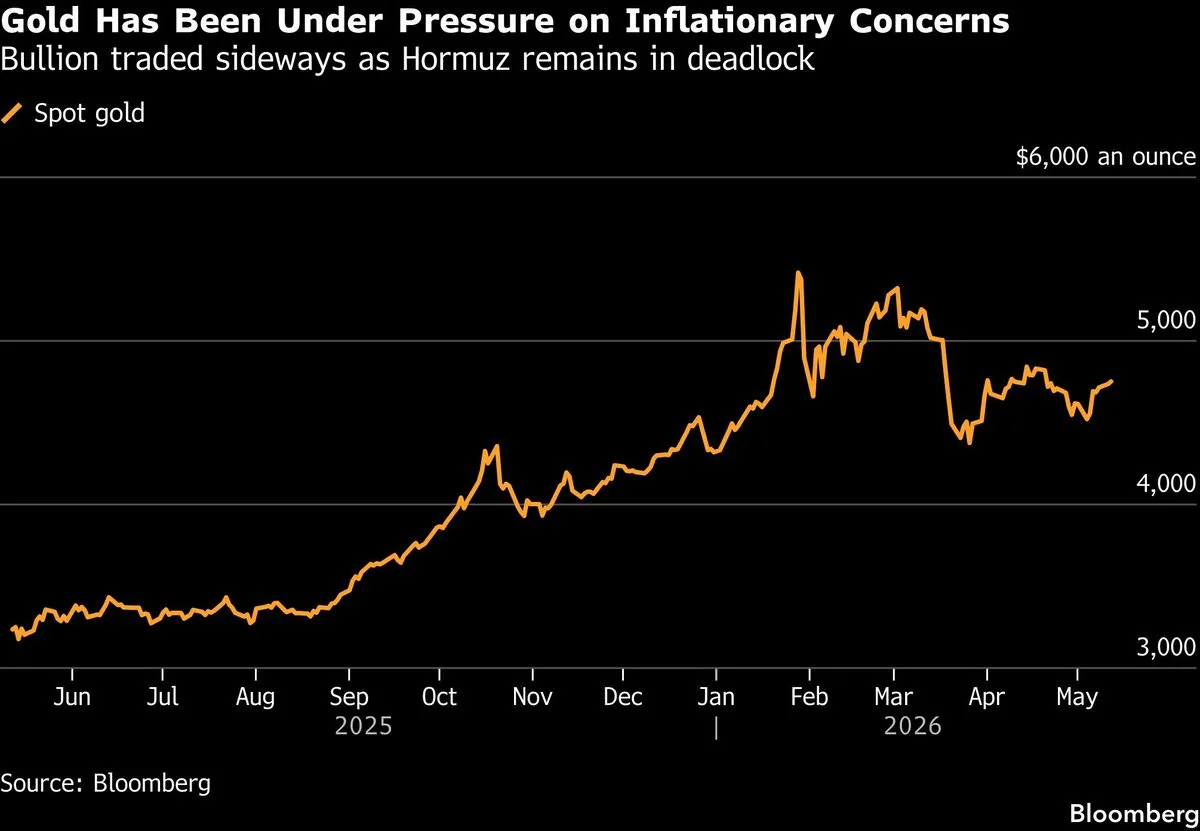
The oil rally fed broader inflation fears, including higher gasoline prices in the U.S. Gold was steady to little changed as investors weighed the conflict, energy costs and the risk of hotter inflation. Spot gold was quoted near $4,730 an ounce and later at $4,742.02, while the Bloomberg Dollar Spot Index was 0.2% higher. [4, 5]
Shares sent mixed signals. AI-linked stock optimism helped support equity markets, but some regional bourses weakened as traders priced in the chance of longer supply disruption and higher input costs. European shares had ended flat on May 11 after stalled U.S.-Iran peace talks pushed oil higher. [3, 4, 6]
The inflation test was due later on Wednesday, with U.S. consumer price data expected to show a sharp rise. Traders were watching the report for signs that the conflict-driven jump in energy costs was feeding through into broader prices. [4, 5]