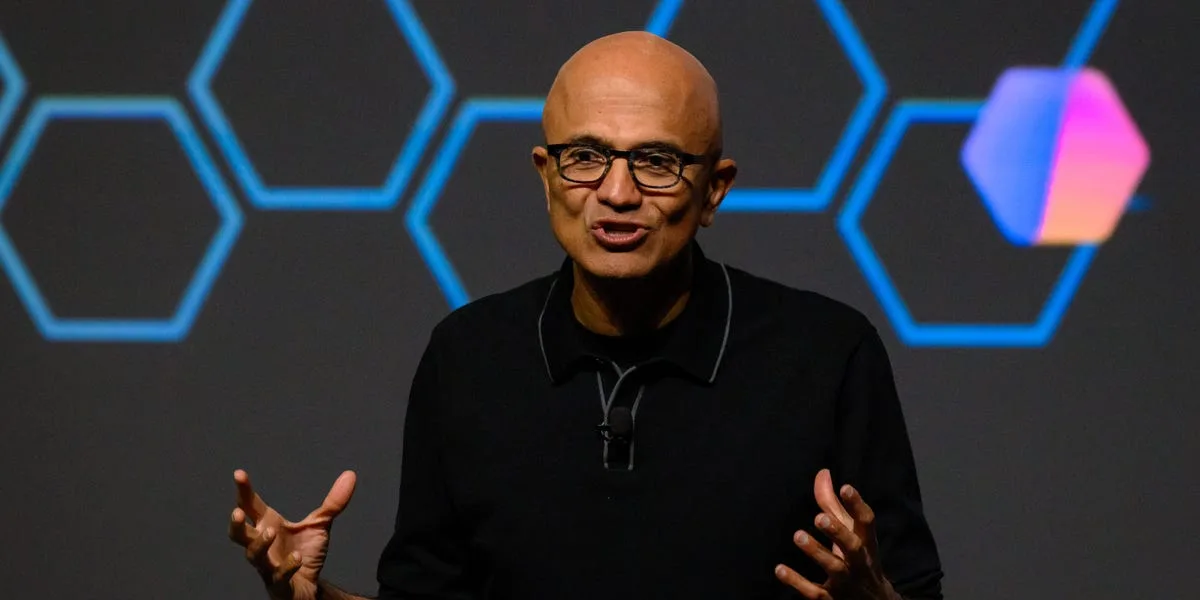
Microsoft CEO Satya Nadella issued a stark warning on June 14, 2026, saying a small number of dominant AI models could seize most economic value and cause industries to lose control over their knowledge assets, effectively hollowing them out [1, 2]. Nadella posted his concerns on the social platform X, stating, "The last thing any of us want is a world where every company across every sector is ceding value to a few models that eat everything they see. There is no societal permission for an AI future that hollows out entire industries" [1].
Nadella compared the risks of AI concentration to the first phase of globalization, when outsourcing hollowed out many industrial economies. "The GDP numbers looked fine on the surface, but the displacement was real and the consequences are still being felt," he said [1]. He emphasized the need for an AI ecosystem where companies retain control over their learning systems to foster innovation and preserve employee expertise [1, 2].
Echoing Nadella’s concerns, Snowflake CEO Sridhar Ramaswamy said big AI model builders aim to access all enterprise data, reducing other software firms to mere data pipelines. He stated, "The big model makers want to create a world in which all of the data for all of the enterprises is easily available to them. Everything else, the world, is just a dumb data pipe that feeds into that big brain" [1].
Box CEO Aaron Levie highlighted the challenge companies face as AI models can perform advanced knowledge work across many professions. "The question that we will have to wrestle with is, in a world where everyone has access to the same expert intelligence, how does a company differentiate? ... Context would be the answer," Levie said [1].
Nadella, Ramaswamy, and Levie all underscored the importance of maintaining proprietary data and context to prevent industries from losing control over their core expertise and innovation capabilities.
The debate over AI’s economic impact continues as leaders and companies must decide how to balance leveraging AI’s power while avoiding concentration that could disrupt entire sectors.