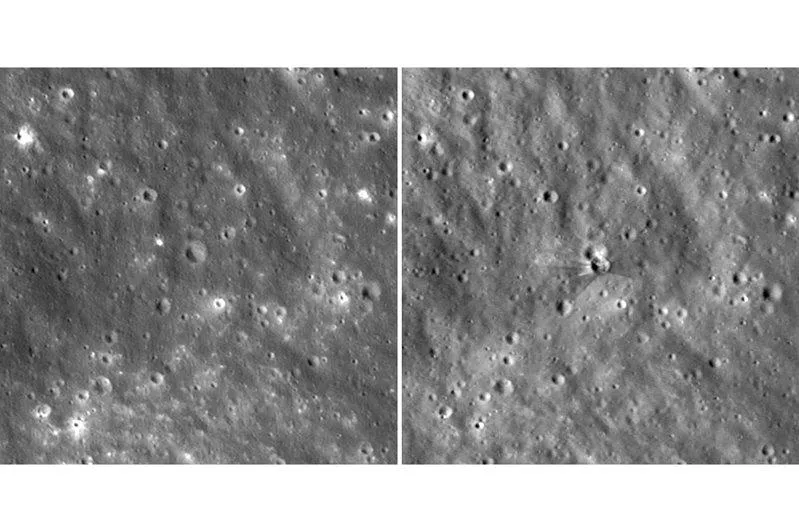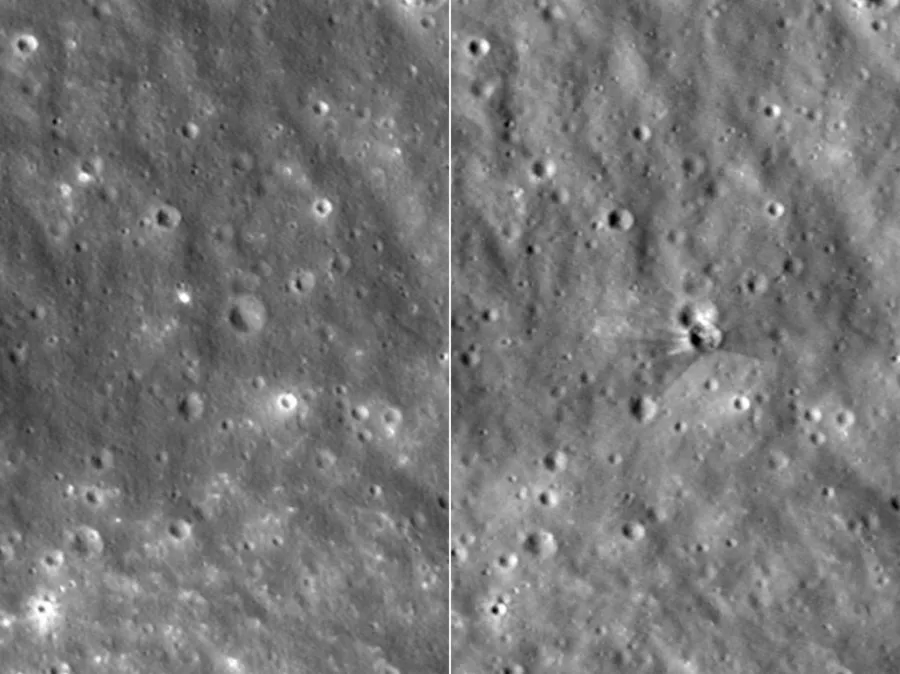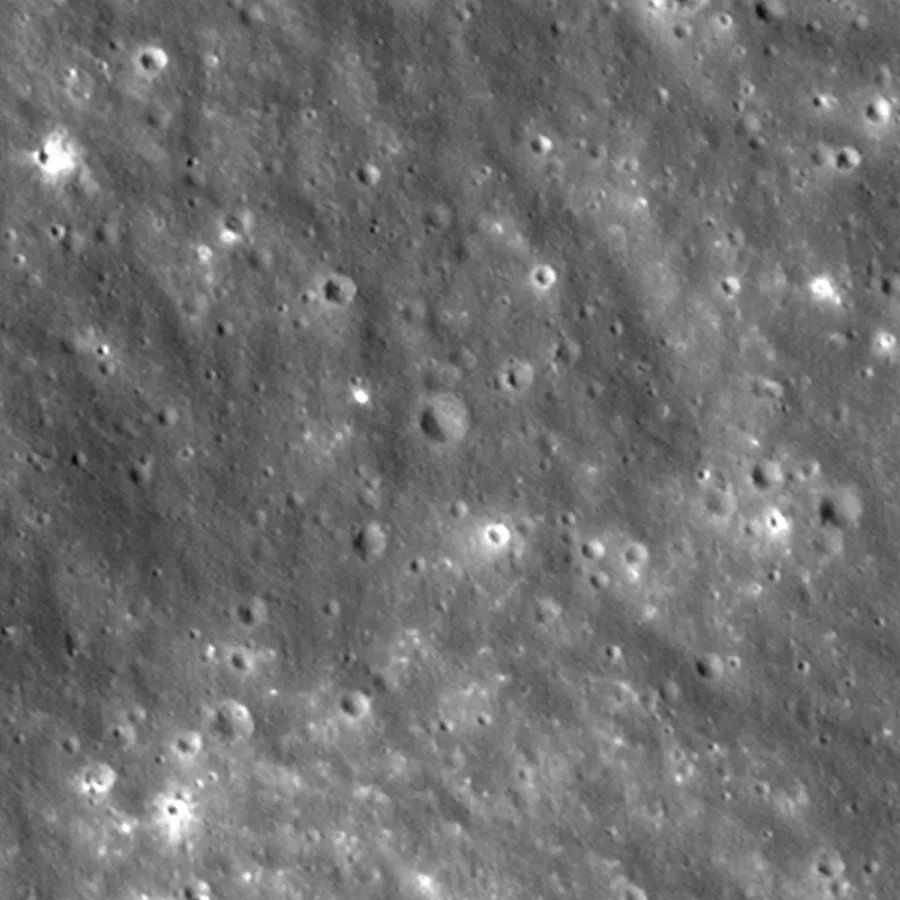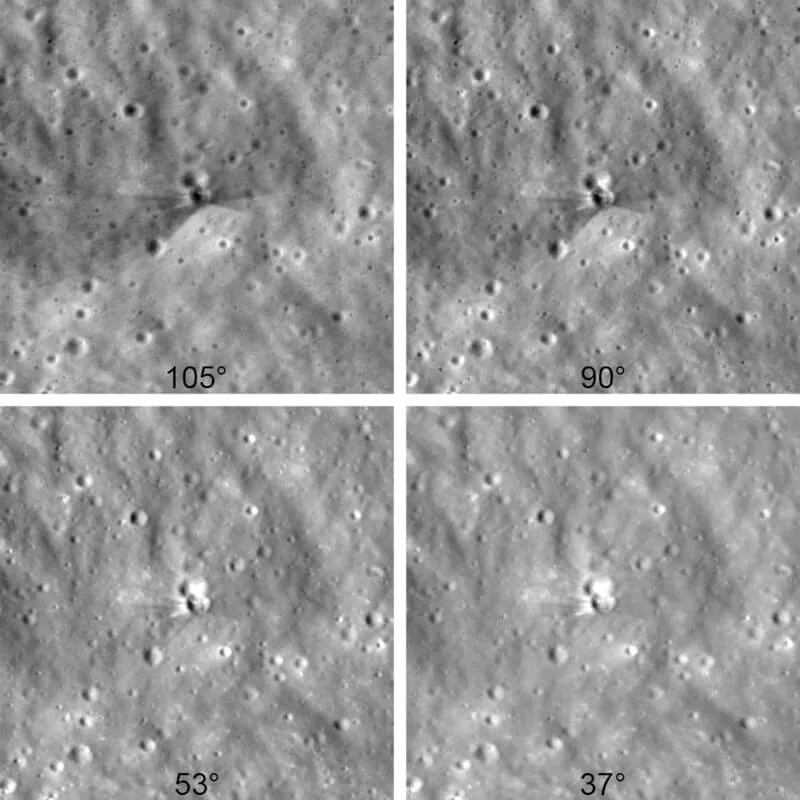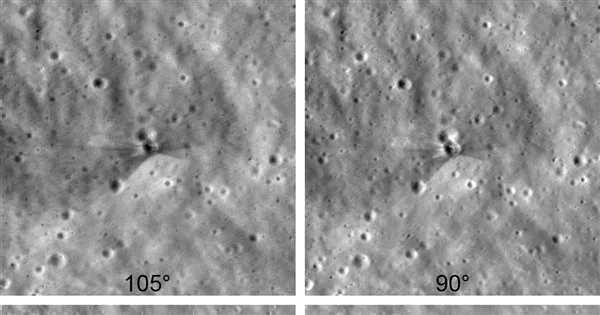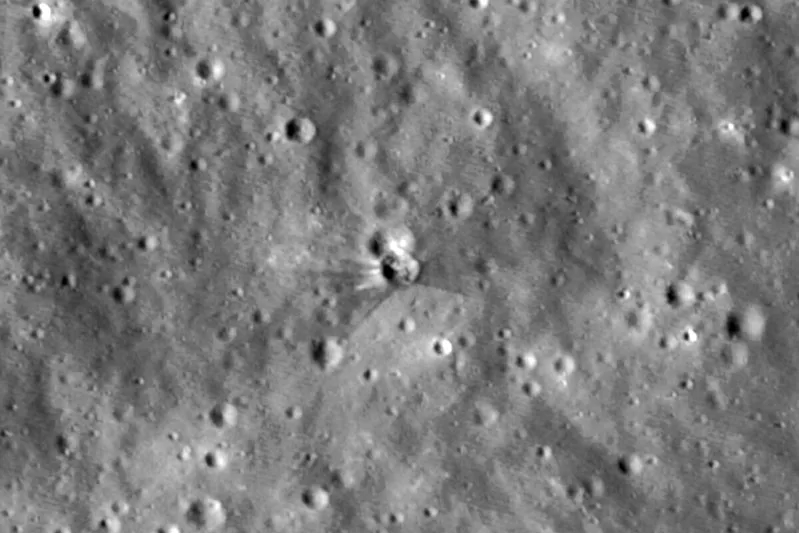
NASA’s Lunar Reconnaissance Orbiter (LRO) obtained new high-resolution images of a crater created by the impact of SpaceX’s Falcon 9 rocket upper stage on the Moon on August 5, 2026 [1, 2, 3, 4, 5, 6, 7]. The crater measures about 18 meters (60 feet) wide and less than 3 meters (10 feet) deep, based on shadow measurements by NASA scientists [1, 2, 3, 4, 5, 6, 7].
The Falcon 9 rocket was originally launched in January 2025 carrying Firefly Aerospace’s Blue Ghost 1 lunar lander, which soft-landed successfully on the lunar surface [1, 2, 3, 4, 5, 6, 7]. The upper stage of the Falcon 9 later crashed into the Moon at over 5,000 mph, striking the surface and leaving the new crater [3].
The LRO orbiter adjusted its orbit and camera angle to capture the crater images between August 11 and 12, 2026, around six days after the impact. It took the photos from around 96.5 to 97 kilometers (60 miles) altitude [1, 2, 4, 5, 6, 7]. NASA noted the precision required: "If the camera snapped even 10 seconds too early or too late, the target would drift off-centre by 10 miles," emphasizing the difficulty of lunar imaging [6].
Earlier, the Korean space agency’s KPLO (Danuri) orbiter took and released initial images of the crash site on August 5 and 6, respectively [1, 2, 4, 5, 6, 7].
The crater’s brighter streaks are freshly excavated material from beneath the surface, while darker streaks show lunar dust and rocks altered by long-term exposure to solar wind and micrometeorites [5, 6]. The LRO can resolve features as small as 3 feet wide on the Moon’s surface [3].
NASA publicly released the latest detailed crater images on August 18, revealing new insights into the impact and its effects on the lunar surface [3, 4, 5, 6, 7].