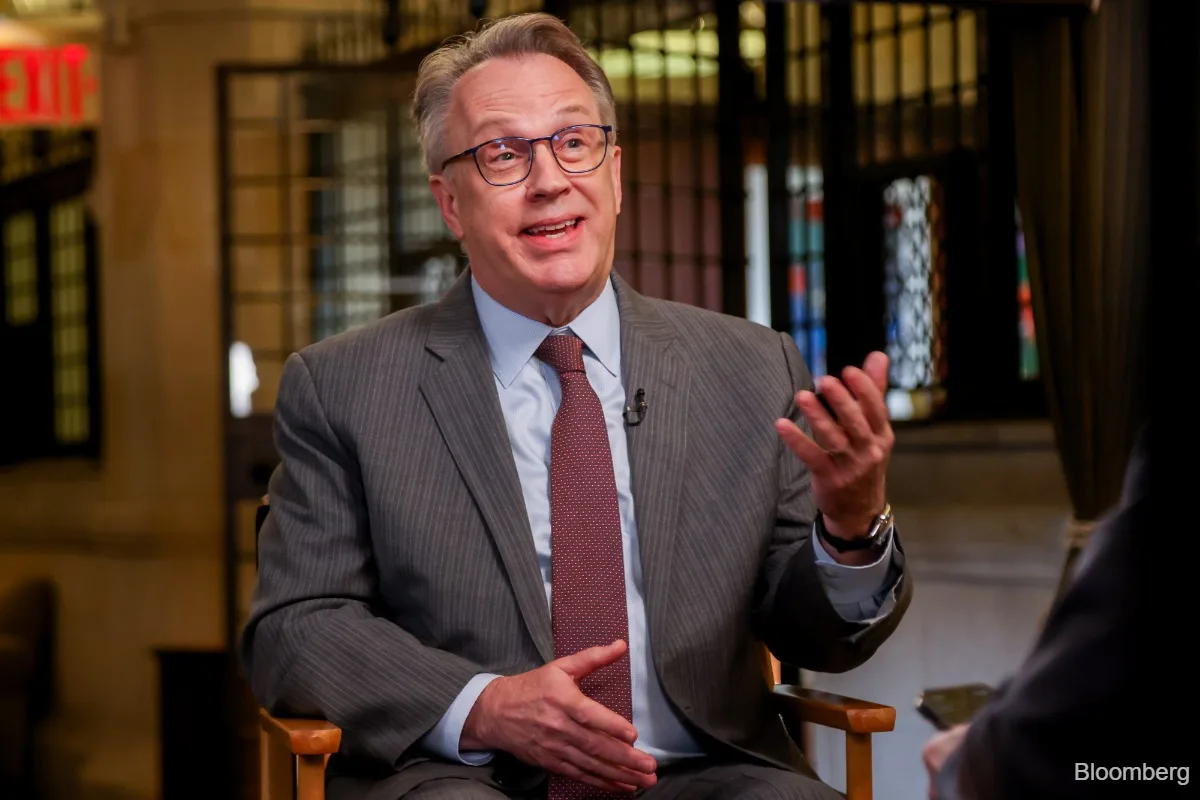
John Williams, president of the New York Federal Reserve, said inflation has peaked and expects it to fall to around 3.25% by the end of 2026, reaching the Fed’s 2% target by 2028 [1, 2]. He stated on July 15 that "there are encouraging reasons to expect that inflation has peaked and should edge down in coming quarters," and "the current stance of monetary policy is well positioned to do that" [2].
Williams cited factors such as shelter inflation moving downward and energy prices having likely peaked as contributors to easing inflation pressures [1, 2]. He added that the labor market currently is not adding to inflationary pressures [1, 2].
He acknowledged that artificial intelligence-driven demand has placed upward pressure on prices but stated he expects the supply-demand imbalances linked to AI investment to ease as more supply comes online: "The supply-demand imbalances stemming from AI-related investment should recede over time," Williams said [1]. Williams also noted tariffs should not add significant additional pressure on consumer prices [1, 2].
Despite Williams’s view that interest rates are well positioned, markets expect the Federal Reserve could raise rates as soon as September 2026 [2]. Fed Chairman Kevin Warsh, who took office in May 2026, has promised to end the Fed’s forward guidance system of signaling rate paths [1]. Warsh recently said recent inflation data "does not fully reflect underlying inflation conditions," adding that the impact of AI on inflation "depends on Fed policy" [3].
Inflation data showed consumer prices unexpectedly dropped 0.4% in June 2026, putting the annual inflation rate at 3.5% [2]. Williams’s comments follow this data and reflect his outlook for inflation to moderate in the coming quarters.
Williams gave his remarks at a July 15 speech, outlining his forecasts and analysis on inflation and monetary policy [1, 2, 3].