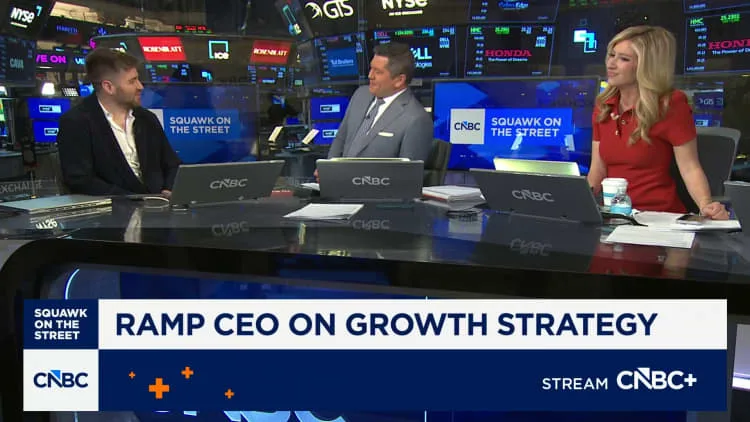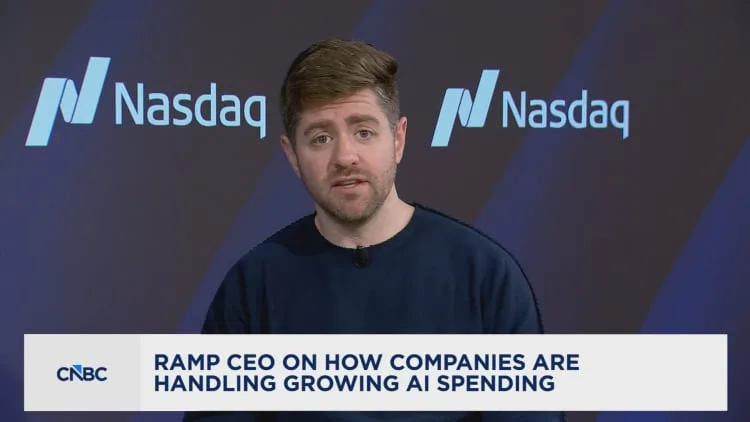
Ramp announced a $750 million funding round at a $44 billion valuation on June 4, 2026, co-led by ICONIQ Capital, Singapore’s GIC sovereign wealth fund, and Ontario Teachers’ Pension Plan [1, 2, 3]. Other notable investors included Goldman Sachs Growth Equity, Morgan Stanley Investment Management, Founders Fund, D.E. Shaw & Co., Generation Investment Management, Insight Partners, and BroadLight Capital [1, 2].
The funding round increased Ramp’s valuation by about 38% [3]. The startup has raised over $3 billion in total funding to date [1, 2]. Ramp competes in the expense management and corporate finance space with peers like Brex, which was acquired for $5.15 billion earlier in 2026 [2].
Ramp’s reported customer base exceeds 70,000, including major companies like Visa, Uber, Shopify, Anduril, and Figma [2, 3]. Its product suite covers expense management, payments, fraud detection, procurement, vendor management, and accounting, all with a strong emphasis on artificial intelligence [2, 3].
The company integrates AI agents into products such as a corporate credit card designed for AI agents, and it helps customers monitor and control AI token usage and associated costs — a growing expense for many firms [2, 3]. CEO Eric Glyman said clients with higher AI spending saw 12% revenue growth while those spending less experienced flat growth [3]. He remarked, "What we're finding is tokens cost quite a bit of money and most CFOs not only didn't plan for this in their annual plans — the steep growth — but don't have great tools to manage this" [3]. Glyman also noted, "People saying this is the greatest opportunity we've had to grow our business in our careers, and yet it is the fastest growing line item" [3].
Revenue figures vary by source. Ramp reported annualized revenue above $1 billion as of September 2025, according to company statements [2]. Bloomberg reported run-rate revenue over $1.5 billion [1]. Ramp is also operating with positive free cash flow [2, 3].
Ramp CEO Eric Glyman indicated the company is considering an eventual public offering [1]. The company will likely continue expanding its AI-driven finance and expense management tools in the near term.