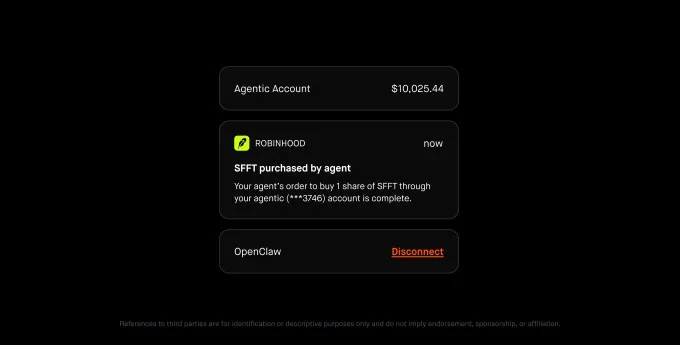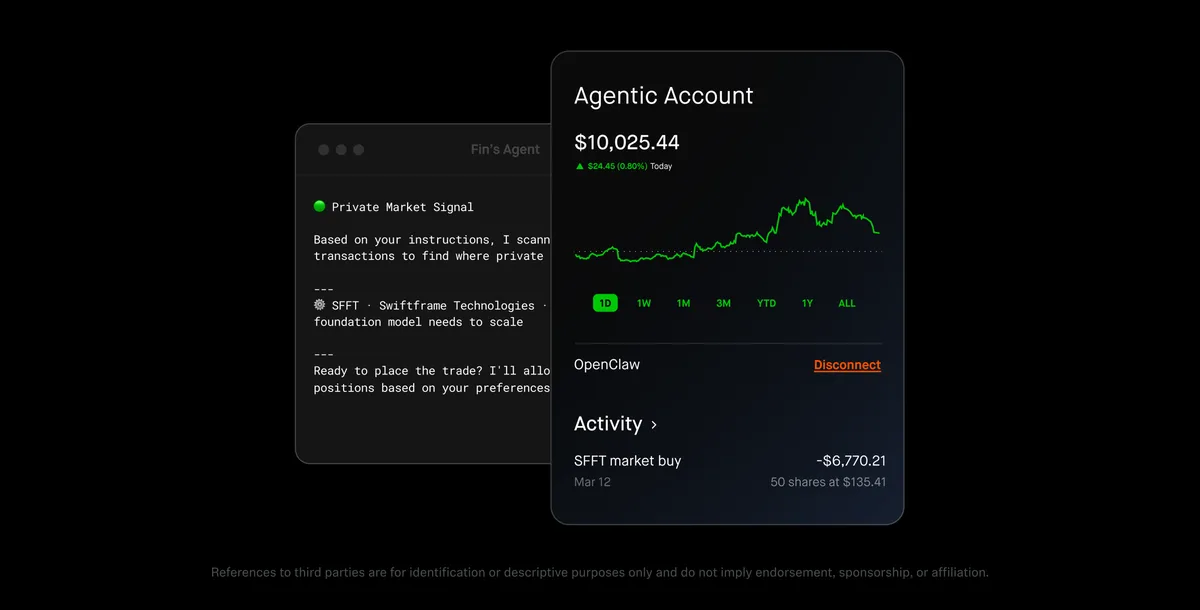
Robinhood introduced "Agentic Trading" on May 27, 2026, allowing users to create separate accounts for AI agents to autonomously trade stocks using dedicated wallet balances funded by the user [1, 2, 3, 4, 5, 6, 7]. The AI agents can analyze portfolios, devise strategies, and execute trades independently but only within pre-funded limits set by users [1, 2, 3, 8, 5, 6, 7].
The beta currently supports stock trading only. Robinhood plans to add options, crypto, futures, event contracts, and prediction market support in future updates [1, 2, 3, 8, 5, 7]. Users receive real-time notifications of AI agent trades and can monitor or pause agent activity at any time [1, 2, 3, 5, 6, 7].
Robinhood has implemented safeguards to protect user assets. These include separating AI trading accounts from main portfolios, establishing spending limits, requiring approvals for certain trades or payments, and deploying fraud detection systems [1, 2, 8, 5, 6, 7]. CEO Vlad Tenev said, "Our mission has always been to democratize finance for all, and now, that mission extends to AI agents" [2, 7].
Alongside Agentic Trading, Robinhood launched an "Agentic Credit Card" feature. This uses virtual credit cards linked to Robinhood Gold Card accounts. The virtual cards have configurable spending caps and manual approval options for transactions made by AI agents [1, 3, 8, 5, 7]. Purchases earn 3% cashback rewards, and the virtual card number is distinct from the main credit card to enhance security [8, 5, 7].
Robinhood’s open standard Model Context Protocol (MCP), developed by Anthropic, connects these AI agents to the platform and external data sources [1, 8, 5]. The company acquired AI research platform Pluto in 2024 and added an AI investment assistant in 2025 before launching this new trading paradigm [1].
Concerns remain about risks such as potential investment losses, market volatility from many users following similar AI strategies, and regulatory responsibility uncertainties [2, 3, 8, 6]. Robinhood provides monitoring and notifications but disclaims responsibility for agent-generated losses and does not guarantee accuracy or suitability of AI outputs [3, 6].
The beta rollout targets Robinhood’s approximately 27.6 million users and represents a step toward automated retail investing and payments via AI [7].